· Design & Ambiance · 10 min read
Restaurant Acoustics: Managing Noise for a Better Dining Experience
Noise is the second or third most common restaurant complaint — and the modern trend toward hard, industrial surfaces has made it dramatically worse.
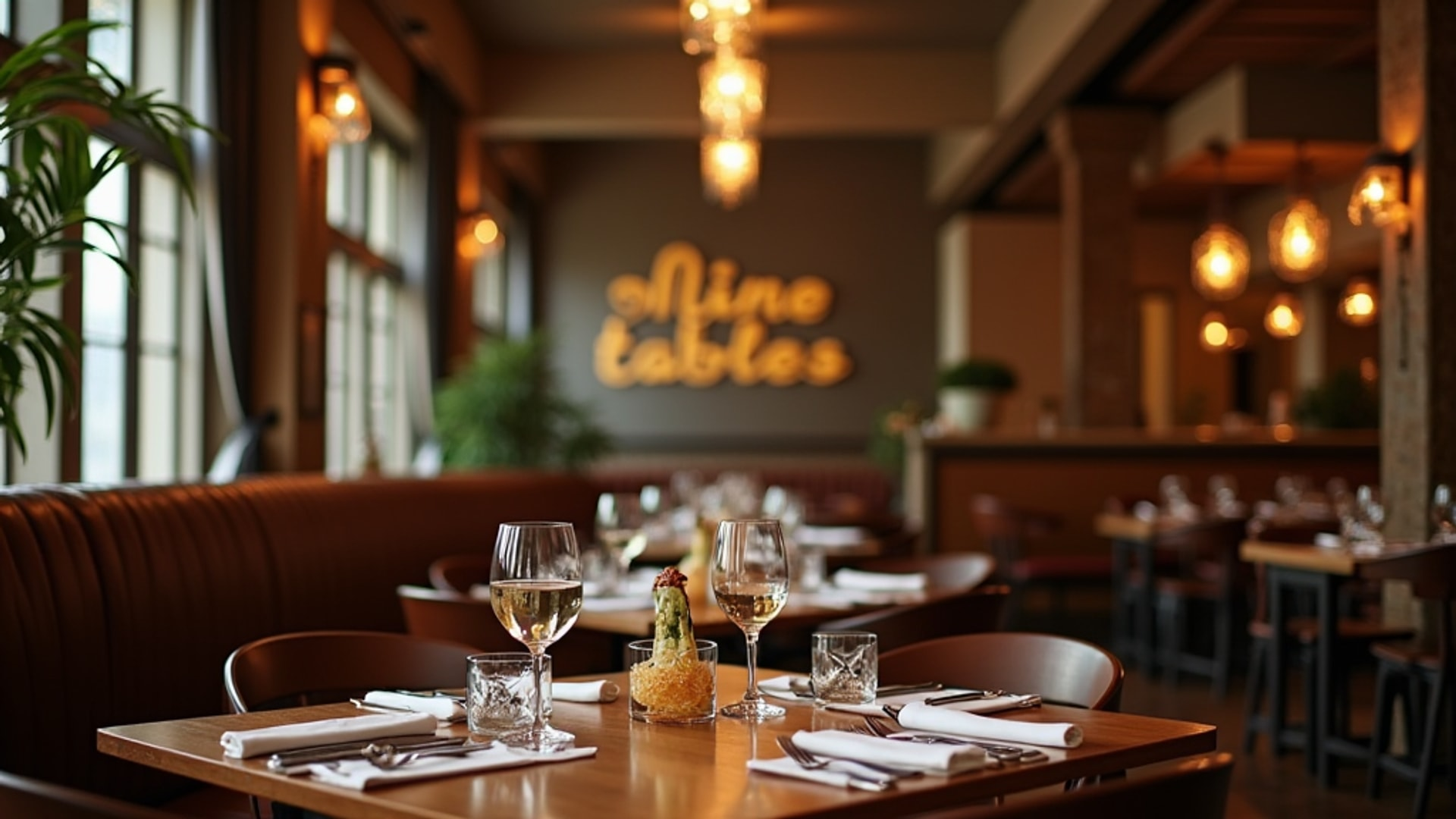
Walk into a loud restaurant and you will immediately start talking louder. So will the table next to you. And the table next to them. Within 30 minutes of full service, a room designed with hard reflective surfaces can hit noise levels that make normal conversation difficult, and guests who cannot converse comfortably will not come back.
Noise ranks as the second or third most common restaurant complaint among diners, behind only poor service and food quality, according to Second Skin Audio’s practical guide to restaurant acoustics. That makes it one of the most significant and most fixable problems in the modern dining experience. Yet most restaurant designers still address acoustics as an afterthought, if they address it at all.
The modern design trends that produce beautiful restaurants have made the problem worse. Exposed concrete, glass facades, open ceilings, reclaimed wood, tile floors, and metal fixtures all look compelling in a design magazine and all reflect sound waves that compound into ambient noise. According to Acoustical Solutions’ analysis of restaurant acoustics, the trend toward industrial aesthetics — hard floors, exposed brick, metal fixtures, and open kitchens — creates visually appealing spaces that can be acoustically challenging.
Understanding noise levels, their effects, and the practical solutions gives you the tools to address acoustics before a lease is signed or a renovation budget is set.
Understanding Restaurant Noise Levels
Sound is measured in decibels (dB), and the relationship between decibel levels and human comfort is not linear. A 10 dB increase in measured noise represents a doubling of perceived loudness.
The benchmarks you need to know:
- 40 to 50 dB: Ideal background noise level for upscale restaurants, according to Second Skin Audio. Quiet, comfortable, easy conversation.
- 60 to 70 dB: The ideal range for comfortable conversation in a restaurant setting, according to Sound Zero. Background ambiance present but conversation is natural.
- 70 dB: The threshold above which conversation quality begins to degrade noticeably.
- 80 dB or higher: Distinctly uncomfortable. Equivalent to standing beside a busy highway. According to Acoustical Solutions’ analysis, noise above 80 dB makes normal conversation difficult and reduces diner satisfaction significantly.
- 85 dB and above: Prolonged staff exposure to noise exceeding 85 dB poses hearing damage risks under OSHA guidelines, according to Second Skin Audio.
Most restaurant conversations happen comfortably at 60-70 dB. When ambient noise exceeds that, guests unconsciously raise their voices to be heard, which raises the ambient noise further, which causes the next table to raise their voices. This feedback loop is called the Lombard effect, and it is why a room that starts quiet at 7:00 PM can be genuinely loud by 8:00 PM without any single table doing anything unusual.
The Business Impact of Poor Acoustics
Excessive noise is not just an annoyance — it directly affects revenue and return rates.
According to Second Skin Audio, the bottom-line impact of poor acoustics is measurable in specific ways:
Lost occasions. Couples struggle to converse on dates and avoid returning. For any restaurant positioning itself as a date-night destination, noise control is a business necessity, not a design preference.
Reduced group dining. Large groups become fragmented and frustrated when individual conversations require effort. Groups who cannot hear each other across the table end up spending less, leave sooner, and do not book the private dining room again.
Order errors. Staff cannot hear customer orders accurately in loud environments, leading to errors that appear as inattention or incompetence. The acoustic problem generates operational problems that compound into service failures.
Diminished taste perception. Research cited by Sound Zero demonstrates that noise levels above 70 dB actually interfere with taste perception, meaning diners in loud restaurants may perceive food as less flavorful regardless of preparation quality. This is a documented physiological effect: excessive noise reduces sensitivity to sweet and salty tastes, making the food seem worse than it is.
Faster departure, less spending. According to Sound Zero, noisy restaurants cause faster eating, quicker departures, less spending, and fewer return visits. Guests who cannot comfortably converse skip the extra round of drinks and the dessert, leave as soon as they finish eating, and do not make a reservation for next month.
The counter-argument — that some noise creates energy and atmosphere — is not wrong. The critical word is “some.” A restaurant with zero ambient noise feels sterile and uncomfortable in a different direction. The goal is not silence; it is controlled noise that allows conversation.
Why Modern Restaurant Design Is Acoustically Problematic
Every design decision that creates the look of a contemporary restaurant tends to increase noise. Tile and polished concrete floors reflect sound. Glass reflects sound. High ceilings allow sound to build up. Exposed metal ductwork reflects sound. Removing the suspended ceiling that was previously hiding acoustic tile eliminates the main absorption surface in many existing buildings.
According to Acoustical Solutions, the fundamental challenge in restaurant environments is the predominance of hard, reflective surfaces: tile floors, glass windows, concrete walls, and metal fixtures all reflect sound waves, creating a cumulative effect where ambient noise escalates rapidly as the room fills with diners.
The physics are simple: sound absorption happens when a wave encounters a porous or soft surface that dissipates energy. Sound reflection happens when a wave encounters a hard, dense surface and bounces back into the room. Industrial aesthetics maximize the number of reflective surfaces and minimize absorptive ones.
Acoustic Treatment Materials
The solution is introducing absorptive surfaces strategically throughout the space. The materials available to do this have improved significantly, and many can be integrated into the design without looking like an afterthought.
Wall Panels
According to Second Skin Audio, effective absorption options include:
Polyester acoustic panels: Non-allergenic, fire-rated, and easy to clean. Available in custom colors and patterns, allowing integration into the design palette.
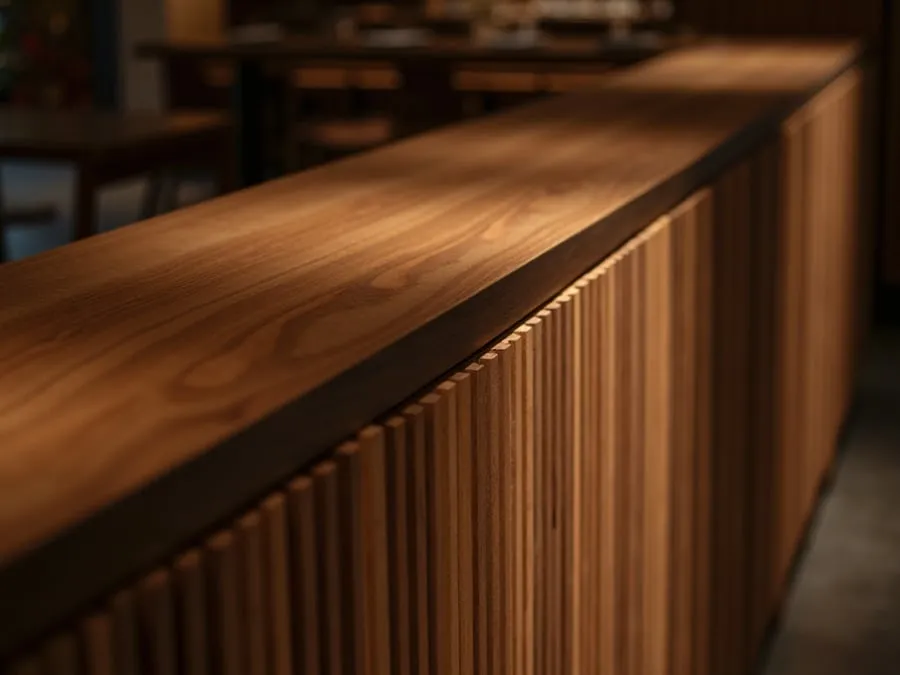
Wood wool panels: An aesthetic alternative for visible wall applications. The texture of wood wool provides a warm, natural appearance while delivering meaningful absorption.
Cellulose panels: Work well for concealed placement where aesthetics are less important.
Acoustical Solutions recommends installing panels on dining area walls at heights where they intercept sound bouncing between tables and walls — typically at and above seated head height. The effect is most significant when panels are distributed across multiple walls rather than concentrated on one.
Ceiling Solutions
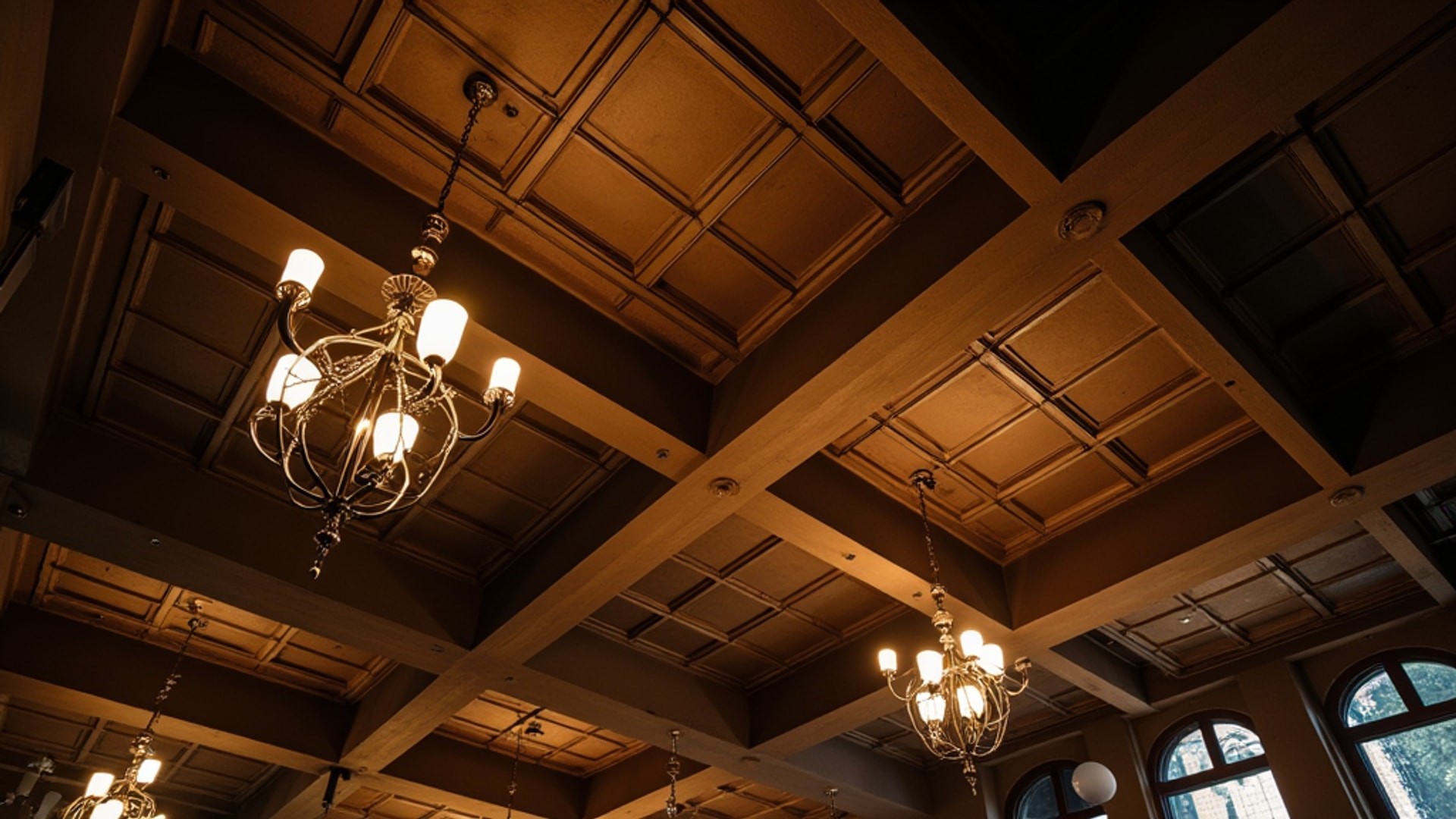
The ceiling is the most important single surface for acoustic treatment because it spans the entire space and is the most common reflection point for voice-level sound.
Acoustic clouds: Panels mounted horizontally on the ceiling capture sound that would otherwise bounce off the hard overhead surface. According to Second Skin Audio, acoustic clouds provide consistent absorption across the room’s entire footprint.
Hanging baffles: Panels suspended vertically below the true ceiling dampen echoes in tall-ceilinged spaces. According to Second Skin Audio, hanging baffles can be easily installed with basic hardware. They are particularly effective in loft-style spaces with very high ceilings where sound would otherwise build up in the overhead volume.
Both solutions are available in custom colors, patterns, and materials that can function as design features rather than acoustic corrections.
Soft Furnishings
According to Acoustical Solutions, upholstered seating, carpets, and partitions absorb sound and reduce reverberation between tables. Soft furnishing choices include:
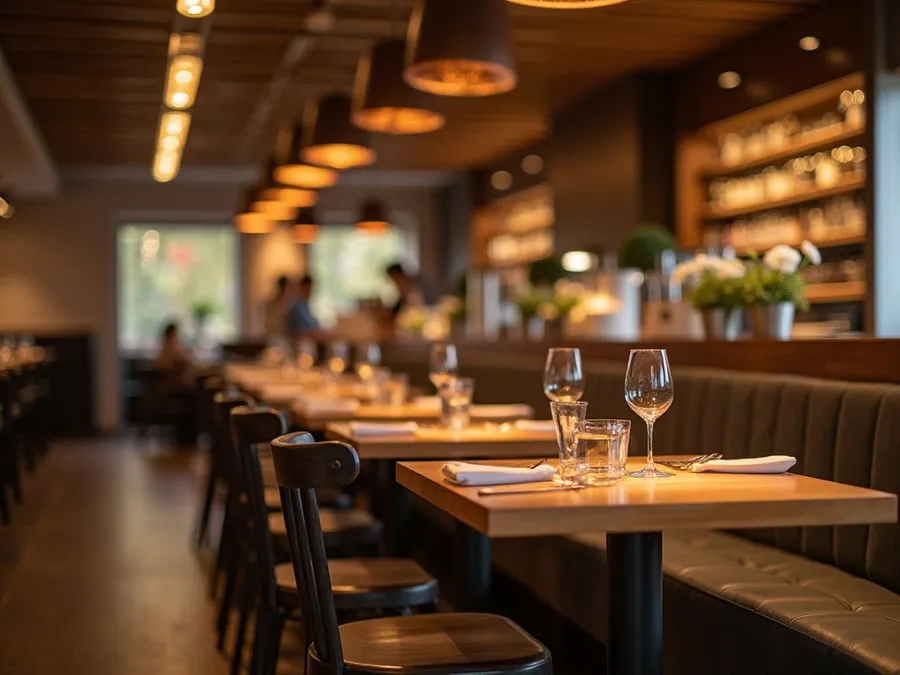
Upholstered booths and banquettes: Fixed seating with fabric or vinyl upholstery provides consistent absorption throughout the room. Booth walls also provide physical separation between tables that reduces sound transmission between parties.
Carpet or area rugs: Hard floors are a primary reflection surface. Even partial carpet coverage — runners in seating areas, area rugs under tables — meaningfully reduces overall noise levels. According to Second Skin Audio, carpet in high-traffic areas contributes to noise reduction.
Tablecloths: A simple, zero-renovation intervention that provides measurable acoustic improvement. Tablecloths dampen the noise of plates, silverware, and glass that otherwise rings off hard table surfaces.
Heavy curtains: Near seating zones, curtains add absorptive surface area and can define acoustic zones within the room.
Strategic Placement
Material placement matters as much as material selection. According to Second Skin Audio, the most effective approach:
- Install panels on dining area walls and ceilings to absorb sound bouncing off hard surfaces
- For restaurants where visible acoustic panels conflict with the aesthetic vision, hidden absorption underneath tables with protective framing keeps materials invisible to patrons
- Soundproof kitchen doors and walls facing the dining area to prevent back-of-house noise from bleeding into guest spaces
- Separate loud equipment — ice machines, blenders, dishwashers — from guest-facing areas
Acoustic Zoning
Not every area of a restaurant needs the same acoustic profile. According to Acoustical Solutions, advanced acoustic design incorporates zoning where different areas are treated to achieve different acoustic profiles.
The bar area may intentionally maintain higher energy levels with livelier ambient noise. The main dining room may be treated for comfortable conversation. A private dining room may require more aggressive acoustic isolation. This differentiation allows the restaurant to offer different experiences within the same building and serve different occasions — a noisy night at the bar and a quiet dinner in the back room are both possible simultaneously when the design is intentional about zones.
Creating distinct zones within the restaurant, separating bar areas from dining spaces, using room dividers, and varying ceiling heights all contribute to managing sound levels, according to Second Skin Audio.
Sound Masking
Counterintuitively, steady background sound at low levels can mask intrusive conversation noise from adjacent tables. According to Second Skin Audio, background sound at levels under 60 dB creates a masking effect that helps individual tables feel more private. This technique supplements rather than replaces physical acoustic treatment.
High-quality audio systems playing consistent background music accomplish two things: they provide an acoustic screen that makes nearby conversations less intelligible (not louder, just harder to follow), and they fill the silence that would otherwise make a quiet room feel awkward.
The important design consideration is speaker placement and system calibration. Speakers positioned too close to seating areas create localized loud spots. Distributed speaker systems with many speakers at lower volume levels, positioned to provide even coverage, produce the consistent background level that masking requires without creating hotspots.
Retrofitting vs. Designing From Scratch
The most effective approach integrates acoustic considerations into the initial design phase rather than retrofitting, according to Second Skin Audio. Acoustic treatment specified during design can be integrated invisibly — built into the ceiling assembly, specified as part of the booth construction, incorporated into the lighting plan as a combined acoustic-and-lighting fixture.
Retrofit acoustic treatment, applied to an existing loud restaurant, is more limited because the budget and available surface area are constrained, and the visual integration is harder. That said, retrofit improvements are absolutely achievable. Decorative acoustic panels can provide significant improvement without requiring major renovation, according to Sound Zero. A strategic placement of wall panels, ceiling clouds, and soft furnishings in an existing loud restaurant can reduce reverberation times meaningfully.
If you are evaluating an existing space for a new restaurant, doing an acoustic assessment before signing the lease will tell you what you are walking into and how much remediation will cost.
→ Read more: Restaurant Ceiling Design
→ Read more: Restaurant Lighting and Ambiance A space that is inherently challenging acoustically — a concrete box with a high ceiling and no soft surfaces — can still be workable, but the acoustic treatment budget needs to reflect that reality from the start.