· Design & Ambiance · 9 min read
Restaurant Booth vs. Table Seating: Strategy, Trade-offs, and the Optimal Mix
The choice between booths and tables is not an aesthetic preference — it determines table turnover speed, guest comfort, accessibility, and revenue per square foot.
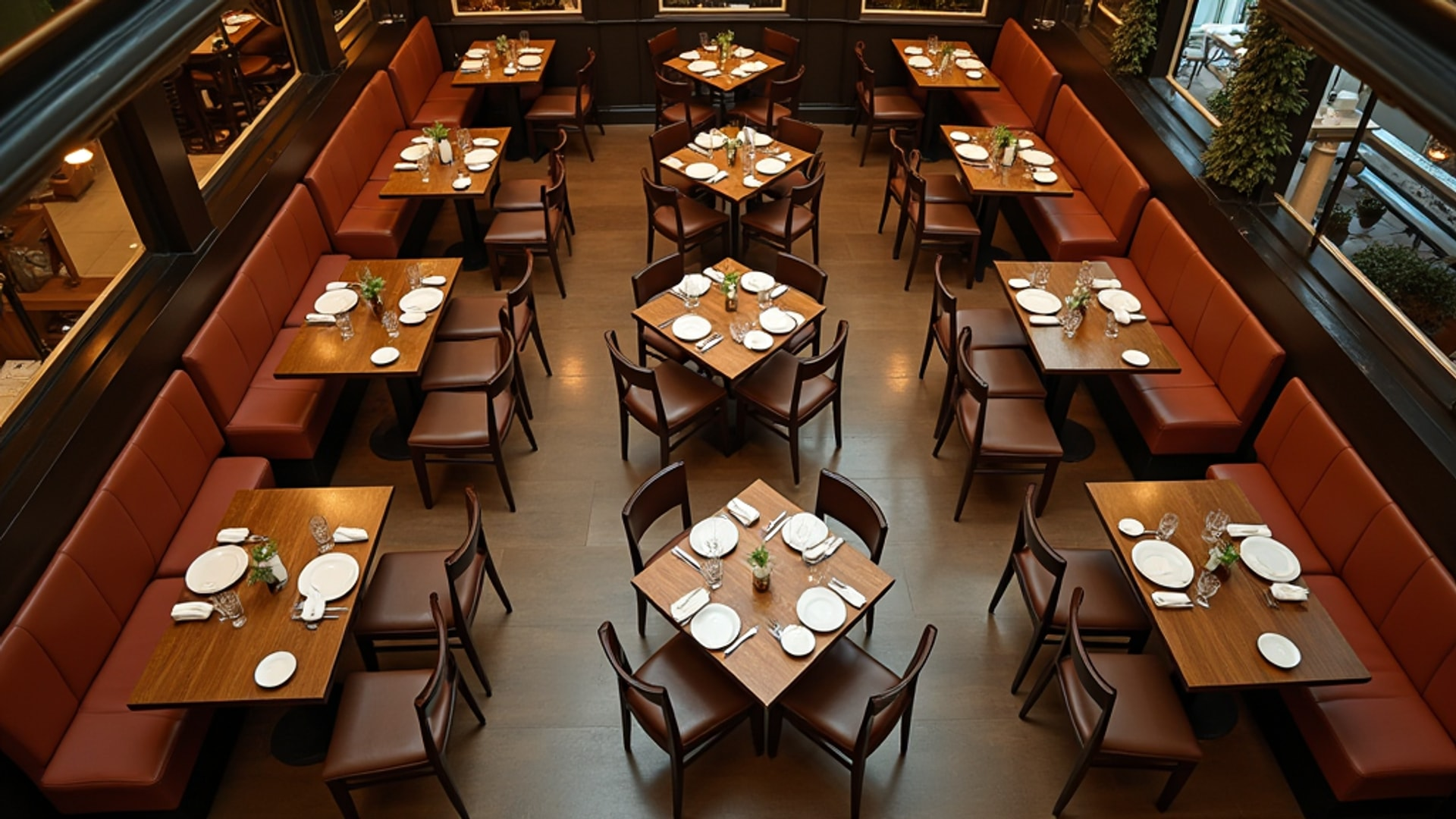
Every restaurant operator faces the booth vs. table decision, and most get it wrong in one of two directions. Some fill every wall with booths because they photograph beautifully and customers request them — then discover that booths cannot flex for varying party sizes and that upholstery maintenance is expensive. Others install only freestanding tables for operational simplicity — then watch competitors with booth seating earn better reviews for intimacy and atmosphere.
The right answer is almost always a mix. But the right mix depends on your concept, your typical party sizes, your revenue model, and your square footage. This article gives you the analysis to make that decision deliberately rather than by default.
What Booths Do Well
Comfort That Encourages Longer Stays
Booth seating offers padded seats, back support, and a three-sided enclosure that creates an intimate dining nook separate from the surrounding room. Standard restaurant chairs, even good ones, cannot match this comfort level for extended dining. According to Restaurant Furniture Plus, booth construction is generally more durable than individual chairs, with fewer moving parts that can break or wear out.
This comfort has a direct commercial implication: guests in booths stay longer. Research consistently shows that customers seated in booths finish meals more slowly and linger after eating compared to table-seated guests. For dinner-focused or experience-driven concepts where average check size matters more than turnover speed, booths encourage the extended stays that lead to additional drink orders, dessert orders, and higher per-person revenue.
Space Efficiency
Counterintuitively, booths are more space-efficient than comparable table arrangements. Because booths share walls with adjacent seating, they eliminate the gap required between chair backs at separate tables. A booth can often seat the same number of guests in 25 to 30 percent less floor space than a freestanding table arrangement, according to Restaurant Furniture Plus.
This is why perimeter booth arrangements are nearly universal in full-service restaurants. Running booths along the walls captures the least-accessible floor area — perimeter zones that would otherwise be used for awkward small tables or wasted as circulatory space — and converts it to high-density, high-comfort seating.
Acoustic Separation
Booth walls absorb sound and create acoustic separation between parties. In a room with hard floors and ceilings — the contemporary restaurant design default — booths are one of the few design elements that actually improve acoustic comfort for individual diners. Guests in a booth feel less exposed to the ambient noise of the room and can hold conversations at normal volume.
This is not a minor benefit. Noise is one of the most common complaints in restaurant reviews. A seating mix that includes a significant proportion of booths naturally manages acoustic comfort without requiring ceiling-mounted acoustic panels or other retrofits.
Family and Group Preference
Restaurant Furniture Plus’s analysis notes that families specifically prefer booths because children can be seated against the wall, reducing the likelihood of running around or disrupting adjacent tables. Groups of four also tend to prefer booths over a four-top table because the enclosed seating creates a more defined shared space.
If your target demographic includes families or groups, booths serve those customers better and generate less operational disruption to adjacent tables.
What Tables Do Better
Flexibility for Varying Party Sizes
Tables made from the right commercial-grade furniture can be rearranged quickly to accommodate different group sizes, pushed together for larger parties, or reconfigured for different service formats. This adaptability is particularly valuable during the variety of situations a restaurant faces across a week: a large birthday party on Saturday, a solo diner at lunch on Tuesday, a team business dinner on Thursday.
Booths are fixed. A four-person booth serves two people inefficiently and cannot be converted for six without a physical renovation. Freestanding tables can be pushed together, separated, or removed entirely to create a private event space. According to the YouTube extract from the interior layout analysis, flexible furniture that can be pushed together or separated can convert two two-tops into a four-top or three two-tops into a six-top without dedicated large tables that sit partially empty during slower periods.
Service Ease
Servers serving guests in booths must reach across or lean over fixed seat backs to deliver and clear plates. Guests on the inside of a booth are physically difficult to access, requiring servers to lean past the outside guest to reach inner guests. This increases service time per table and creates physical strain for servers working a full shift.
Restaurant Furniture Plus’s comparison notes that staff may struggle serving guests on the inner side of booths with limited aisle access. For a high-volume operation where service speed is a competitive priority, this friction is significant.
Accessibility
Tables win decisively on accessibility. Chairs can be moved, removed, or replaced with wheelchair-accessible options to accommodate guests with mobility needs. ADA requirements mandate that at least 5 percent of seating be wheelchair accessible, with tables at the correct height and with clear floor space for wheelchair positioning.
Booths present genuine accessibility challenges. Fixed seat heights may be difficult for elderly guests or those with mobility limitations. The enclosed three-sided structure makes entry and exit more physically demanding. Fixed booth tables cannot accommodate wheelchairs without structural modification. If your concept serves or aspires to serve an older demographic, a design-heavy booth proportion creates exclusivity in a negative sense.
Sanitation and Maintenance
Hard-surface tables and movable chairs are straightforward to clean and maintain. Surface sanitizing between seatings takes seconds. Individual damaged chairs can be replaced without affecting adjacent seating. The initial cost is lower than custom booth fabrication, and replacement is incremental rather than wholesale.
Booth upholstery presents ongoing maintenance challenges. According to Restaurant Furniture Plus, upholstered seating requires regular deep cleaning and stain removal is more difficult with fixed arrangements. Upholstery wear and damage is inevitable, and reupholstering booth seating is expensive — often $500 to $1,500 per booth section for labor and materials. Plan for this in your capital expenditure schedule.
Turnover: The Revenue-Per-Square-Foot Equation
The turnover question is where booth vs. table becomes a strategic financial decision, not just a design preference.
Guests in booths stay longer. For a quick-service lunch operation targeting 45-minute average table times, booths are the enemy of revenue. For a dinner-focused restaurant targeting $80 average check and wanting guests to order a second round of drinks, booths are the asset.
Restaurant Furniture Plus frames this clearly: for high-turnover concepts like casual dining and lunch service, a higher proportion of tables can increase revenue per square foot. For dinner-focused or experience-driven concepts where average check size matters more than turnover speed, booths encourage the extended stays that lead to additional orders.
Run the math for your specific concept. If your lunch service averages 45-minute table times and dinner service averages 90 minutes, and your revenue target requires 3 turns at lunch and 2 turns at dinner, the optimal seating mix may look different for lunch versus dinner — which is an argument for a flexible configuration rather than an all-booth or all-table solution.
Banquettes: The Middle Path
Banquettes offer a design solution that captures booth advantages without all of booth disadvantages. A banquette provides wall-side upholstered seating — the comfort and acoustic benefits of a booth — while pairing with freestanding chairs and movable tables on the open side.
This configuration is more flexible than a booth (the table can be repositioned to accommodate different party sizes) and easier to service (the open side allows normal server access) while maintaining the intimacy and visual appeal of wall-side fixed seating.
According to Restaurant Furniture Plus, banquettes represent a middle ground — providing the wall-side comfort and visual separation of a booth while pairing with movable tables and chairs on the open side, creating a flexible yet defined seating area. For restaurants that want the aesthetic and atmospheric benefits of booth-style seating without committing to fully fixed configurations, banquettes are often the optimal choice.
The Optimal Mix and Placement Strategy
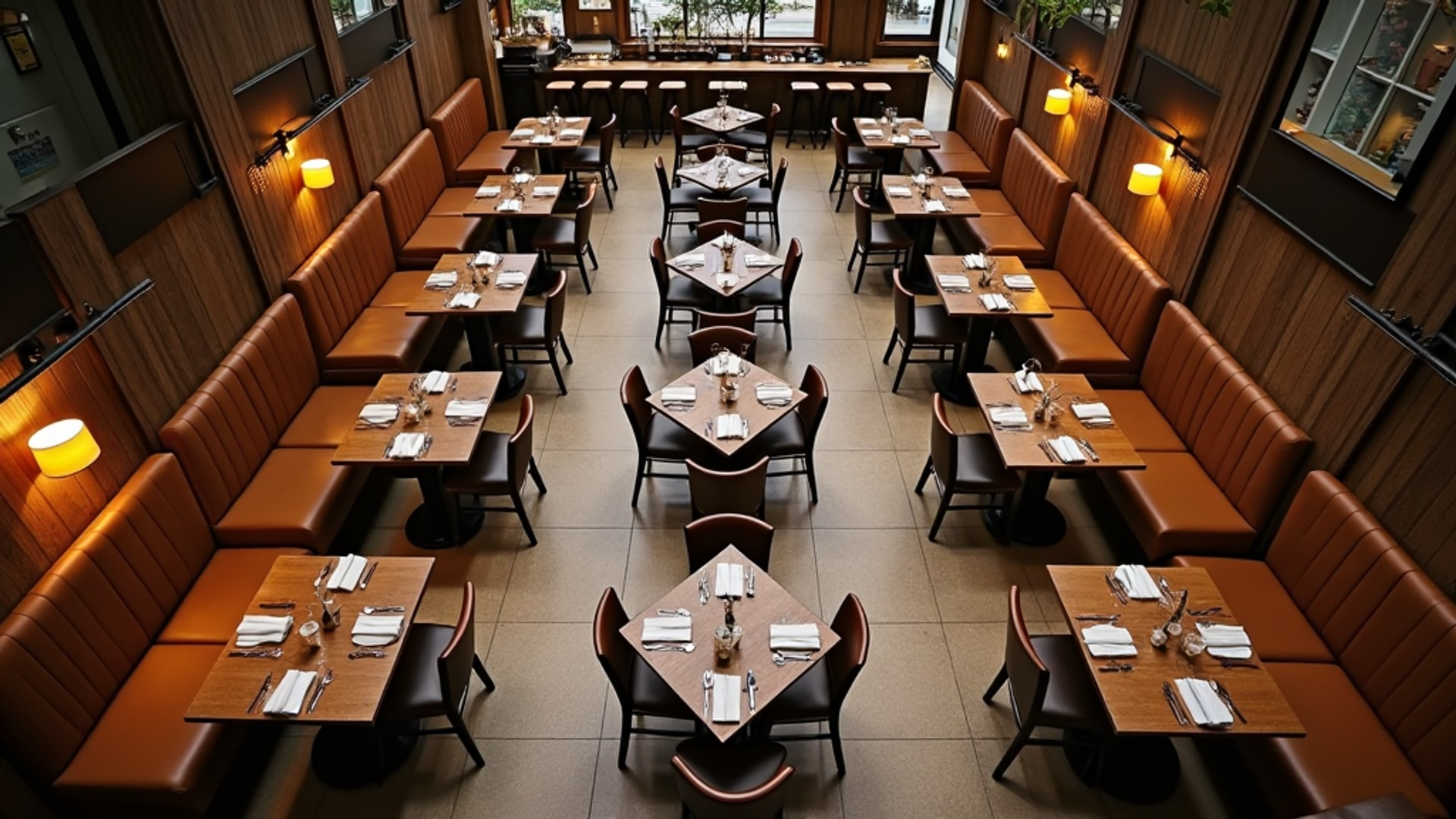
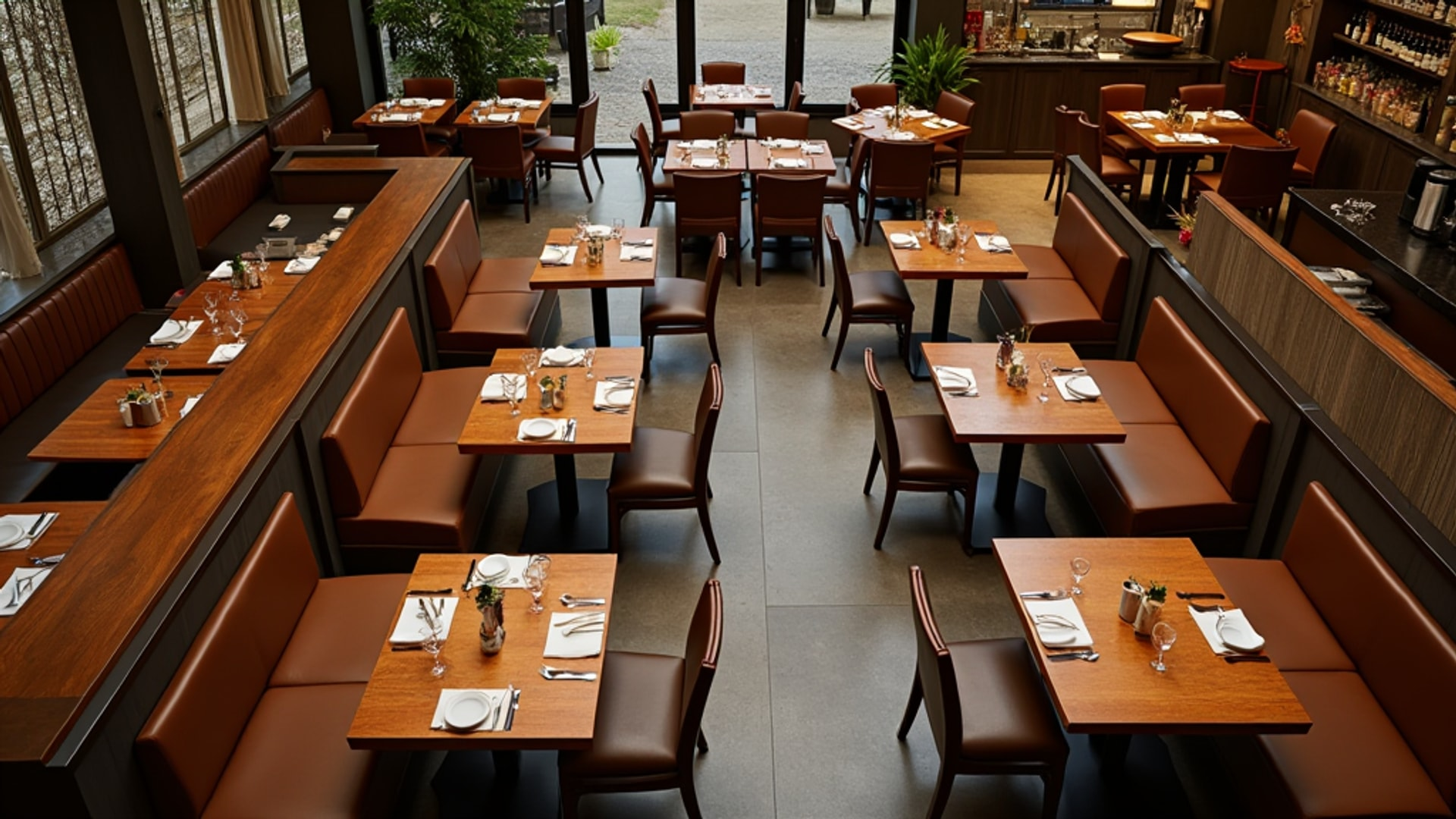
Most restaurant designers recommend a starting ratio of approximately 50 percent booths or banquettes to 50 percent freestanding tables, adjustable based on concept and target market. Restaurant Furniture Plus confirms this general guidance, noting that perimeter booths with central table arrangements maximize flexibility while offering guests a choice.
The placement logic is straightforward: perimeter spaces along walls are naturally suited to booths and banquettes, which require wall support and feel more enclosed in perimeter positions. Central floor space is best used for flexible freestanding tables that can be reconfigured. This configuration also creates a natural privacy gradient — guests who want intimacy self-select to perimeter booths, while guests who prefer visibility and social atmosphere gravitate toward central tables.
For party size optimization, consider these benchmarks from the seating capacity research: the most common party size in US restaurants is two people (50–55 percent of covers), followed by four (25–30 percent), and then three or larger groups. A two-top table or two-person booth is the highest-frequency seating unit; four-tops are the most flexible for varying party sizes. Design the majority of your seating around these two configurations and add a smaller number of six-tops and communal tables for larger groups.
What to Ask Before You Decide
Before finalizing your booth-to-table ratio, answer these questions:
What is the typical party size for your target customer? If you primarily serve couples, a high proportion of two-person booths makes sense. If you primarily serve office groups and families, four-top flexibility matters more.
What is your average ticket target and how does dwell time affect revenue? If you need table turns to hit revenue targets, booths may work against you at lunch. If you need spend-per-guest, booths work for you at dinner.
What is your accessibility responsibility? If your concept serves or markets to older adults or families with mobility needs, limit booth proportion accordingly.
What are your long-term maintenance cost expectations? Budget for booth reupholstering every three to five years of heavy use. If that cost is not in your capital plan, freestanding tables are the more predictable choice.
The right mix of booth and table seating is not a single universal answer — it is the answer that fits your specific concept, customer, and financial model. Make the decision deliberately, with these variables in mind, and you will create a floor plan that serves both your guests and your P&L.
→ Read more: Small Restaurant Space Design
→ Read more: Private Dining Room Design