· Design & Ambiance · 9 min read
Restaurant Flooring: Materials, Costs, and Maintenance Compared
The wrong flooring choice in a commercial kitchen or dining room costs you in slip accidents, maintenance hours, and replacement cycles — here is what each material actually delivers.
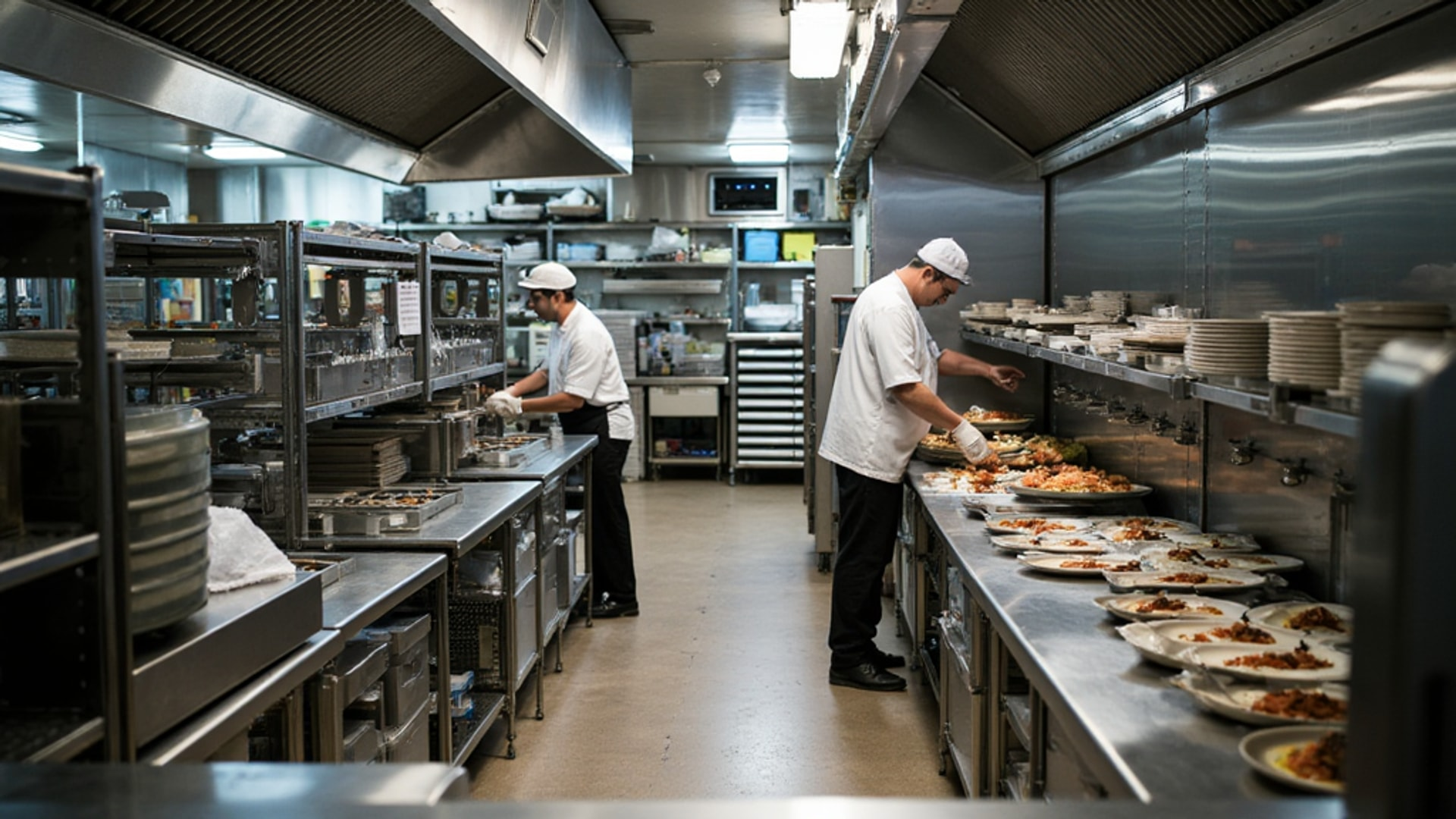
Flooring is the most abused surface in a restaurant. It absorbs spills, tolerates dropped cookware, gets mopped with commercial cleaners multiple times daily, and carries the full weight of every staff member and guest who walks through the door. It also has to comply with health department requirements, pass fire and building code inspections, and, in the dining room, look attractive enough that guests do not notice it.
Getting it wrong is expensive in ways that compound. Flooring that does not meet slip-resistance standards creates liability exposure and injury risk. Flooring that cannot handle commercial cleaning chemicals degrades quickly and must be replaced prematurely. Flooring that looks beautiful in a residential showroom may be completely wrong for the demands of a commercial kitchen.
Restaurant flooring selection requires matching materials to the specific demands of each zone. Scher Flooring Services’ commercial flooring guide breaks these zones down by their distinct challenges: moisture exposure, foot traffic intensity, spill frequency, and aesthetic requirements.
The Two-Zone Framework
Every restaurant has at least two fundamentally different flooring environments that require different solutions:
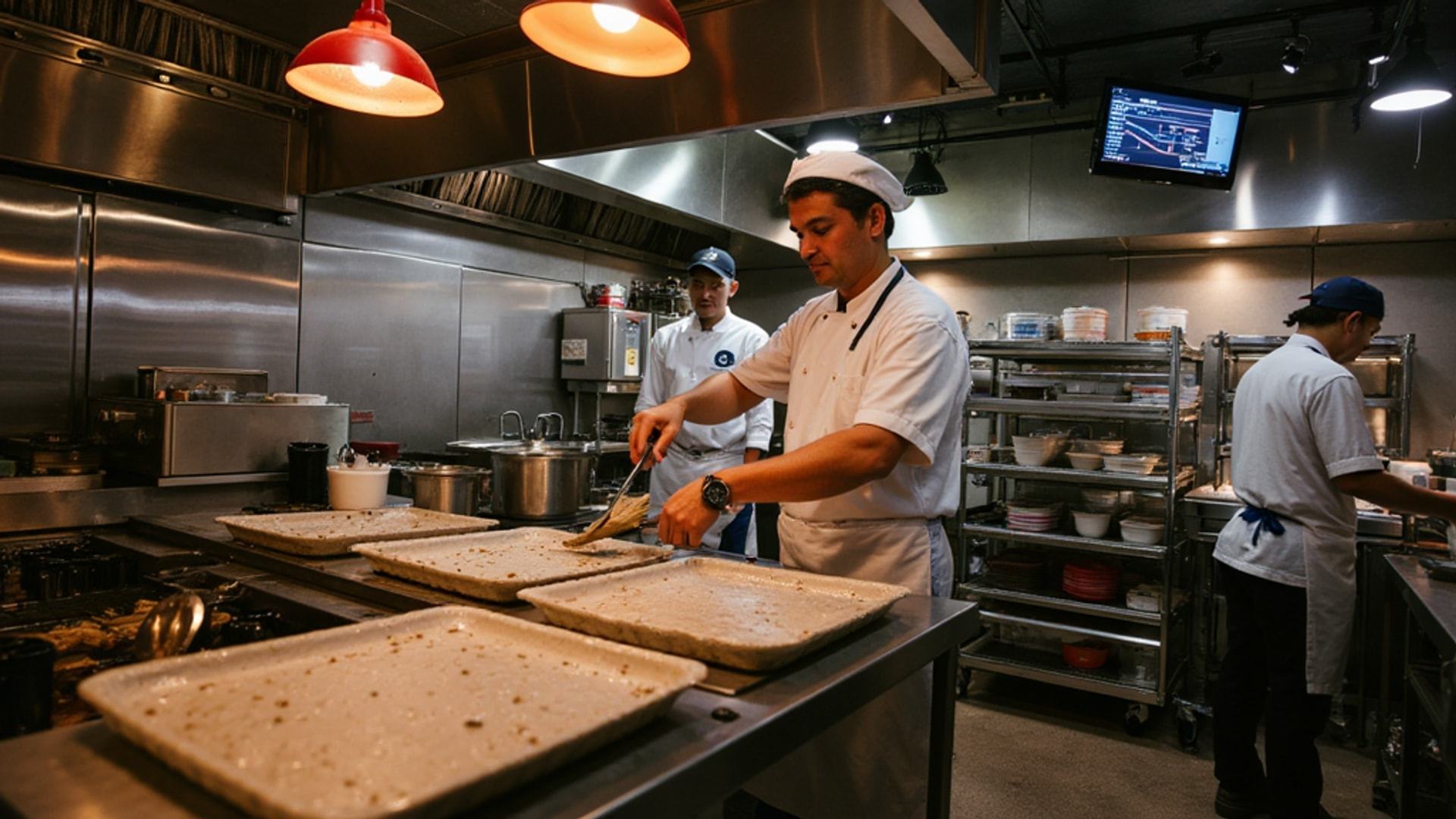
Back of house (kitchen, prep areas, receiving, dishwashing, storage) requires maximum performance: slip resistance, water resistance, chemical resistance, heat tolerance, ease of cleaning, and compliance with health department standards. Aesthetics are secondary to function.
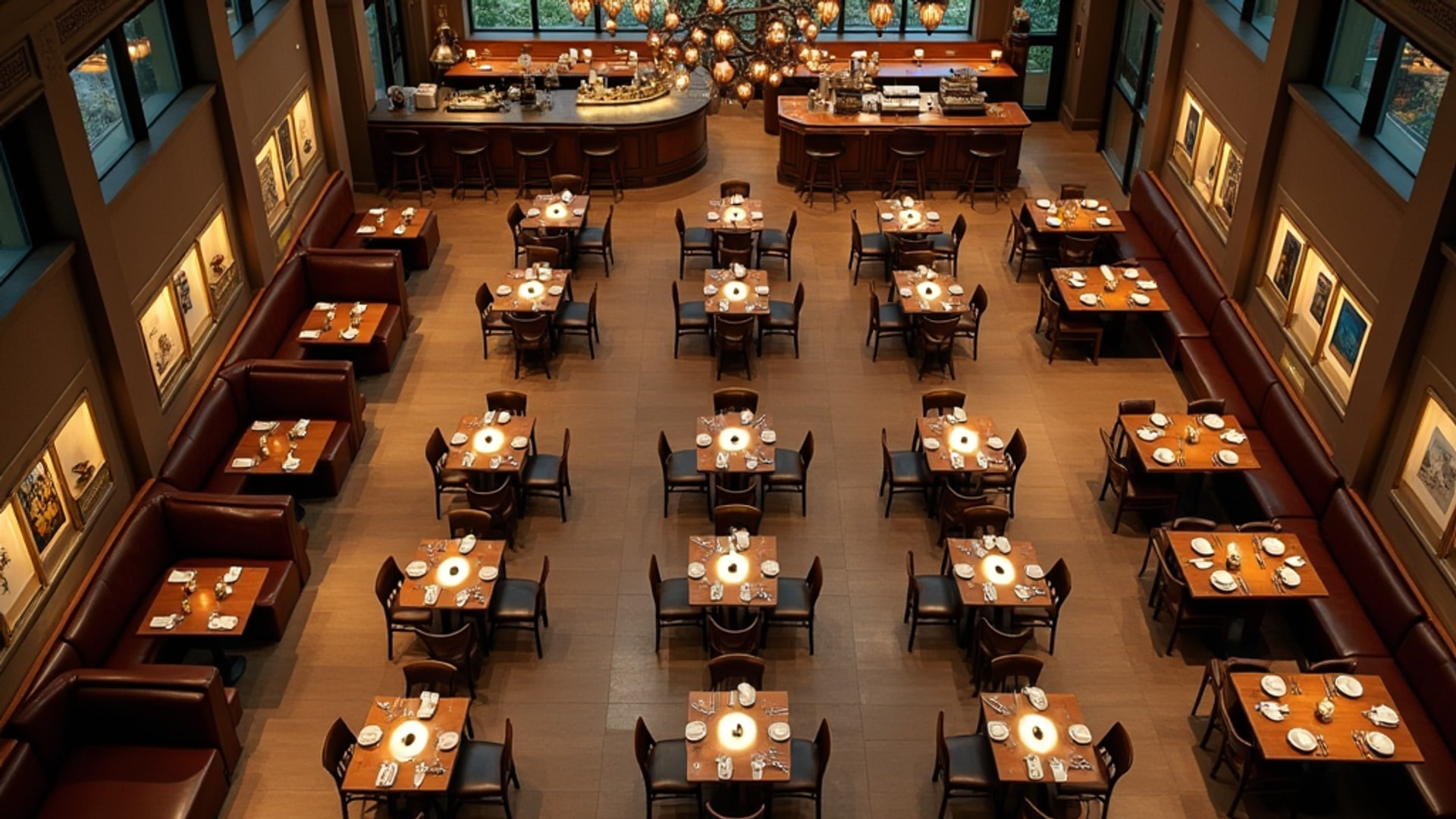
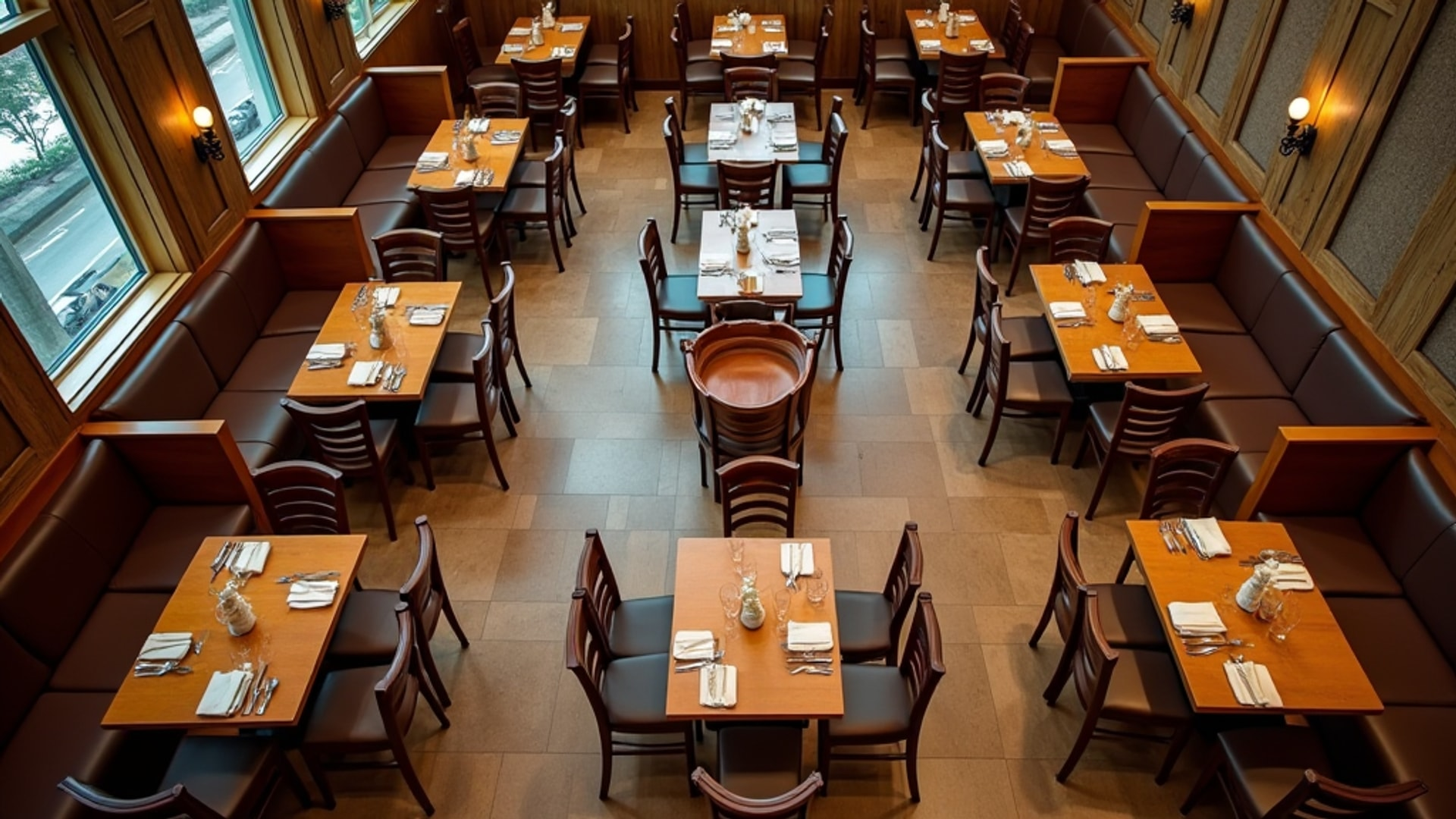
Front of house (dining room, bar, entry, restrooms) must balance commercial durability with design aspirations. The material must handle heavy foot traffic, resist spills, and survive commercial cleaning while contributing to the atmosphere the concept is trying to create.
These two environments have almost no overlap in their requirements, which is why they are typically solved with different materials.
Kitchen Flooring: Function Comes First
Commercial kitchen flooring demands the highest performance standards. Five materials dominate the category.
Quarry Tile
Made from natural clay and shale fired at high temperatures, quarry tile has been the kitchen flooring standard for decades. WebstaurantStore’s commercial kitchen flooring guide confirms what most operators already know: it is affordable, slip-resistant, durable, and stain-resistant. The natural firing process produces a surface that withstands heavy foot traffic, high temperatures, and the thermal shock of hot liquids being dropped or spilled on a cold surface.
Quarry tile’s natural texture provides inherent slip resistance without requiring additional treatments. It handles the chemical environment of a commercial kitchen (degreasers, sanitizers, and acidic cleaners that would degrade many other surfaces) without deteriorating.
The maintenance requirement is straightforward: daily sweeping or vacuuming and cleaning with a neutral cleaner and hot water. The grout lines, which are the vulnerability in any tile installation, should be sealed and will require periodic regrouting as part of long-term maintenance.
Best suited for: High-traffic kitchens, pizzerias, bars, and prep areas where moisture and heat exposure are frequent.
Epoxy Flooring
Resin-based material poured and cured on-site creates a seamless finish that is the most hygienically demanding option available. Epoxy offers excellent chemical resistance, water resistance, and fire resistance, with a seamless monolithic surface that eliminates grout lines where bacteria can accumulate.
The seamless surface is the key advantage for food safety compliance. Health departments in many jurisdictions prefer or require seamless flooring in food preparation areas because grout lines and seams trap food debris and bacteria that cannot be fully cleaned. Epoxy eliminates this problem entirely.
The critical design consideration is that the water-tight surface becomes slippery when wet, requiring specified non-slip coatings or aggregate additives mixed into the top coat. Epoxy without slip-resistance treatment in a wet kitchen environment creates serious fall hazard liability.
Best suited for: Industrial kitchens, food processing facilities, breweries, and operations with frequent wet conditions and strict hygiene requirements.
Rubber Flooring
Natural or synthetic rubber provides a cushioned surface that reduces fatigue for kitchen staff who stand for extended hours while offering shock absorption and slip resistance. The cushioning effect is meaningfully different from tile or concrete: kitchen staff working 10-hour shifts on rubber flooring report significantly lower foot and back fatigue than on hard surfaces.
The vulnerability of rubber is its reaction to oils and fats. Rubber can become slippery and degrade where oils and fats frequently spill. In a kitchen environment where animal fats, cooking oil, and grease are present in significant quantities, rubber flooring in zones adjacent to fryers or heavy cooking equipment can deteriorate and become hazardous.
Best suited for: Equipment-heavy kitchens where staff fatigue is a concern, bars, and coffee shops where oil exposure is limited.
Concrete
Concrete offers exceptional durability for heavy equipment and a seamless design that facilitates cleaning. It resists heat and moisture and can be customized with stains or polishing. In large commercial kitchens where equipment loads are high and longevity is the priority, poured concrete is a strong choice.
The main disadvantage is hardness: prolonged standing on concrete is taxing on feet and joints, requiring anti-fatigue mats for staff comfort. Sealed or polished concrete also requires periodic resealant application to maintain its moisture and chemical resistance.
Best suited for: Large, high-volume kitchens and receiving areas with heavy equipment.
Ceramic Tile
Ceramic tile consists of clay and natural materials available in numerous colors and designs. It resists heat, moisture, and staining while offering more aesthetic versatility than quarry tile. Its greater variety of colors and patterns makes it a transition option between back-of-house functionality and front-of-house aesthetics.
The vulnerability is impact resistance: ceramic tile is less durable than quarry tile and can crack or chip when heavy objects are dropped. In an active kitchen where pots, pans, and heavy equipment are moved regularly, this is a real risk.
Best suited for: Restrooms, prep areas, dining zones, and entryways where aesthetics matter more and heavy impact is less frequent.
Dining Room Flooring: Balancing Durability with Design
Front-of-house flooring must balance commercial durability with design aspirations. The materials in active use today span a wide range of performance and aesthetic profiles.
Luxury Vinyl Tile (LVT) and Sheet Vinyl
Modern vinyl formulations have dramatically advanced from the commercial vinyl of earlier decades. Current LVT can replicate the appearance of wood, stone, or ceramic tile convincingly while providing water resistance, cushioned comfort underfoot, and customizable slip-resistance treatments.
The non-porous surface inhibits bacterial growth and is easy to clean with standard commercial products. Sheet vinyl provides a fully seamless surface for superior cleanliness. For fast-casual, bakeries, and cafeterias, operations where fast cleaning between services is important, vinyl represents a cost-effective option with relatively easy installation.
The limitation of vinyl in a design-conscious environment is that it can read as what it is: a material imitating something else. In a concept positioning itself at the top of its segment, LVT may not carry the materiality that stone or hardwood provides. Honestly, for most casual and fast-casual operators, that trade-off is worth it.
Best suited for: Fast-food restaurants, bakeries, cafeterias, high-traffic casual concepts, and any application where budget, easy maintenance, and water resistance are primary requirements.
Polished or Sealed Concrete
Polished concrete resists slips, stains, dust, impact, moisture, chemicals, and UV light. As a design material, it aligns with industrial and contemporary restaurant concepts where the raw honesty of the material is part of the aesthetic. It requires minimal maintenance (periodic resealing and regular damp mopping) and handles commercial cleaning products without degrading.
The acoustic limitation of concrete is significant: it reflects sound just as effectively as it handles physical abuse. A dining room with concrete floors, high ceilings, and no soft furnishings will be very loud. If concrete is the floor material, acoustic treatment elsewhere in the space becomes more important.
Best suited for: Industrial aesthetic concepts, open-plan contemporary restaurants, and any design where the material appearance of concrete supports the concept.
Hardwood
Hardwood dining room floors communicate warmth, heritage, and quality in ways that no synthetic material fully replicates. The challenge for restaurant applications is that hardwood is sensitive to moisture, heavy traffic, and the frequency of commercial cleaning. Commercial-grade hardwood flooring for restaurants requires:
- Species selection for hardness (oak, maple, and hickory are harder and more durable than softer species)
- Commercial-grade surface coatings that protect against moisture and wear
- Proper installation with commercial sub-floor preparation
- Refinishing capability to extend service life when the surface shows wear
Hardwood also needs acoustic consideration. It reflects sound and contributes to the cumulative noise problem in hard-surfaced dining rooms.
→ Read more: Restaurant Acoustics and Noise Control
Ceramic and Porcelain Tile
Ceramic and porcelain tiles offer virtually unlimited design options through patterns, colors, and textures. Porcelain, which is denser and less porous than ceramic, is more water-resistant and more durable in high-traffic applications. For dining rooms, tile patterns can create dramatic visual effects (geometric patterns, custom inlays, period-appropriate designs) that contribute directly to the concept’s atmosphere.
The trade-offs are acoustic (tile reflects sound), comfort (hard surface), and maintenance of grout lines.
The Transition Between Zones
The transition between different flooring zones must be carefully detailed with flush transition strips to prevent tripping hazards and maintain ADA compliance. A height difference between flooring materials at a transition point that seems minor in construction can create a genuine fall risk during service.
Flush transitions also look more professional than raised thresholds, which read as construction afterthoughts. Specify transition strips during the design phase, not as a field decision during installation.
Health Department Requirements
All restaurant flooring must satisfy local health department requirements for cleanability and sanitation. This affects material selection in food preparation and service areas specifically. Requirements typically address:
- Smooth, non-absorbent surfaces in food contact areas
- Coving at floor-wall junctions to eliminate the 90-degree seam where debris and moisture collect
- Materials that can withstand commercial cleaning agents
- Slip resistance coefficients in wet areas
Checking local health department requirements before finalizing flooring specifications in kitchen and prep areas avoids costly retrofits after inspection.
The Maintenance Reality
Every flooring material requires different maintenance protocols, and the actual cost of ownership includes maintenance labor and materials, not just installation. A flooring material that is inexpensive to install but requires daily special treatment may cost more over a five-year period than a higher-cost material with simple mop-and-clean maintenance. Get the maintenance protocol from your supplier before specifying, and ensure that the daily operations team has access to the correct products.
→ Read more: Sustainable Restaurant Design
→ Read more: Restaurant Design Mistakes