· Design & Ambiance · 10 min read
Restaurant Kitchen Layout Types: Configurations, Trade-offs, and Selection Guide
The kitchen layout you choose sets the efficiency ceiling for every service that follows — understand the four main configurations before you design.
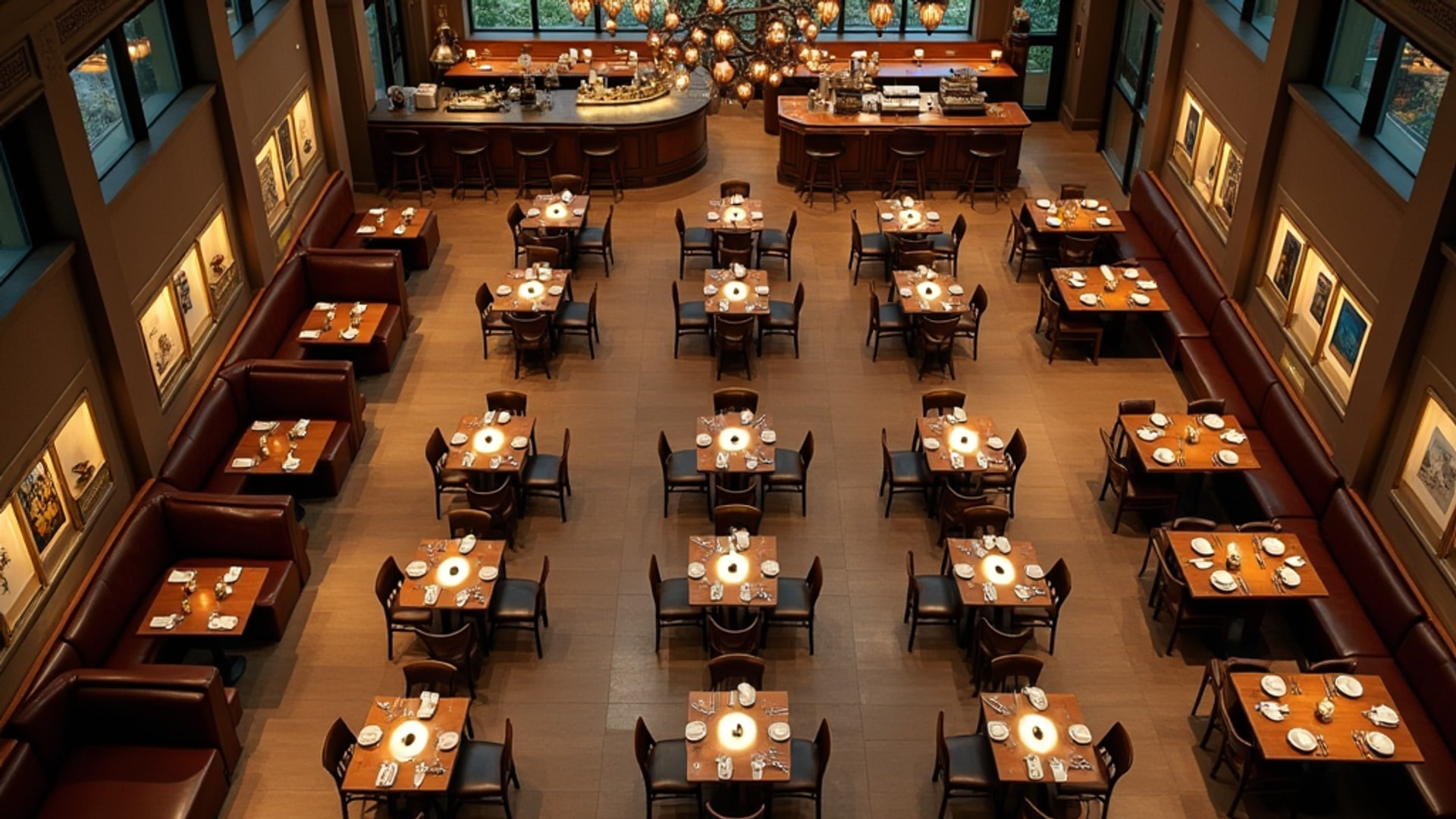
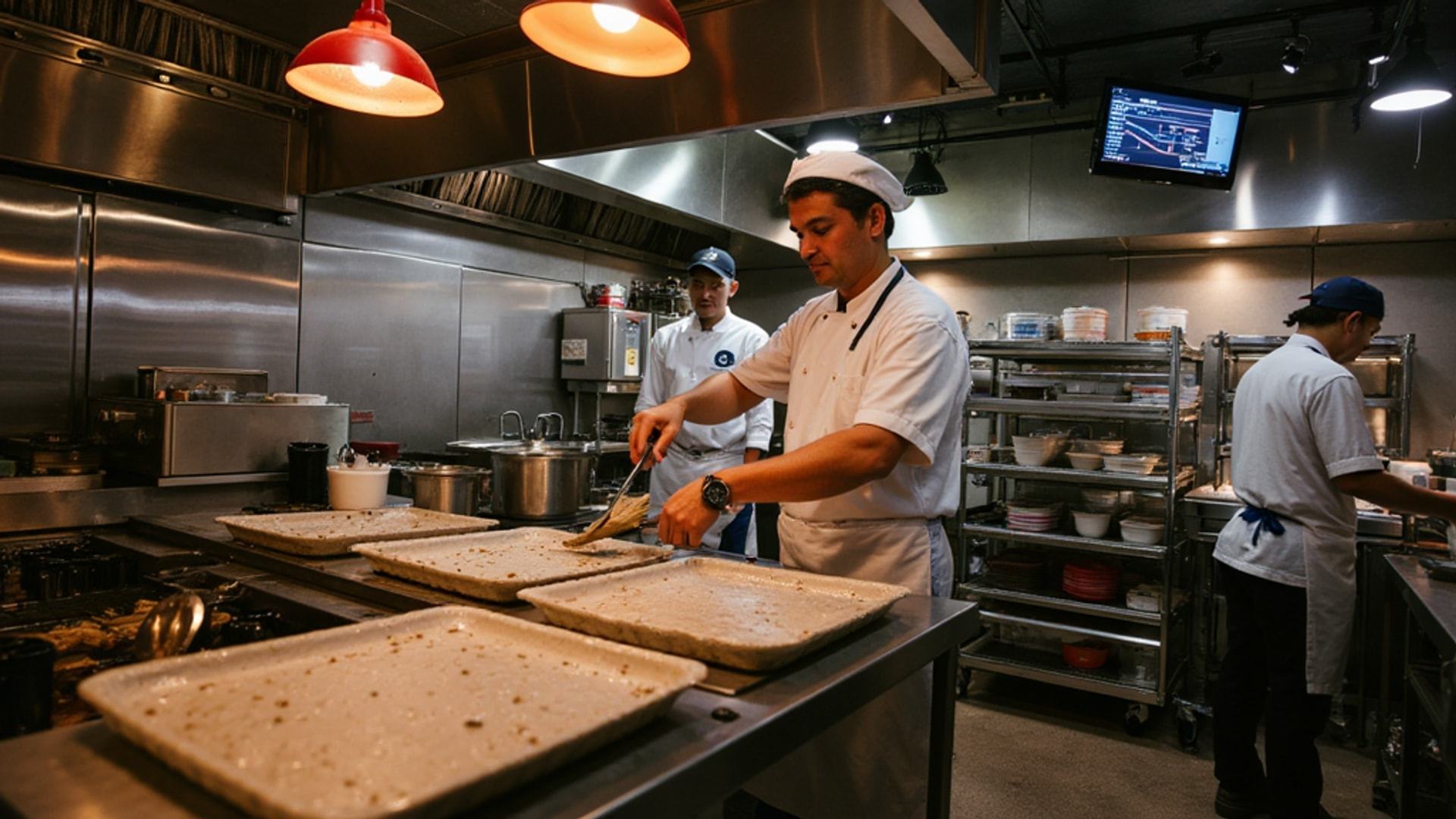
The kitchen layout is the most consequential design decision in a restaurant. It determines how fast food moves from prep to plate, how many tickets the line can handle simultaneously, how much cross-traffic and contamination risk exists, and how hard your team has to work to execute your menu. A well-designed kitchen makes talented cooks faster and reduces accidents. A poorly designed kitchen makes talented cooks slower and creates safety hazards.
According to WebstaurantStore, a well-planned kitchen can increase efficiency by up to 30 percent, improving service speed and reducing labor costs. That is not a marginal improvement — it is the difference between a kitchen that can turn 200 covers and one that can turn 260.
The Universal Workflow Principle
Before selecting a layout type, understand the principle that underpins all commercial kitchen design: materials and personnel should move through the space in a single, logical sequence without backtracking or unnecessary cross-traffic.
The sequence is always: receiving → storage → preparation → cooking → service → cleaning. In an ideal kitchen, raw materials enter at one end and finished plates exit at the other, with each step adjacent to the next. Cross-traffic — where the path of one person or material crosses the path of another — creates collision risk, contamination risk, and wasted motion.
No kitchen layout in a real restaurant achieves the perfectly linear flow of this ideal. Space constraints, building shape, and menu complexity all create compromises. The goal is to get as close to this ideal as the physical space allows, and to choose the layout type that best fits the specific constraints and requirements of the concept.
The Four Main Layout Types
1. The Galley Layout
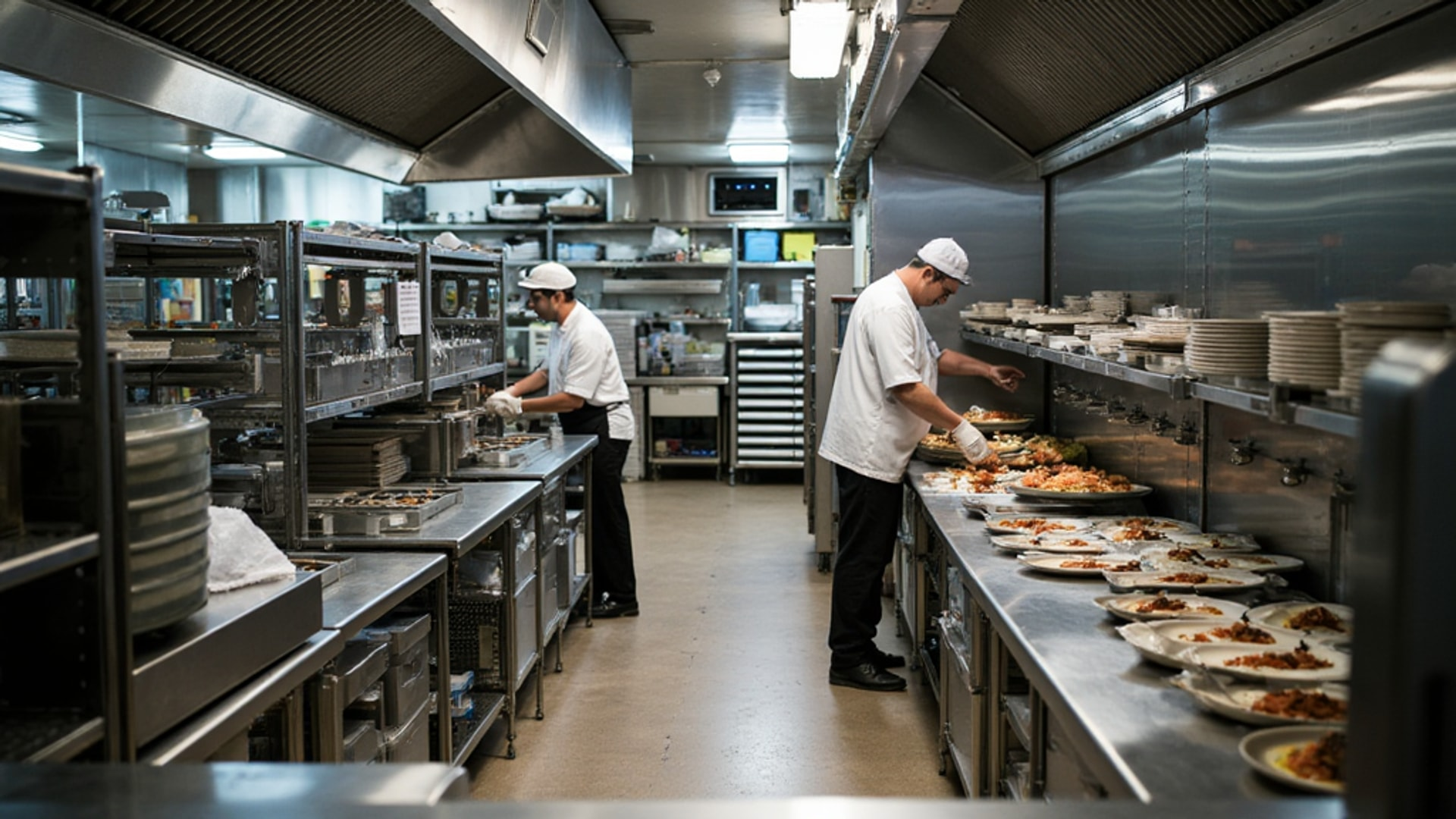
The galley layout arranges equipment along two parallel walls with a central aisle. It is the most common configuration for small to medium commercial kitchens and the most efficient use of a narrow, rectangular kitchen footprint.
The cook line occupies one wall — typically the wall adjacent to the dining room or expo station, usually with an exhaust hood running the full length. Storage, prep areas, and support equipment occupy the opposite wall. The central aisle, typically 36 to 48 inches wide, provides the single circulation path for all staff movement.
Advantages: Maximum equipment density in a limited footprint. The head chef at the middle of the line has sightlines to the full cook line. Equipment placement along walls maximizes the exhaust hood coverage area.
Limitations: The single central aisle creates bottlenecks when the kitchen is fully staffed. When multiple cooks need to access equipment on both sides of the aisle simultaneously, movement conflicts slow production. The layout works best when the team is small — typically one to three cooks — and breaks down under high staffing levels in very small spaces.
Best for: Small neighborhood restaurants, cafes, fast-casual operations, and any concept where the kitchen footprint is inherently constrained by the building.
2. The Island Layout
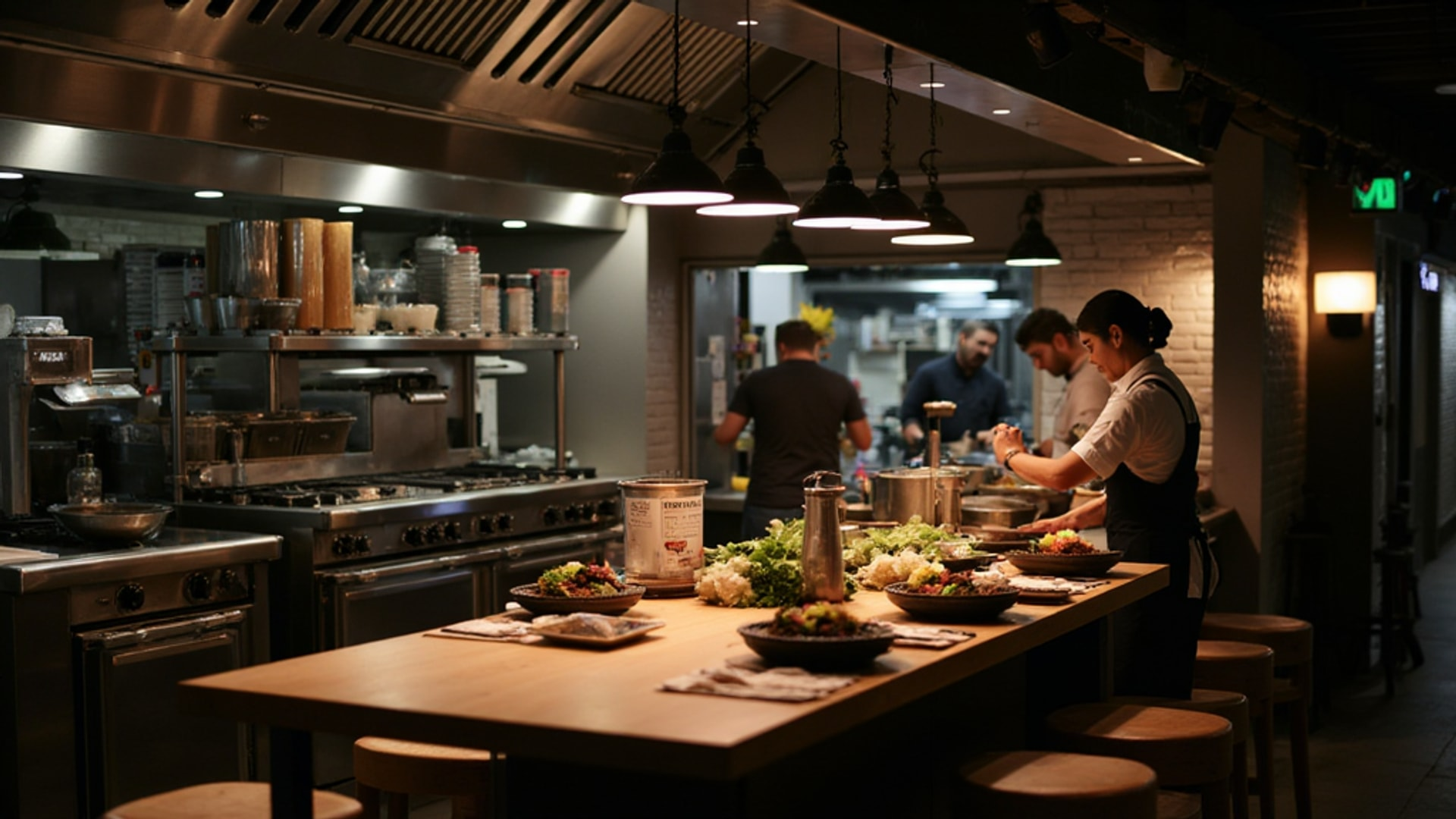
The island layout places the primary cooking equipment — ranges, grills, fryers, and broilers — in a central island, with preparation counters, storage, refrigeration, and plating stations arranged along the perimeter walls.
This configuration creates a natural supervision position. The head chef standing at the central island can observe all perimeter stations simultaneously — the prep station, the plating area, the pass window. This is why island kitchens are common in chef-driven, quality-focused restaurants where the chef’s oversight of every plate is a production value.
The island also improves team communication. In a galley kitchen, cooks at opposite walls may have their backs to each other. In an island kitchen, most stations face the central island, creating a more naturally communicative working environment.
Advantages: Superior sightlines and supervision. Clear distinction between cooking and prep zones. Natural communication hub at the central island. Works efficiently with larger kitchen teams.
Limitations: Requires more total square footage than a galley layout for the same number of covers. The central island creates the hood sizing challenge — a hood large enough to cover an island perimeter is a significant structural and mechanical investment.
Best for: Full-service restaurants with larger kitchens, chef-driven concepts where quality oversight is central to the operation, hotels and institutional kitchens with higher volume and larger teams.
→ Read more: Kitchen-to-Dining Room Ratio
3. The Assembly Line Layout
The assembly line layout arranges equipment in a linear sequence that mirrors the production process for the menu. Ingredients move from left to right (or right to left, depending on the build sequence) through dedicated stations, with each station performing one step before passing the item to the next.
This is the layout of fast-food and fast-casual kitchens, made famous by the Chipotle model: protein station, rice station, bean station, topping station, wrap and press. Every item follows the same path through the line, with each person performing the same task repeatedly at high speed.
The assembly line trades flexibility for speed and consistency. A kitchen configured for assembly line production can execute a standardized menu faster than any other configuration, with the highest repeatability and lowest error rate. But it cannot easily accommodate menu complexity — a diverse menu with items requiring different cooking methods and different build sequences does not fit the assembly line model.
Advantages: Maximum throughput for standardized menus. Easy to train new staff — each position is defined by a narrow set of tasks. Consistent output because each item follows the identical path through production. Quality checkpoints are easy to implement at defined stations.
Limitations: Inflexible for diverse menus. The physical sequence is fixed — changing the menu requires changing the kitchen layout. Cross-contamination risk if the sequence is not designed carefully.
Best for: QSR, fast-casual, and any high-volume concept built around a standardized menu with limited variation. Sandwich shops, pizza operations, bowl concepts, and taco bars are natural fits.
→ Read more: Kitchen Workflow Efficiency
4. The Zone Layout
The zone layout groups related functions into dedicated work zones — a hot zone with ranges and fryers, a cold zone with refrigerated prep surfaces and cold storage, a prep zone for butchery and vegetable work, a baking zone with ovens and pastry equipment, a plating zone, and a cleaning zone.
Unlike the assembly line, the zone layout does not assume a single production path. Instead, it organizes equipment by function and allows multiple products to be prepared simultaneously through different zones, converging at the plating station for final assembly.
Zone layouts work best for restaurants with diverse, complex menus that require multiple cooking methods simultaneously — a full-service restaurant with a menu that spans raw preparations, grilled proteins, braised items, pasta, and pastry, all running in parallel during service.
Advantages: Handles menu complexity and diverse cooking methods better than any other layout. Each zone is self-contained with the equipment, storage, and prep space its cooking method requires. Reduces cross-contamination risk by separating raw and cooked food handling.
Limitations: Requires more total space than assembly line or galley layouts for the same output. More complex to orchestrate — the head chef or expediter must track output from multiple zones and integrate them at plating. Training new staff takes longer because each position is more complex.
Best for: Full-service restaurants with diverse menus, fine dining kitchens, hotel restaurants with multiple service outlets, and any operation where menu variety is a competitive differentiator.
Universal Principles That Apply to All Layouts
Regardless of which layout type you choose, several design principles apply universally.
Preparation and cooking adjacency. Prep areas should be physically adjacent to cooking stations. Every step an ingredient travels from the cutting board to the pan is wasted motion and a contamination opportunity. In WebstaurantStore’s analysis of kitchen efficiency, preparation areas located close to cooking areas are identified as a baseline requirement for any efficient kitchen design.
Cross-traffic minimization. Identify every path that staff, ingredients, and dishes travel during service. Map these paths on the floor plan. Where they cross, you have a collision risk. Redesign to eliminate crossing paths where possible, and establish right-of-way rules where crossing is unavoidable.
No backtracking. If executing a standard ticket requires a cook to walk from the grill to the walk-in and back multiple times, that is not a training problem — it is a layout problem. The storage locations for ingredients should be on the path from receiving to prep to cooking, not across the kitchen from where they are used.
Adequate aisle widths. WebstaurantStore and the YouTube extract on interior layout both document the standard: kitchen aisles that carry two-way traffic need a minimum of 44 to 48 inches. Single-direction service paths can function at 36 inches. These minimums are not generous — they are the minimum required for two people to pass each other without contact.
Dishwashing isolation. The dishwashing area must receive dirty dishes from the dining room without those dishes crossing through the preparation or cooking areas. Proper storage design supports this separation. Contamination of food-production surfaces with soiled serviceware is a health code violation and a food safety risk. Route the dirty dish return path along the perimeter, not through the kitchen.
The Open Kitchen Consideration
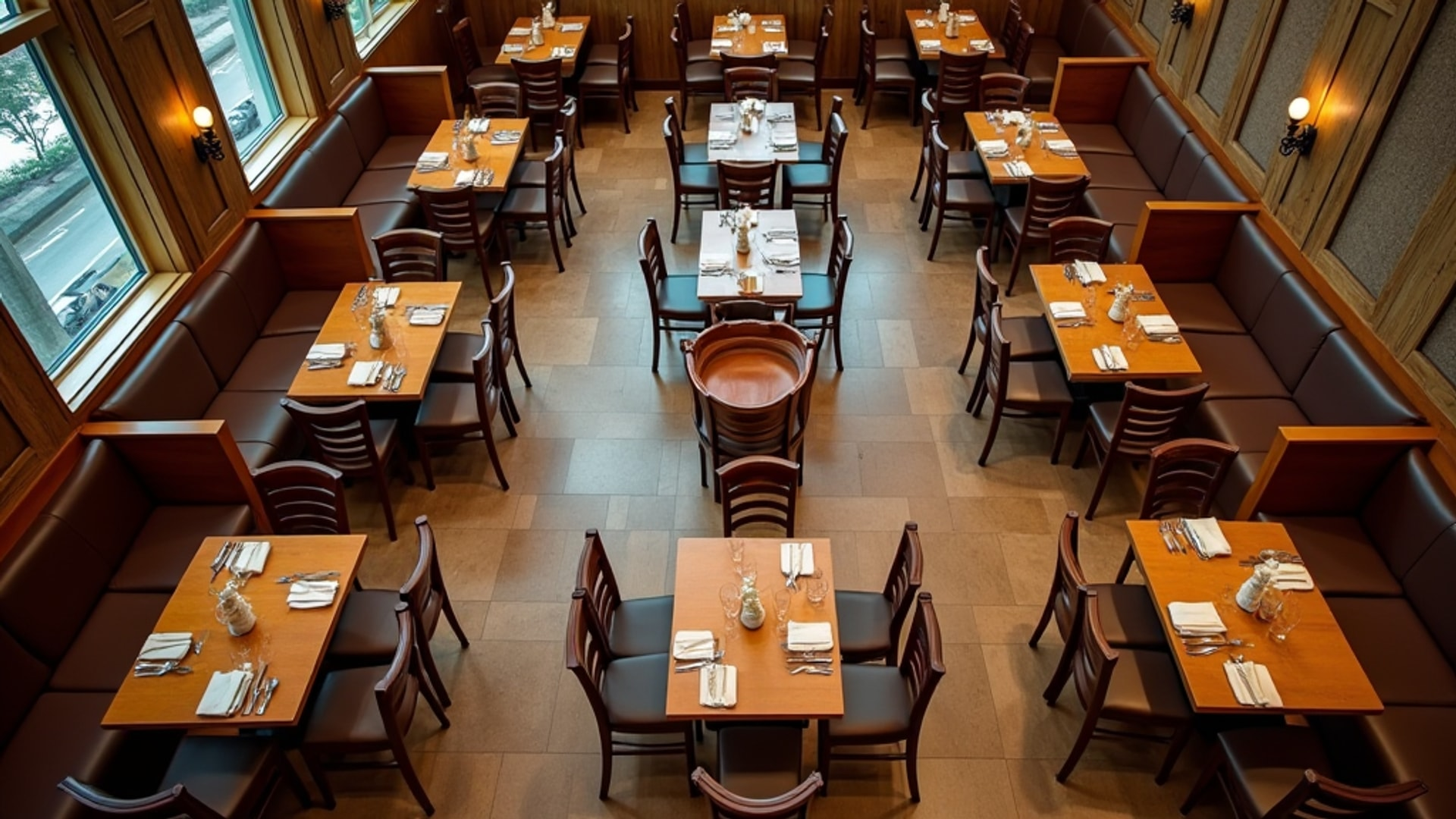
The open kitchen concept — where the dining room has full or partial sightlines into the kitchen — adds a design constraint to all four layout types: the kitchen must look organized and professional at all times. According to GoFoodservice, open kitchens can increase customer satisfaction by nearly 20 percent when well designed, and they build trust through transparency. But they also require higher housekeeping standards, more careful equipment placement for visual appeal, and noise and ventilation management to prevent kitchen sounds and odors from overwhelming the dining room.
If you are considering an open kitchen, the island layout is the most naturally suited — it puts the cooking action on display at the center, with the head chef visible and engaged. The galley layout can also work with a pass window that creates selective visibility. The assembly line is visually compelling in fast-casual formats (Chipotle’s original insight). The zone layout is the most challenging to make visually coherent as an open kitchen.
Combining Layout Types
Many real-world restaurant kitchens combine elements of multiple layout types. A full-service kitchen might use a galley-style hot line, an island prep area, and a dedicated zone for pastry and cold preparations. The principle governing the combination is the same as for any single layout: minimize backtracking, minimize cross-traffic, and ensure adjacency between preparation and cooking for every station.
Getting the Design Right
Kitchen layout design should be done by a foodservice equipment consultant or a designer with commercial kitchen experience, working directly with the chef who will operate the kitchen. The chef understands the menu, the team structure, and the production requirements. The designer understands code compliance, equipment specifications, and spatial optimization. Neither can do this work effectively without the other.
The investment in professional kitchen design is always recovered in operational efficiency. A poorly laid out kitchen that costs five hours of extra labor per week at an average cook wage of $20/hour costs $5,200 per year in avoidable labor expense. Over a five-year lease, that is $26,000 — likely more than the cost of proper kitchen design in the first place.
→ Read more: Restaurant Equipment Checklist
→ Read more: Restaurant HVAC System Design