· Design & Ambiance · 7 min read
Open Kitchen Design: How to Make Transparency Work for Your Restaurant
A practical guide to designing an open kitchen that builds guest trust, delivers entertainment value, and avoids the noise, heat, and odor problems that sink poorly planned open concepts.
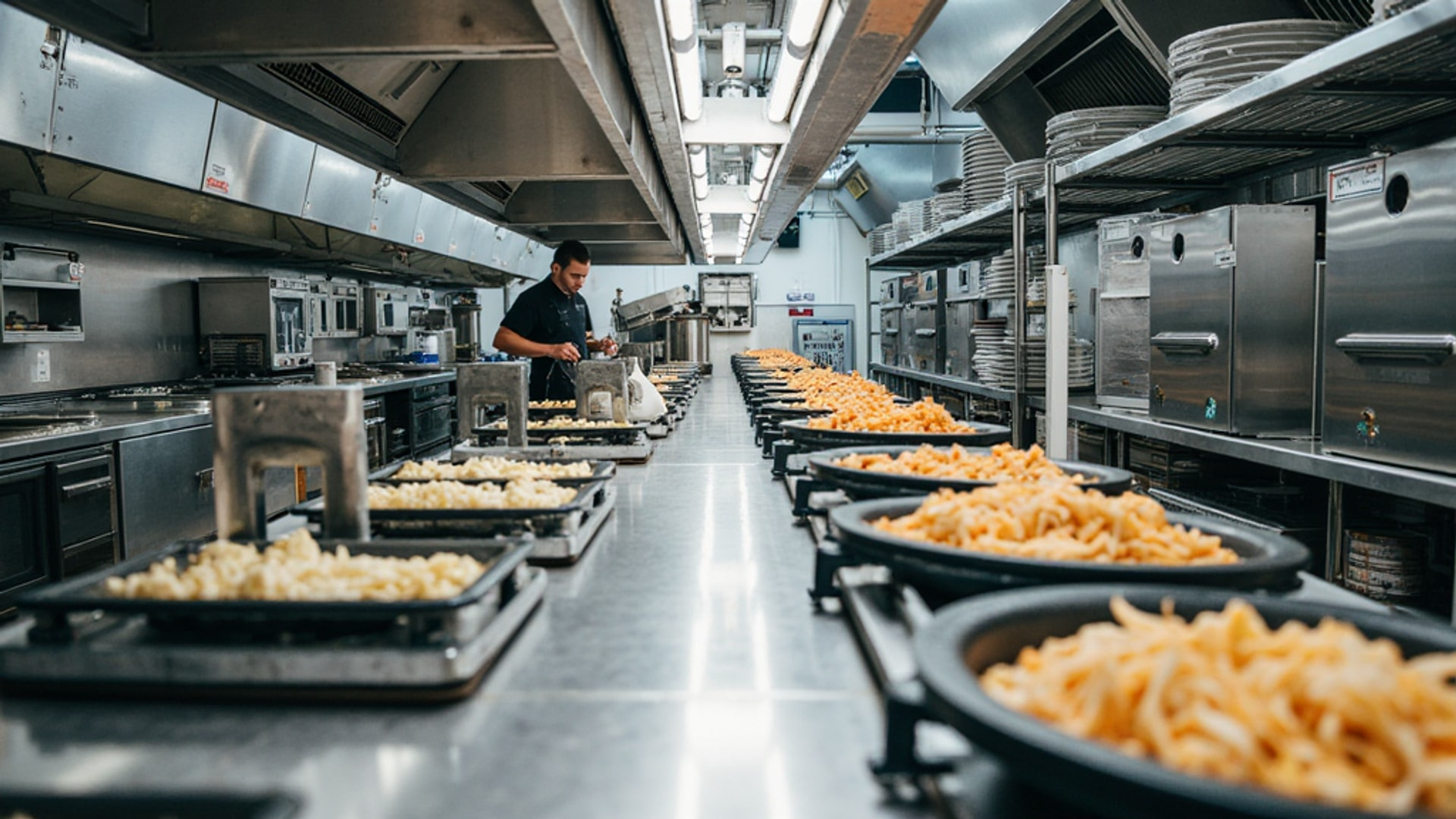
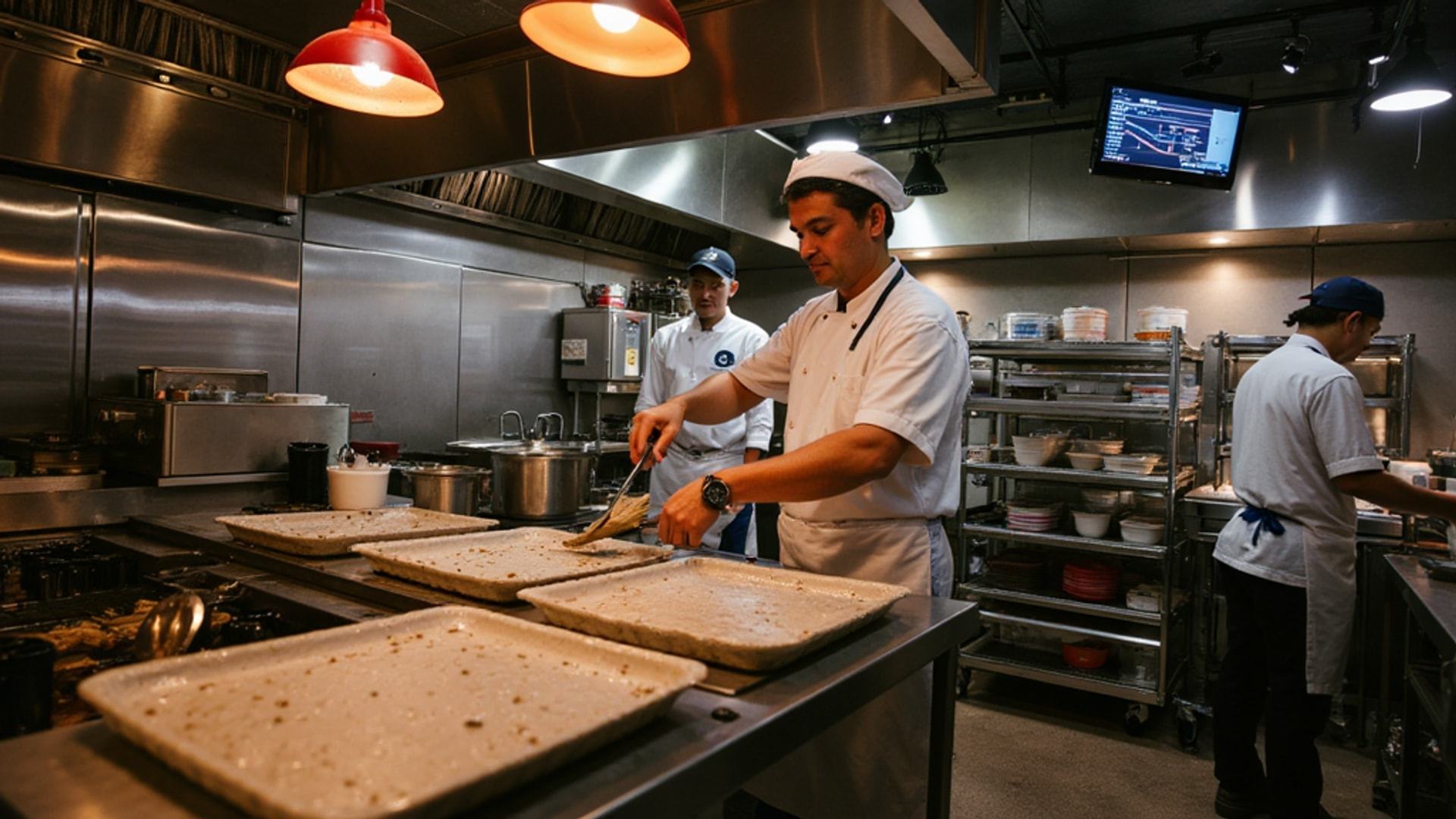
The open kitchen is one of the most powerful design statements a restaurant can make. It tells guests: we have nothing to hide. According to GoFoodservice, open kitchen designs build trust by allowing diners to see food preparation, handling, and plating firsthand — and when well designed, they can increase customer satisfaction by nearly 20 percent. But “well designed” is doing a lot of work in that sentence. An open kitchen that hasn’t solved its noise, heat, and odor problems is worse than a closed one. This article gives you the tools to get it right.
The Case for Opening the Kitchen
Fast-casual pioneers like Chipotle proved the concept at scale: watching your food being assembled with fresh ingredients, in real time, removes doubt about quality. According to GoFoodservice, the entertainment value of watching chefs work adds a dynamic visual element to the dining experience that no amount of wall art can replicate. The kitchen itself becomes the show.
The business benefits stack up:
- Trust and transparency — Guests can see cleanliness standards, ingredient quality, and culinary technique
- Entertainment value — An active cook line is more engaging than a static wall
- Staff performance — Kitchen teams work more carefully and present better when they know guests are watching
- Storytelling — The kitchen becomes evidence of the restaurant’s culinary values
- Social media — Dramatic cooking moments, plating close-ups, and chef interactions are share-worthy content
According to GoFoodservice, interactive dining allows chefs to engage directly with guests, answer questions, and explain dishes — a level of hospitality impossible behind a closed kitchen door.
The Four Design Challenges You Must Solve
Before you open the kitchen, you need concrete solutions to four problems:
1. Noise
Kitchen noise — the clatter of pans, the hiss of the exhaust hood, dishwashing, and kitchen communication — can overwhelm a dining room. According to GoFoodservice, noise control is a significant challenge requiring exhaust fan design and acoustic management.
Solutions:
- Install sound-absorbing ceiling panels directly above the cook line
- Specify low-decibel exhaust hood systems — the difference between brands is substantial
- Use a partial glass barrier between the expo station and the dining room; it maintains visibility while providing meaningful sound dampening
- Train the kitchen team on voice levels during service — “behind” and ticket calls don’t need to be shouted
- Position the dishwashing area as far as possible from the dining room sightline
2. Ventilation
This is non-negotiable. According to GoFoodservice, layout and mechanical systems must control smoke, steam, and odors escaping into the dining room. An exhaust hood that handles a closed kitchen may be completely inadequate when the kitchen is open — the entire system needs to be re-evaluated.
Ventilation design requirements for open kitchens:
- Size exhaust hoods for capture velocity, not just BTU load — open kitchens need higher capture velocities because there’s no wall to contain rising smoke and steam. Your HVAC system must be designed specifically for open-kitchen conditions
- Create negative pressure in the kitchen relative to the dining room so air always moves from dining room into kitchen, never the reverse
- Install makeup air systems to replace exhausted air without creating uncomfortable drafts at the pass
- Consider kitchen placement relative to HVAC return air grilles — you don’t want exhaust pulled back into the dining room circuit
3. Temperature
An open kitchen radiates heat into the dining room. This is manageable in winter, uncomfortable in summer. According to GoFoodservice, ventilation design is critical with properly sized and positioned exhaust systems. Go beyond minimum code requirements — design for worst-case service on a hot summer day.
4. Cleanliness Standards
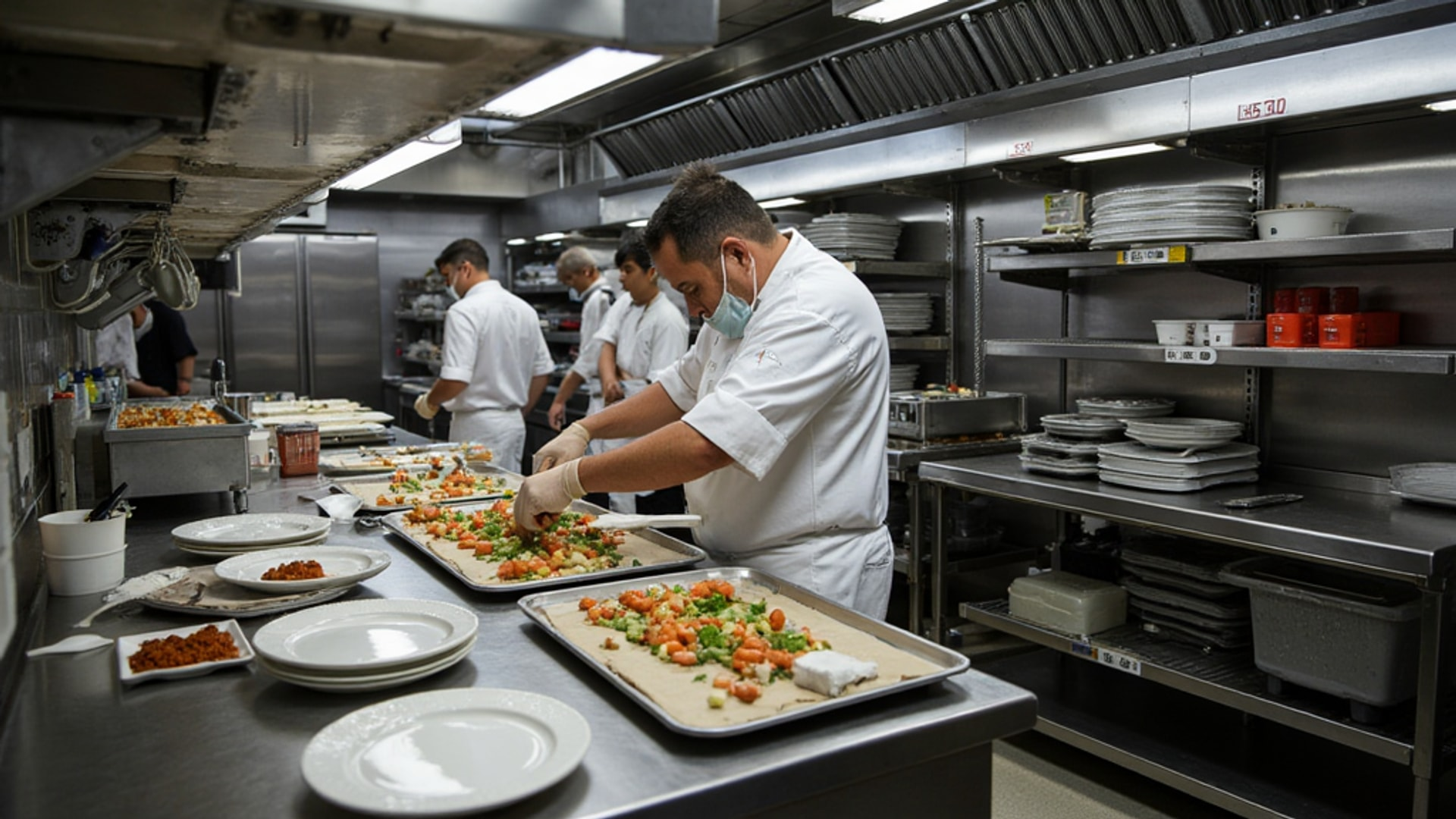
According to GoFoodservice, open kitchens raise cleanliness standards as the entire kitchen is continuously visible to guests. This is a benefit disguised as a challenge. Yes, you need to maintain standards that a closed kitchen could occasionally allow to slip — but that discipline makes your operation better.
Cleanliness standards for open kitchens:
- Wipe down surfaces continuously throughout service, not just at the end
- All shelving, equipment surfaces, and walls within the sightline must be impeccably maintained
- Staff uniforms must be clean and pressed at the start of every shift
- Storage in visible areas must be organized and labeled consistently
- Create a pre-service opening checklist specifically for the visible kitchen areas
Glass Partitions: The Best of Both Worlds
According to GoFoodservice, glass partitions offer a compromise between full openness and practical separation. They maintain the visual connection while providing sound dampening and preventing kitchen air from mixing with the dining room atmosphere.
Glass partition configurations:
| Type | Sound Reduction | Air Separation | Visual Impact |
|---|---|---|---|
| Full-height fixed glass | High | Complete | Maximum visibility |
| Half-height glass with open top | Medium | Partial | Natural pass-through |
| Operable glass panels | High (closed) | Complete (closed) | Flexible |
| Open pass window | None | None | Theatrical, high exposure |
For most full-service restaurants, a half-height glass partition or a framed pass window provides the best balance of theater and practicality. The guest can see everything that matters — the cooking, the plating, the chef’s table presence — without experiencing the noise and heat of the full kitchen.
Equipment Placement as Zone Definition
According to GoFoodservice, strategic equipment placement creates natural barriers between functional zones without blocking sightlines. Use this to your advantage:
- Position the cook line as the main visual feature — this is where the action happens
- Place prep stations further back, out of the primary sightline — guests don’t need to see vegetable peeling
- Position the expo station at the transition between kitchen and dining room — this is the theatrical finale where dishes are finished and plated for service
- Locate dishwashing as far from the sightline as possible, behind solid walls if the layout allows
The open kitchen should show guests the best version of your operation, not every operation. You’re curating a show, not broadcasting raw footage.
Front-of-House Finish Treatments
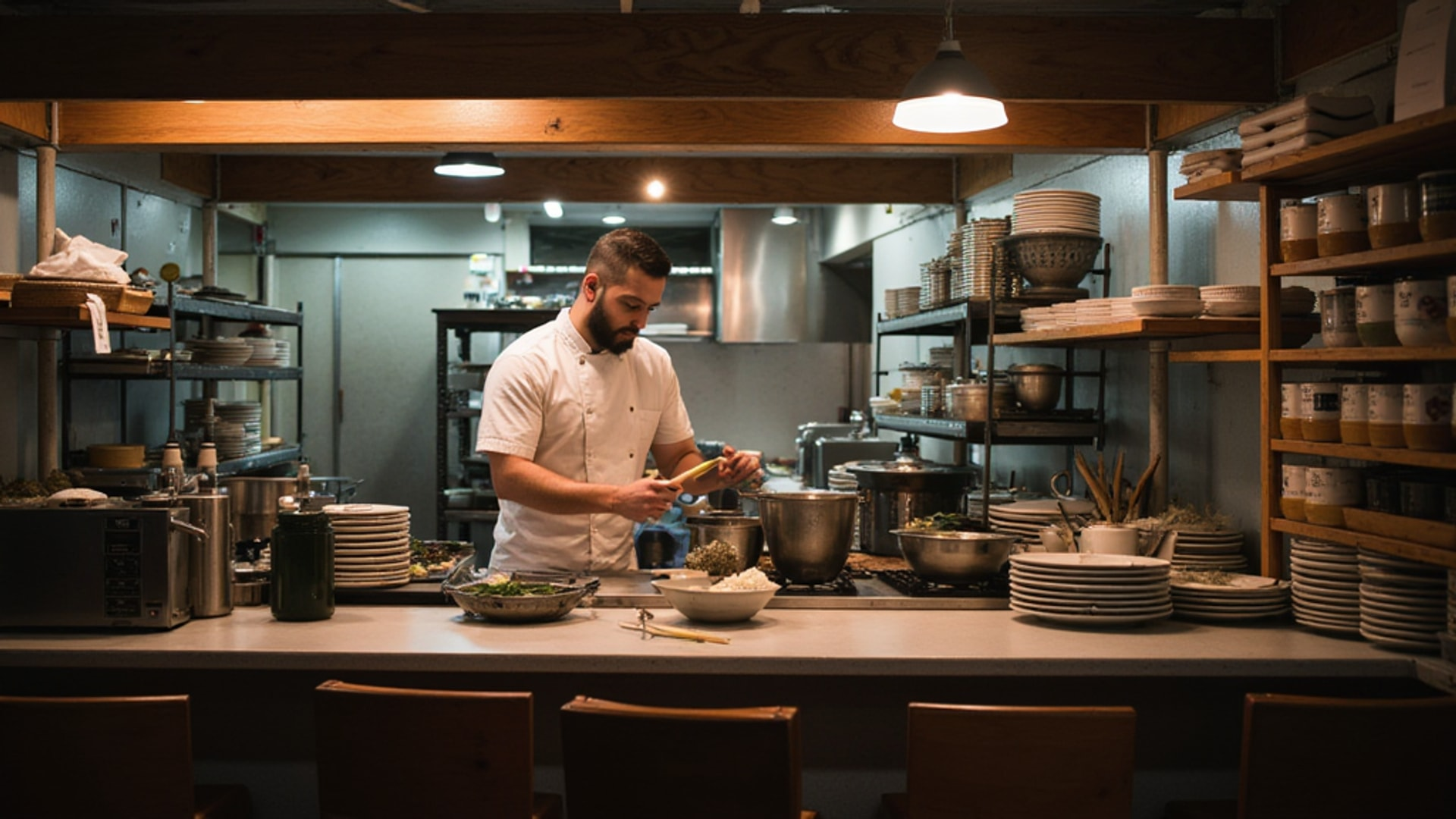
When the kitchen faces the dining room, its surfaces need to meet dining room design standards, not just health code requirements. According to Restaurant Development + Design, front-of-house exposed stations feature finished stone tops rather than stainless steel.
Material upgrades for visible kitchen elements:
- Pass counter top: Stone, concrete, or honed marble instead of stainless steel
- Shelving: Open wood shelving for spice displays and mise en place instead of wire racks
- Equipment cladding: Panel the fronts of refrigerators and undercounter units to match cabinetry
- Ceiling above cook line: Decorative hood design — this is the most visible element; invest accordingly
- Lighting: LED strip lighting under shelving, pendant lighting over the pass, and focused task lighting at the cook line
The Chef’s Counter: Maximum Exposure
A chef’s counter — where guests sit directly facing the cook line — is the highest-intensity expression of the open kitchen concept. According to Interior Layout and Seating Design (YouTube extract from Fallow’s Woodwolf build), the restaurant installed one of the largest chef’s counters in London, making it a centerpiece of the experience.
Chef’s counters work best when:
- The counter has 8–16 seats to maintain an intimate scale
- The chef de cuisine or a senior cook manages the line facing the counter
- Courses are explained by the kitchen team directly, eliminating the server as intermediary
- The counter design positions guests at eye level with the cook line (counter height: approximately 42 inches)
Open Kitchen Suitability by Concept
| Concept Type | Open Kitchen Fit | Notes |
|---|---|---|
| Fast-casual | Excellent | Chipotle model; builds trust in ingredients |
| Casual full-service | Good | Partial visibility through pass window works well |
| Fine dining | Excellent (chef’s counter) | Premium positioning; requires superior execution |
| High-volume diner | Challenging | Noise and heat management is more difficult |
| Bakery/cafe | Excellent | Baking theater; aromatic appeal |
| Sushi bar | Natural fit | Traditional format; guests expect it |
Implementation Checklist
Before opening the kitchen to guests:
- Exhaust system sized for open configuration, not closed-kitchen minimum
- Negative pressure confirmed in kitchen vs. dining room
- Sound absorption installed above cook line
- Glass partition or pass window detail finalized
- All visible surfaces specified in dining-room-grade materials
- Kitchen team briefed on appearance, voice level, and guest interaction standards
- Pre-service cleaning protocol written for visible areas
- Dishwashing area shielded from primary sightline
An open kitchen is a commitment. Get the mechanical and acoustic systems right first. The theater follows naturally once the fundamentals are in place.
→ Read more: Restaurant Kitchen Layout Types
→ Read more: Kitchen-to-Dining Room Ratio