· Kitchen · 9 min read
Managing Kitchen Noise: Acoustic Solutions for Restaurant Kitchens
Kitchen noise is both a workplace health issue and a guest experience problem — here are the acoustic solutions that actually work in commercial kitchen environments.

Noise in a commercial kitchen is not a minor comfort issue. It is a workplace health concern, a communication reliability problem, and in open-kitchen concepts, a significant factor in the guest experience. According to Kanopi by Armstrong’s analysis of restaurant acoustic challenges, the combination of hard, reflective surfaces with multiple simultaneous noise sources — exhaust fans, dishwashers, hood systems, equipment operation, and staff communication — creates an acoustic environment that amplifies sound rather than absorbing it.
The result is a working environment where communication errors increase, staff stress rises, and in open-kitchen designs, kitchen sound bleeds into the dining room and degrades the atmosphere operators worked to create.
Understanding why kitchens are acoustically difficult, and which interventions actually help within the constraints of a commercial food service environment, is the foundation of effective noise management.
Why Commercial Kitchens Are So Loud
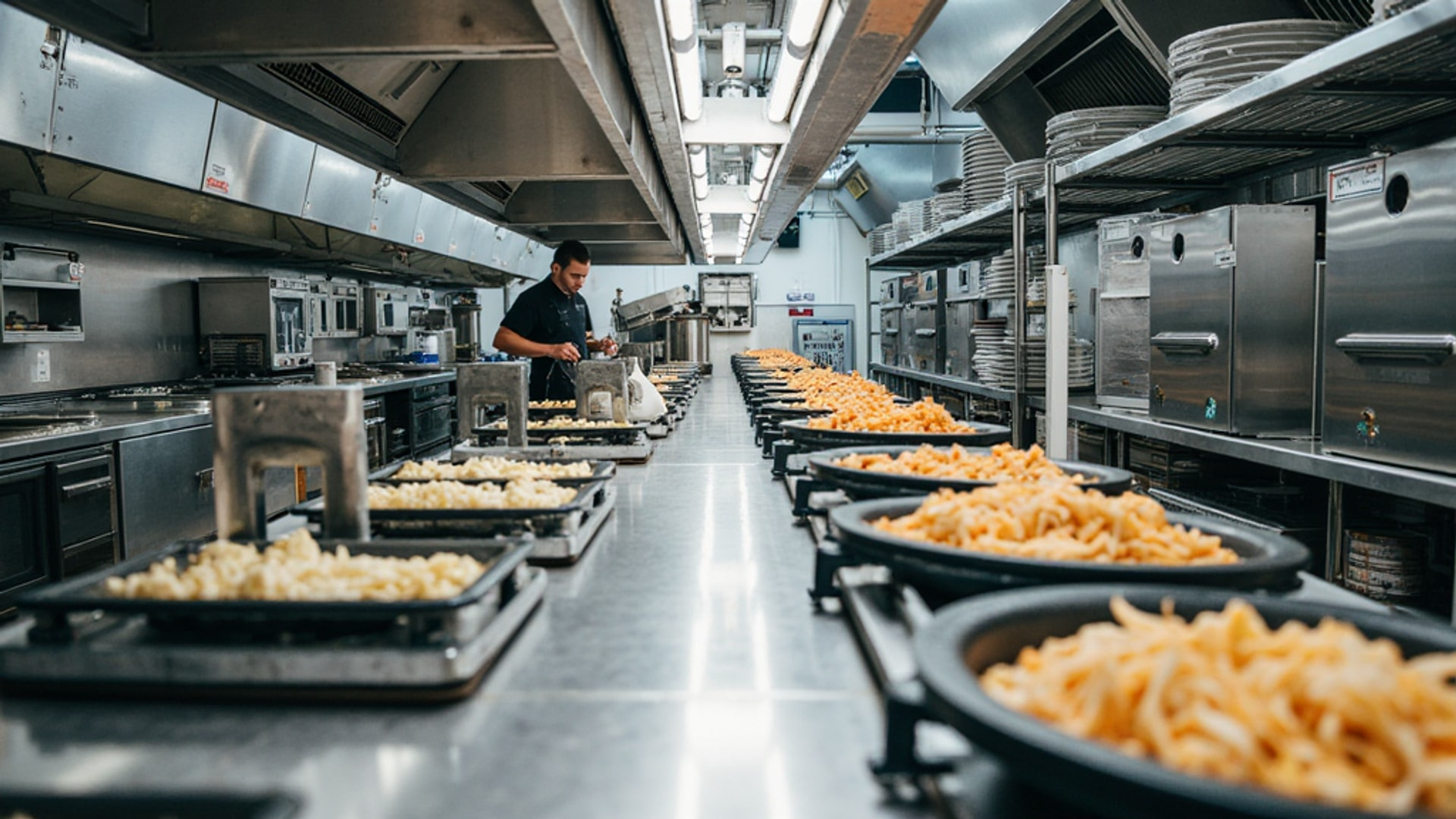
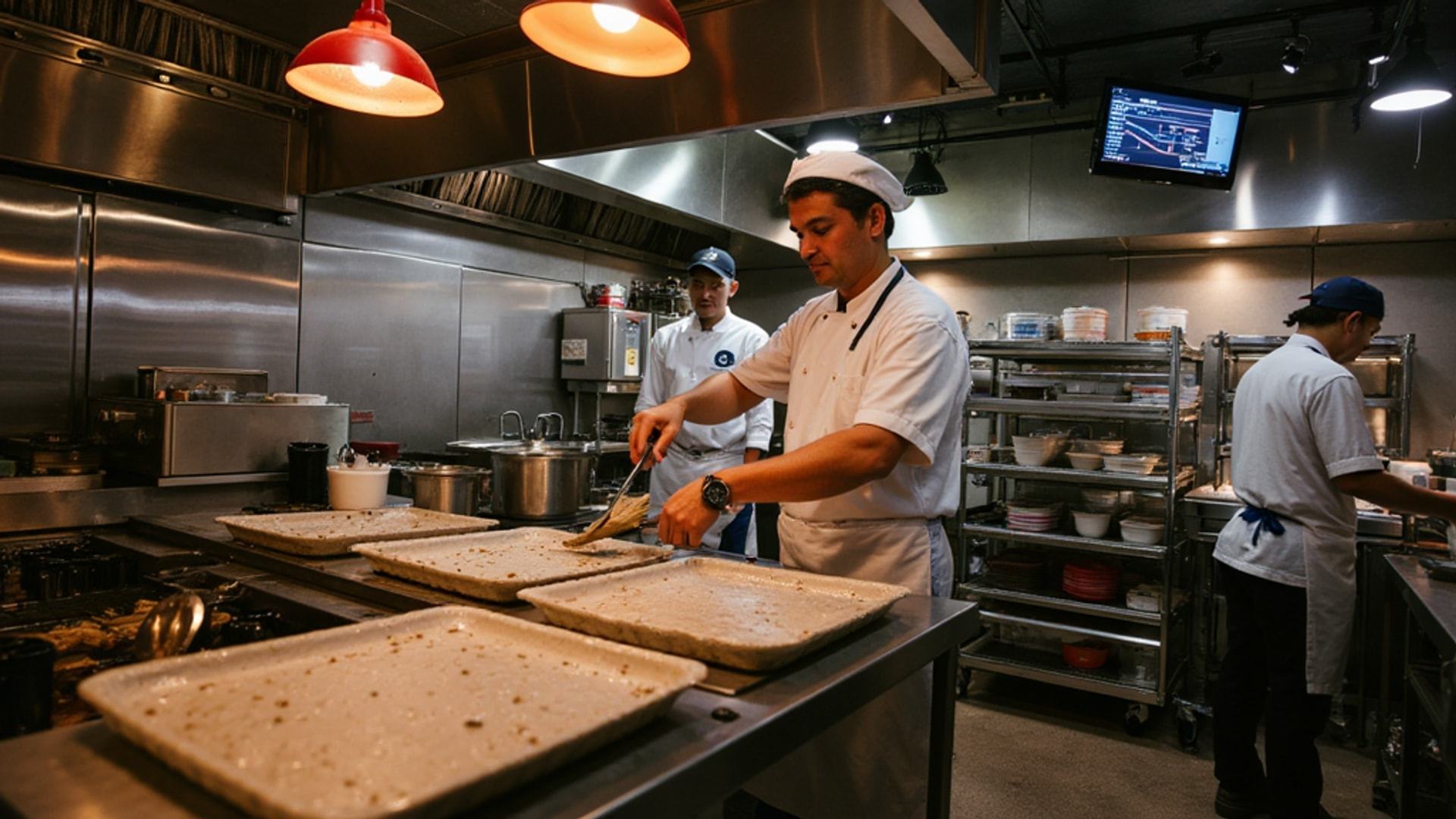
The acoustic problem in a commercial kitchen starts with the materials. Stainless steel equipment, tile floors, glass, concrete walls, and hard ceiling surfaces are all acoustically reflective — they bounce sound rather than absorbing it. Every noise generated in the kitchen — the slam of a reach-in door, an expeditor calling out an order, the continuous roar of an exhaust hood, the mechanical clatter of a dishwasher cycle — bounces off every hard surface it reaches.
According to Kanopi’s analysis, sound bouncing between these hard surfaces amplifies overall noise levels in a compounding way. A sound that would dissipate quickly in a soft-furnished room persists and intensifies in a kitchen because it reflects repeatedly rather than being absorbed.
The noise sources in a commercial kitchen are also numerous and largely unavoidable:
- Exhaust hood fans (often the dominant noise source, running continuously)
- Commercial dishwasher mechanical cycles
- Refrigeration compressors
- Range and fryer combustion
- Kitchen equipment operation (mixers, slicers, processors)
- Staff verbal communication (necessary and intentional)
- Dropped equipment and serviceware impacts
Addressing kitchen noise requires interventions at multiple levels: the physical structure, the equipment selection, and in some cases, the operational protocols around sound-generating activities.
Acoustic Ceiling Panels: The Highest-Impact Single Intervention
Kanopi by Armstrong identifies acoustic ceiling panels as the most effective single intervention for reducing kitchen noise. The ceiling is the largest uninterrupted surface in most kitchens and represents the greatest opportunity for sound absorption.
Standard kitchen ceilings are hard, smooth, and reflective. Sound that rises from equipment and staff activity hits the ceiling and reflects back into the space. Acoustic ceiling panels interrupt this reflection by absorbing sound energy that would otherwise bounce back.
The practical constraint is that commercial kitchen acoustic panels must meet food service requirements that standard office acoustic panels do not need to meet. They must be:
- Moisture-resistant (kitchens generate steam, condensation, and cleaning spray)
- Cleanable with commercial cleaning products
- Non-porous or sealed to prevent bacterial growth on the panel surface
- Compliant with local health department requirements for materials used above food preparation areas
Commercial kitchen-rated acoustic panels meeting these requirements are available from manufacturers specializing in food service environments. They typically cost more than standard office acoustic panels but perform correctly in the kitchen environment without degrading or creating sanitation concerns.
The acoustic benefit is measurable. Adding sound-absorbing ceiling panels to a previously all-hard kitchen reduces the sustained noise level by reducing the echo and reverberation that amplify initial sounds. The result is a kitchen where noise exists — it always will — but it does not compound as severely.
Mass-Loaded Vinyl for Wall Sound Isolation
When the goal is preventing kitchen noise from reaching the dining room, acoustic ceiling panels alone are insufficient. The sound transmission problem — noise moving through shared walls between kitchen and dining room — requires mass-loaded vinyl (MLV) or specialized acoustic insulation within the wall assembly.
According to Kanopi’s analysis, MLV installed within the wall cavity between kitchen and dining areas blocks sound transmission through the wall structure. Mass-loaded vinyl works through its density: it is heavy enough to resist sound wave transmission through it. Unlike acoustic panels that absorb sound within a space, MLV prevents sound from passing through a physical barrier.
This is an installed-during-construction or renovation solution. Adding MLV to an existing wall requires opening the wall, installing the material, and closing it again — a meaningful renovation cost. For operators designing from scratch or undertaking significant renovations, specifying MLV in the kitchen-dining wall assembly is one of the most cost-effective acoustic decisions available.
The material is hidden inside the wall assembly, so there is no aesthetic trade-off. The kitchen can be designed without considering the acoustic treatment appearance.
Glass Partitions in Open-Kitchen Designs
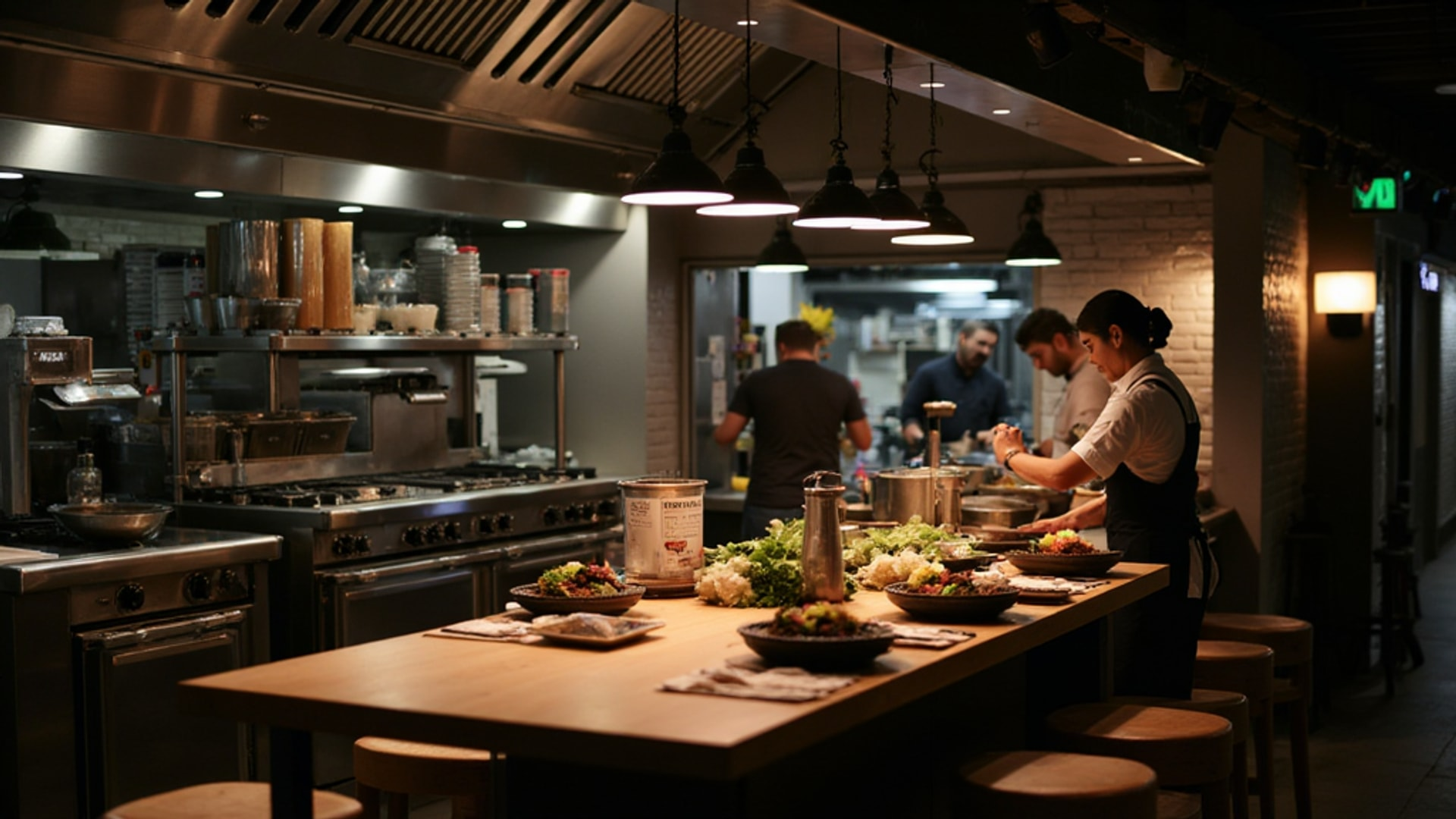
Open kitchens create a specific acoustic challenge: the restaurant market them as a feature while the kitchen is simultaneously one of the loudest areas of the building. The design intent is visual connection between kitchen and dining room; the acoustic consequence is sound connection as well.
Glass partitions are the most common solution to this trade-off. According to Kanopi’s analysis, a pane of glass between the kitchen and dining room preserves the visual connection while significantly reducing sound transmission. Glass does not absorb sound, but it blocks the direct transmission of sound waves from the kitchen space into the dining room more effectively than an open pass.
The glass can be full-height (floor to ceiling), partial-height (from counter level up), or configured as a sliding system that allows the partition to be opened or closed depending on service intensity. Frameless glass partitions maintain the visual openness that makes open-kitchen designs appealing while providing meaningful acoustic separation.
The cost of glass partitions varies substantially by system type, glass thickness, and hardware. A basic partial-height glass partition over a pass might cost a few thousand dollars. A full-height frameless glass system could run significantly higher. But the investment often pays back in guest satisfaction — particularly in fine-dining or experiential restaurant concepts where the dining room acoustic environment is a deliberate part of the experience.
Equipment-Level Noise Reduction
Equipment generates noise, but not all equipment generates equal amounts of it. According to Kanopi’s analysis, equipment selection and maintenance both affect ambient noise levels.
Quiet equipment ratings: Some commercial refrigerators, dishwashers, and ventilation systems carry decibel ratings. When comparable equipment choices exist, the quieter option reduces the kitchen’s baseline noise level. This is rarely the primary selection criterion, but it is worth factoring in when all other specifications are equal.
Anti-vibration mounts: Compressors, heavy mixers, and other mechanical equipment transmit vibration through whatever they sit on. That vibration generates secondary noise as it travels through floor structures, counters, and walls. Anti-vibration pads or mounts under heavy equipment isolate the vibration before it can transmit, reducing the secondary noise generated by equipment operation.
Soft-close doors: Refrigerator doors, cabinet doors, and drawer mechanisms that slam generate impact noise that compounds over hundreds of cycles per day in a busy kitchen. Soft-close dampers on these fixtures reduce both the impact noise and the wear on door seals and hinges.
Equipment maintenance: Kanopi specifically identifies worn bearings, loose panels, and failing compressors as sources of excess noise beyond the normal operating sound of the equipment. Regular preventive maintenance that catches these issues before they become loud failures keeps equipment noise at its designed level rather than the elevated level of deteriorating machinery.
Textile Elements and Soft Surfaces
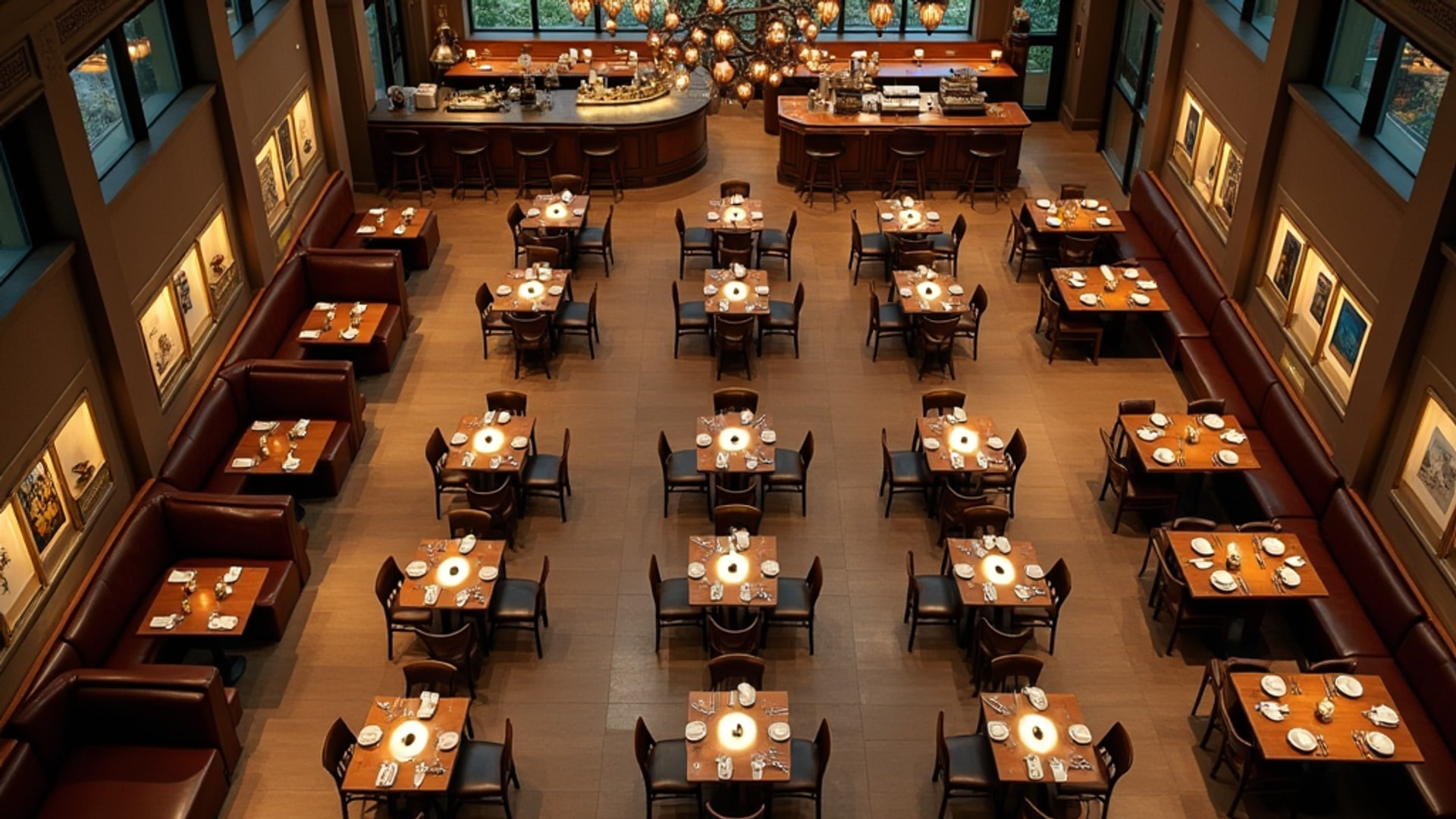
Kanopi’s analysis notes that textile elements — rugs, curtains, cushions — absorb sound, while hard surfaces reflect it. In the dining room, this translates directly to acoustic treatment through interior design choices. Upholstered seating, fabric acoustic panels on dining room walls, window treatments, and floor coverings all reduce the dining room’s own noise level and help buffer the sound entering from the kitchen.
In the kitchen itself, textile options are severely limited by sanitation requirements. Fabric surfaces that cannot be easily cleaned do not belong in food preparation areas. But in the transition zone between kitchen and dining — the service corridor, the expo area, or the bar — some textile elements may be practical while still meeting sanitation standards.
Wood wool acoustic panels, identified by Kanopi as combining sound absorption with aesthetic appeal, offer a kitchen-adjacent application. These panels work in areas near the kitchen — dining room walls adjacent to the kitchen, entrance corridors, private dining rooms — where their aesthetic character can be featured while they perform acoustic work.
Cost and Practical Prioritization
Acoustic interventions range from inexpensive to substantial. Kanopi notes that basic acoustic ceiling upgrades may cost a few hundred dollars for a small application, while comprehensive soundproofing with wall treatments, glass partitions, and specialized materials can run into the thousands.
For operators prioritizing acoustic investment:
Start with the ceiling if the kitchen is already operating. Commercial kitchen-rated acoustic panels are the highest-impact intervention per dollar invested and can often be installed without major construction disruption.
Specify MLV in the wall assembly if designing new construction or undertaking a renovation that opens walls. This is the time to do it; retrofitting MLV later is significantly more expensive.
Add glass partitions if the concept includes an open kitchen and the dining room acoustic environment is a priority. The visual benefit and the noise reduction come together.
Evaluate anti-vibration mounts for compressors and heavy equipment. These are relatively inexpensive, easy to install, and reduce both noise and equipment wear simultaneously.
Consider soft-close hardware during kitchen renovation or equipment replacement cycles. The incremental cost over standard hardware is modest; the noise reduction across thousands of daily cycles is meaningful.
The Staff Wellbeing Argument
Beyond guest experience, kitchen noise directly affects the people who work in it for eight to twelve hours per day. Prolonged exposure to high noise levels is a documented occupational health risk. Communication errors increase when staff cannot clearly hear each other, leading to order mistakes, safety failures, and general operational friction.
According to Kanopi’s analysis, the investment in acoustic treatment often pays for itself through improved guest satisfaction and reduced staff turnover. Staff who work in less punishing acoustic environments experience less fatigue, communicate more accurately, and stay in the job longer. For an industry with chronic turnover problems, anything that makes the working environment less physically demanding is worth evaluating as a retention investment alongside a noise reduction investment.
→ Read more: Restaurant Kitchen Layout: A Complete Guide to Getting It Right
→ Read more: Kitchen Ergonomics: Workstation Design That Prevents Injuries and Keeps Your Team Working
→ Read more: Restaurant Acoustics: Managing Noise for a Better Dining Experience