· Kitchen · 8 min read
Sous Vide in Commercial Kitchens: Consistency, Labor Savings, and Implementation
Sous vide has moved from fine dining novelty to standard commercial kitchen practice — here is how restaurants implement it for consistency, cost control, and speed of service.

Sous vide started as a fine dining technique and has become standard practice across restaurant categories from casual to upscale. The core method is simple: vacuum-seal food in a bag, cook it in a precisely temperature-controlled water bath, and the result is a protein or vegetable cooked uniformly from edge to edge at exactly the temperature you specify. According to Breville Commercial’s analysis of sous vide in restaurant kitchens, the technique has spread because it solves two problems that plague high-volume cooking at scale: consistency across large batches and quality that does not depend on individual cook skill.
Understanding why restaurants actually use it — and how the commercial implementation differs from the home version — is the starting point for evaluating whether it belongs in your kitchen.
The Commercial Reality: Cook-Chill, Not Cook-and-Serve
In a home kitchen, sous vide is often cook-and-serve: food goes in the bag, cooks for the prescribed time, comes out, and goes on the plate. In a commercial kitchen, this model almost never works. The cooking times that make sous vide special — 24 to 72 hours for some proteins — are incompatible with à la minute service.
Commercial restaurants solve this with the cook-chill approach. Kitchens cook proteins and vegetables sous vide in advance, rapidly chill them using an ice bath or blast chiller, and store them vacuum-sealed in the walk-in for reheating and finishing during service. This shifts the labor-intensive cooking to prep periods and reduces service execution to a brief final step.
During service, the process is: retrieve the pre-cooked, vacuum-sealed protein from the refrigerator, drop it into a hot water bath or use a hot water speed regen unit to bring it to serving temperature, then sear briefly in a cast iron pan or on a grill for the crust and final color. The entire service execution takes three to five minutes from refrigerator to plate, compared to the 10 to 20 minutes a steak requires when cooked entirely to order.
This is why sous vide is simultaneously a quality improvement and a speed improvement. The precision happens in advance; the service is fast.
Equipment Required for Commercial Implementation
Breville Commercial’s implementation guide, commercial sous vide requires three core pieces of equipment:
Chamber vacuum sealer: This is the commercial standard for sealing food in airtight bags. Unlike the clamp-style sealers used at home, a chamber sealer creates a vacuum around the entire bag before sealing, which handles liquids and marinades without them being drawn into the mechanism. Chamber sealers for commercial use typically start around $1,000 and can exceed $5,000 for high-throughput models. The bags used must be rated for the specific cooking temperatures — standard food bags are not always safe at sustained sous vide temperatures.
Immersion circulator or precision water bath: The circulator maintains the water at a constant temperature by circulating it through heated metal coils. Commercial-grade units handle larger water volumes and continuous operation that would burn out consumer models. For a small restaurant, a 1,200-watt circulator in a 12-gallon container may be sufficient. High-volume operations may need dedicated water baths holding 24 or more gallons, with circulators rated for continuous commercial service.
Container or tank space: The volume of food the kitchen wants to process at one time determines the tank volume needed. A small restaurant processing 20 portions of steak per prep session needs less tank capacity than a hotel kitchen processing 200 portions. The containers need to be large enough to hold bags without overcrowding — bags need water circulation contact on all surfaces for even cooking.
Batch Cooking Efficiency and Temperature Sharing
One of the operational advantages of sous vide that is often overlooked is the ability to cook multiple different proteins simultaneously when they share compatible temperatures. Breville Commercial notes that chicken and pork cook at similar temperatures, as do salmon and many vegetables, allowing restaurants to process multiple products in the same water bath during the same prep session.
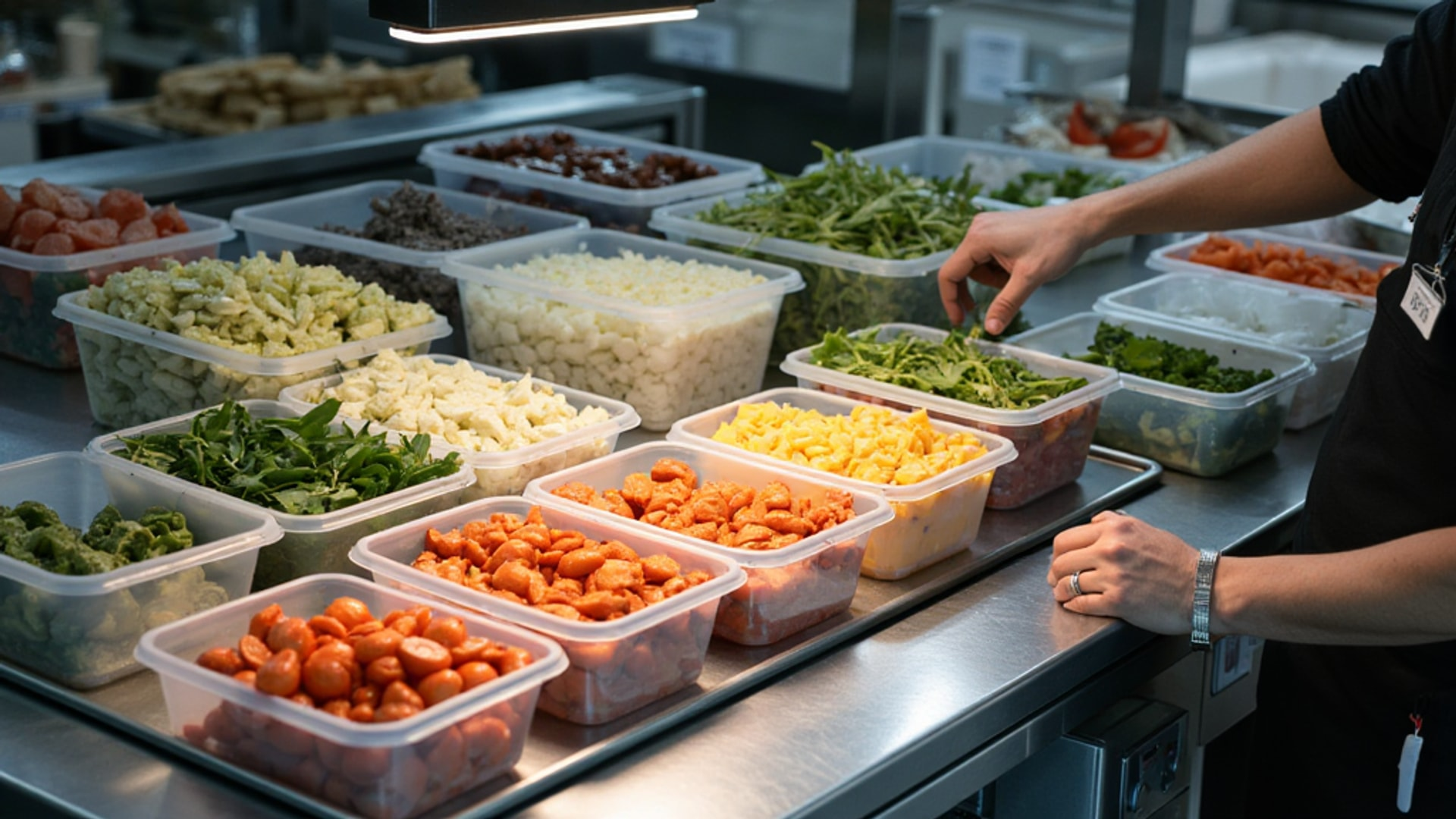
This batch efficiency compounds over a week’s worth of prep. Instead of individually cooking proteins to order at multiple temperature points during service, the kitchen cooks large batches at each temperature point once or twice per week, seals them, and draws from the reserve during service. The result is fewer total cooking labor hours for the same or higher production volume.
The temperature sharing principle also enables one circulator setup to produce several different menu items during a single prep session by sequencing the batches. Start with the items requiring the highest temperature, then cool the bath to process the next batch. This requires careful production planning but reduces equipment requirements for operations with limited capital.
Quality and Cost Benefits
The quality case for sous vide is well-documented. The method transforms less expensive cuts of meat into premium-quality products through extended low-temperature cooking that breaks down collagen without drying out the meat. Short ribs that would require a skilled braise to achieve tenderness cook perfectly sous vide at a fraction of the active labor. Pork shoulder, beef chuck, and lamb neck all benefit from this transformation.
Portion shrinkage is significantly reduced compared to traditional cooking methods because moisture is retained within the sealed bag throughout cooking. A conventionally roasted chicken breast may lose 25 to 35 percent of its weight to moisture during cooking. The same breast cooked sous vide retains significantly more moisture, meaning higher yield per unit of raw material purchased.
This combination of using less expensive cuts at higher yields creates a genuine food cost improvement. Breville Commercial notes that restaurants can charge higher prices for consistently superior results while spending less on raw ingredients per portion.
For menu pricing, the consistency aspect also matters. Traditional cooking has quality variance — a busy cook’s seared salmon fluctuates between slightly under and slightly overdone depending on grill temperature, portion thickness, and attention level. Sous vide produces the same result every time regardless of who finishes the dish, which protects the menu’s value proposition and reduces the frequency of comped or remade dishes.
Food Safety and Shelf Life
Sous vide cooking at specific time-temperature combinations achieves pasteurization — the elimination of harmful bacteria — which significantly extends the useful shelf life of cooked and chilled items compared to traditionally cooked proteins. This extended shelf life enables larger batch preparation without quality loss, allowing kitchens to cook less frequently while maintaining freshness.
The pasteurization documentation also provides food safety compliance records. Digital temperature monitoring — whether through the circulator’s built-in display or connected apps — creates a log of time and temperature for each batch, which is valuable during health inspections. HACCP documentation for sous vide requires recording the specific time-temperature parameters for each protein type, and these logs demonstrate compliance with pasteurization standards.
Pre-portioned and vacuum-sealed products handled during service reduce contact, which further minimizes contamination risk compared to raw proteins being handled on the line immediately before cooking.
The food safety parameter that requires attention is rapid chilling after cooking. Food cooked sous vide must be chilled rapidly to below 40 degrees Fahrenheit within specific time windows to prevent bacterial growth. An ice bath can handle small batches; a blast chiller handles larger volumes more reliably and with better documentation. Skipping the rapid chill step or using inadequate chill methods creates genuine food safety risk, which is why training on this specific protocol is non-negotiable for any operation using cook-chill methods.
Implementation Strategy
Starting well means starting focused. Restaurants should begin with high-volume proteins that benefit most from consistency — typically the proteins ordered most frequently and most prone to inconsistency under traditional cooking methods. Steak doneness is the obvious candidate in most full-service restaurants. Chicken breast consistency is another high-payoff target.
Once the team is proficient with the equipment and protocols for these core applications, expansion to vegetables, sauces, and specialty items is straightforward. Trying to implement sous vide across the entire menu simultaneously creates too many variables to manage while the team is still learning the equipment and protocols.
Staff training priorities, as identified by Breville Commercial:
- Vacuum sealing technique (eliminating air pockets, handling liquids, proper bag selection)
- Time-temperature parameters for each protein type the kitchen will use
- Rapid chilling procedures and verification
- Service execution — reheating and searing technique for each product
- HACCP documentation requirements for cook-chill production
The training investment for sous vide is real, but the operational consistency it delivers — across services, across staff, across the lifespan of the concept — makes it one of the higher-return technique implementations available to commercial kitchens.
→ Read more: Batch Cooking and Prep Efficiency: How to Build a Kitchen That Produces More with Less Labor
→ Read more: Combi Ovens for Commercial Kitchens: Features, Costs, and ROI
→ Read more: Recipe Standardization: Building Consistent, Profitable Dishes at Scale