· Kitchen · 8 min read
Mise en Place and Prep Systems: Organizing Your Kitchen for Speed
How professional kitchens use mise en place, prep sheets, and batch cooking systems to execute service at speed — with practical guidance on station setup, prep scheduling, and the layout decisions that make or break efficiency.
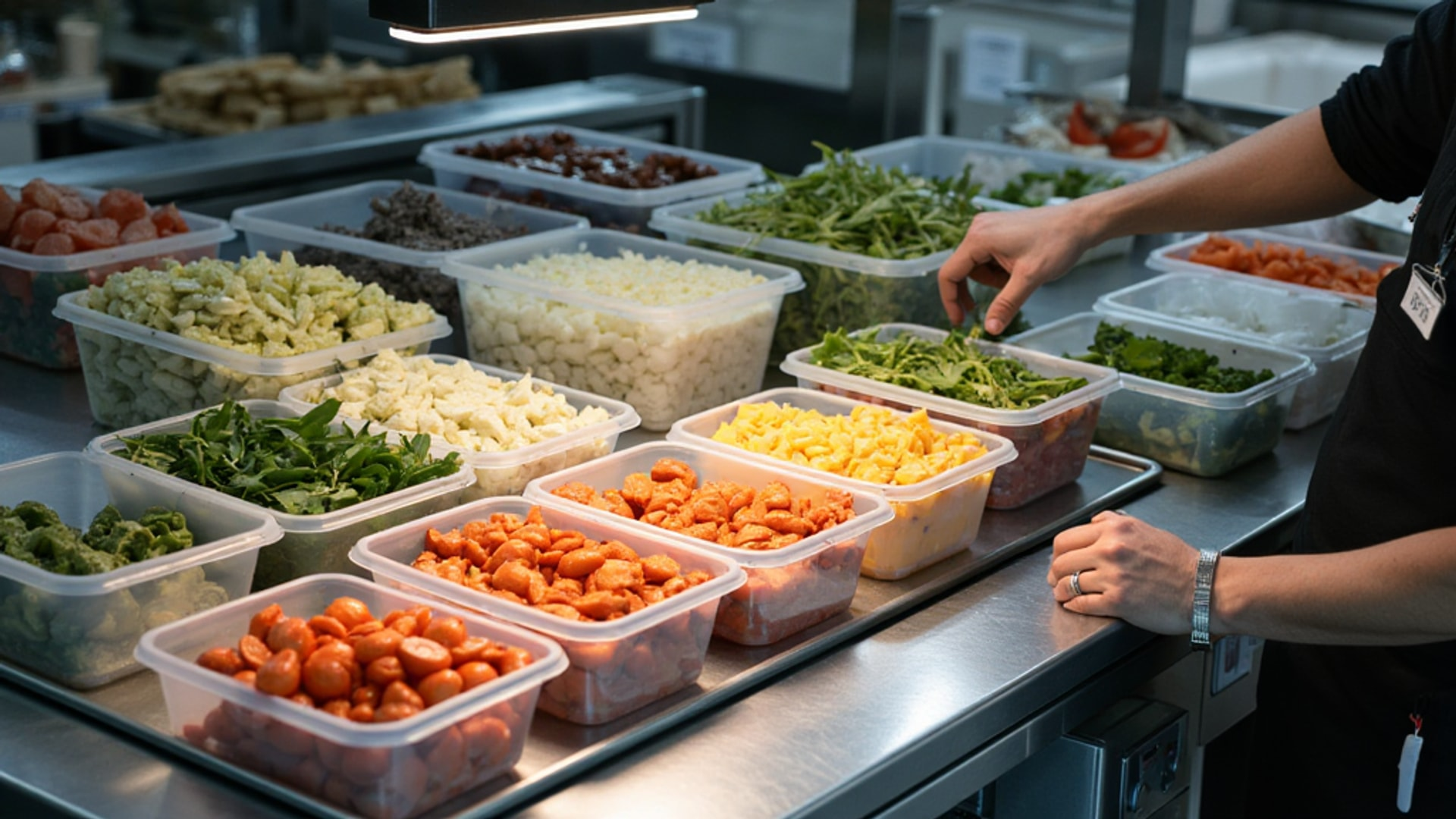
Ask any experienced chef what separates a kitchen that handles a 300-cover Saturday night smoothly from one that crashes at 150, and the answer usually comes down to one concept: mise en place. Everything in its place. The French phrase describes both a physical state — every ingredient prepped, portioned, and positioned before service — and a mindset about how professional kitchens operate.
The physical systems that support mise en place — prep sheets, batch cooking schedules, zone-based station layouts — are what turn the concept from a philosophy into a reproducible operational outcome.
What Mise en Place Actually Means
Johnson & Wales University’s culinary curriculum defines mise en place as serving two simultaneous goals: organization and focus. When everything is in its place before service begins, a cook can direct full attention to executing during service rather than scrambling to find, prep, or portion ingredients while tickets are firing.
The concept covers four distinct phases:
Food preparation: Transforming raw ingredients into service-ready components. Vegetables cut to spec, proteins butchered and portioned, sauces prepared to their service stage, par-cook items brought to their required degree of doneness. Each component goes into a labeled container arranged in the order it will be used during service — a physical representation of the menu’s production sequence.
Station setup: The physical workspace prepared for execution. Cutting boards cleaned and positioned, knives sharpened and within reach, pans and utensils staged for immediate use, waste bins and towel stations positioned for efficiency. The goal is that once service starts, the cook should not need to leave the station.
Tool assembly: Every piece of equipment the station needs during service is confirmed present, cleaned, and functional before service begins. Missing a ladle or a bain marie lid is a small annoyance during prep; the same missing item during a full-ticket rush costs time and focus.
Station cleanup: Working clean is central to the mise en place philosophy. Between tasks, the station is wiped down, used tools are cleaned or replaced, and waste is disposed of. A cluttered station slows every movement and increases cross-contamination risk.
Research published in the journal Sustainability confirms that mise en place promotes efficiency, minimizes waste, and supports sustainable kitchen operations — not just as a cultural tradition but as a measurable operational system.
The Prep Sheet: Your Kitchen Roadmap
According to CHEF’STORE’s analysis of prep sheet and batch cooking systems, kitchen prep sheets serve as roadmaps for back-of-house employees, eliminating guesswork and reducing training time. A well-designed prep sheet specifies quantities, preparation methods, storage requirements, and timing for each menu item, turning the mental model in the executive chef’s head into a system any trained cook can execute.
Effective prep sheets include:
- Quantities: Based on projected covers and historical sales data, not intuition. Review POS data weekly to calibrate par levels.
- Preparation methods: Specific enough that a new cook can execute correctly. “Brunoise carrot” is more useful than “cut carrot.”
- Time targets: When each item should be complete (e.g., “stocks reduced by 9 AM, sauces finished by 10 AM, all proteins portioned by 11 AM”).
- Storage requirements: Temperature, container type, label information.
- Task grouping by station: Prevent multiple cooks from independently prepping the same ingredient or creating traffic conflicts at shared equipment.
According to Paris Gourmet’s food prep efficiency guide, effective prep lists should also flag time-sensitive items needing early attention, set clear quantity targets based on actual sales history, and be reviewed and adjusted daily based on what was actually used or wasted. A static prep sheet that never gets updated based on actual usage is a document, not a tool.
Digital tools and shared whiteboards help align the team on daily goals. Some operations run both — a master digital prep sheet that prints each morning and a whiteboard where the chef can update priorities in real time as the day evolves.
Batch Cooking Strategies
Batch cooking is the practice of producing large volumes of a single component in one continuous session rather than making small quantities repeatedly throughout the week. The labor efficiency gains are significant — every batch benefits from the setup time invested once (pulling the equipment, measuring mise en place for the production batch, cleaning up after) across a larger output volume.
CHEF’STORE’s batch cooking analysis identifies five high-leverage strategies:
Capitalize on slow periods: Deploy staff during off-peak hours for prep projects rather than sending them home early or having them clean the same surfaces for the third time. A prep cook scheduled during a slow Tuesday afternoon who produces a week’s supply of compound butter, spice blends, and demi-glace is generating significant value.
Focus on top sellers: Use POS data to identify high-volume dishes with components that batch well — soups, stews, braised proteins, and signature sauces that freeze without quality loss. These are the highest-ROI batch production targets.
Create flavor bases in bulk: Spice blends, compound butters, marinades, and house-made stocks can be produced in large quantities and stored for weeks or months. The time investment is minimal compared to the service savings — a cook who can grab a pre-made compound butter rather than assembling it to order during service moves significantly faster.
Establish portioning standards: Consistent portion sizes, vacuum-sealed and frozen, create service-ready components that reduce execution time and improve plate consistency. A portioned, vacuum-sealed filet that simply needs a sear executes faster and more consistently than one that gets cut and trimmed to order during a busy service.
Group similar tasks: Chop all the aromatics for the week in a single session. Portion all the protein in one pass before moving to the next task. Equipment changes — from knife work to the Robot Coupe to the bain marie — add minutes of setup and cleanup that multiply quickly when repeated for individual small batches.
Station Organization and Tool Placement
The physical arrangement of the station follows the mise en place logic: items used most frequently at the center, within arm’s reach. Items used occasionally at the periphery, reachable without leaving the station position. The cutting board is the primary work surface, with the knife on the board’s right side (for right-handed cooks), waste bowl to the left, and prepped ingredients in containers arranged from left to right in the order they’ll be used.
Paris Gourmet’s prep efficiency research emphasizes a principle that is easy to overlook: sharp knives are foundational to mise en place efficiency. High-quality, sharp knives improve prep speed, ensure consistency in cuts (affecting cooking times and plate presentation), and reduce waste. Dull knives require more force, produce uneven cuts, and — counterintuitively — increase injury risk because the additional force reduces control. Sharpening knives is a daily requirement, not a weekly ritual.
→ Read more: Batch Cooking and Prep Efficiency: How to Build a Kitchen That Produces More with Less Labor
Every container in the mise en place receives a label: ingredient name, prep date, use-by date. Consistent labeling prevents confusion during service (which of these white tubs is crème fraîche and which is sour cream?), supports FIFO rotation, and satisfies food safety requirements for labeled storage. Use waterproof labels that meet FDA Food Code labeling requirements, especially for items stored in cold, humid environments where regular labels fail quickly.
Prep Kitchen Design Principles
Eleven36’s prep kitchen design guide identifies seven essential functional zones that support effective mise en place execution:
- Vendor delivery zone: External access with staging space for receiving shipments.
- Dry and cold storage: Temperature-controlled and separated by food type.
- Ingredient prep zone: Choppers, slicers, cutting stations, and prep tables.
- Cooking zone: Stovetops, ovens, fryers, and ticket display.
- Plating and service zone: Assembly, quality check, and temperature holding.
- Dirty dishes zone: Isolated from prep areas to prevent contamination.
- Washing and sanitation zone: Equipment cleaning separated from food handling.
Traffic flow design dictates how effectively the mise en place system functions in practice. Main traffic paths require at least 3 feet of clear space, following proper kitchen layout principles. Areas where staff work back-to-back need 4 feet. Separate handwashing, food prep, and dishwashing sinks prevent cross-contamination and comply with health codes. Equipment on casters enables thorough cleaning underneath and behind units, and allows kitchen reconfiguration as menus evolve.
The Texas Department of Insurance’s ergonomics research adds a spatial dimension: the recommended spacing between parallel workstations of 41 to 47 inches allows two people to work without one having to stop and move aside. This clearance isn’t just ergonomically correct — it’s what makes station-to-station communication and movement possible during the density of a full service.
Implementing the System
Building a functional mise en place system in an existing kitchen takes about two weeks to establish as a habit. The implementation process:
Week one: Document existing prep practices. Interview cooks about what they make every day, in what order, and in what quantities. Identify redundant prep (three different cooks prepping the same shallot brunoise independently), missed batch opportunities (hollandaise made to order instead of in a morning batch), and inefficient tool placement.
Week two: Design the new prep sheets based on actual usage data, schedule batch cooking sessions for high-volume components, and reset station tool placement to the mise en place logic. Walk through the prep sheet with the team before implementing — buy-in comes from understanding the reasoning, not just receiving an order.
Ongoing: Review prep sheets against actual usage weekly. If you’re consistently over-prepping on a component, reduce the par. If you’re running out mid-service, increase it. Prep sheets that don’t get adjusted become inaccurate and get ignored.
The mise en place system is not paperwork. It’s the operating architecture of your kitchen. When it works, service feels controlled even during volume. When it doesn’t, every busy service feels like barely surviving.
→ Read more: Kitchen Operations Efficiency: Prep Systems, Waste Reduction, and Workflow Optimization
→ Read more: Kitchen Staff Scheduling: Build a System That Reduces Turnover and Controls Labor Costs