· Kitchen · 9 min read
Kitchen Safety Training: Burns, Cuts, Ergonomics, and Emergency Response
A complete guide to building a kitchen safety training program covering OSHA requirements, burn and cut response, ergonomic workstation design, and emergency preparedness protocols.
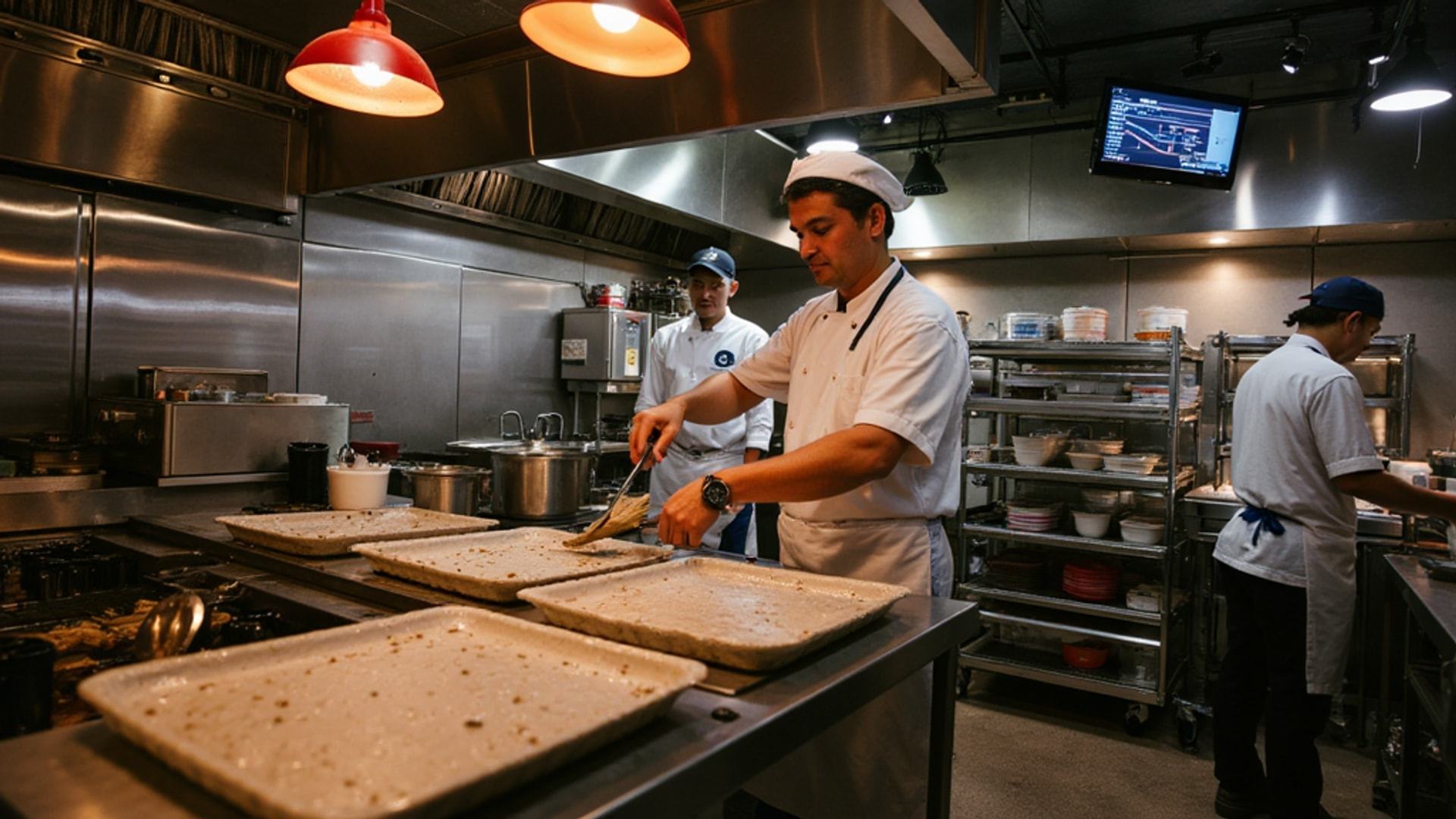
A kitchen is a genuinely dangerous workplace. Commercial kitchens operate with open flames, deep fat fryers running at 350 degrees F, knives sharp enough to require stitches from a momentary lapse, floors that become slip hazards within seconds of a spill, and staff working 10-hour shifts in spaces where ambient temperatures regularly exceed 100 degrees F during service.
The guiding principle from WebstaurantStore’s restaurant safety training analysis puts it plainly: a kitchen is only as safe as the employee who has received the least amount of training. Every new hire who enters the kitchen without a thorough safety orientation is a liability — to themselves, to their colleagues, and to the business.
The OSHA Framework
The Occupational Safety and Health Administration does not have restaurant-specific standards, but its general industry standards (29 CFR 1910) apply fully to commercial kitchen operations. OSHA’s eTool for restaurants provides practical guidance organized around the specific hazards of restaurant work.
The most frequently cited OSHA violations in restaurant kitchens include:
Electrical safety: Damaged or frayed electrical cords, improper grounding, overloaded outlets, and missing ground fault circuit interrupters (GFCIs). Kitchens are unique in combining electrical equipment with constant water and wet surfaces. OSHA mandates GFCIs wherever electricity and water coexist. Inspect all electrical cords regularly; replace damaged cords immediately rather than taping them.
Machine guarding: All power-driven equipment — slicers, grinders, choppers, cutters, mixers — must have guards in place during operation and cleaning. This is also where OSHA’s child labor protections are most specific: workers under 18 are prohibited from operating power-driven slicers, grinders, choppers, cutters, and bakery mixers.
Emergency Action Plans: OSHA regulation 1910.157 requires a documented Emergency Action Plan whenever fire extinguishers are present in a workplace. This plan must cover evacuation routes, emergency contact procedures, and designated assembly areas. It must be posted and communicated to all staff.
Heat stress: Kitchens routinely exceed 100 degrees F during service. OSHA requires employers to provide access to water, rest breaks in cool areas, and monitoring of workers for signs of heat illness. The controls are a combination of engineering (ventilation, air conditioning), administrative (scheduled breaks, task rotation), and PPE (lightweight clothing appropriate for kitchen work).
Slip, trip, and fall prevention: OSHA requires floors to be maintained in a clean and dry condition as reasonably possible. Non-slip flooring, immediate cleanup of spills, proper drainage, adequate lighting, and clear walkways are all required. Anti-slip footwear should be a formal requirement in your employee uniform policy.
→ Read more: Restaurant Workplace Safety: The OSHA-Compliant System Every Operator Needs
Burns: Prevention and First Response
According to OSHA’s restaurant safety documentation, deep fat fryers are the number one cause of burns in restaurant kitchens. Fryer-related burns are often severe — hot oil at 350+ degrees F causes deep tissue damage within milliseconds. Prevention is categorically more important than treatment.
Fryer safety protocols: maintain proper oil levels (underfilling causes excessive splashing; overfilling causes overflow when food is added), use fryer baskets with handles that keep hands away from the oil surface, train on safe oil filtering procedures, use splash guards where available, and never add wet or frozen food directly to hot oil without patting dry first — water causes violent steam-generated splashing.
First response for burns follows a severity-based protocol documented by the American Red Cross:
For minor burns (first degree, outer skin only): Run cold water over the burn for 10 to 15 minutes immediately — this is the most important intervention. Do not use ice. Apply burn ointment or aloe vera. Cover with a sterile non-stick dressing. The employee can typically return to work with the wound covered.
For second-degree burns (blistering, or any burn larger than the palm): Cool with running water, cover with a cool wet dressing, and seek medical attention. Do not break blisters.
For severe burns (third degree, or large surface area): Cover the wound with a clean cloth, call emergency services immediately, and do not attempt to remove clothing stuck to the burn.
Remove jewelry near burns before swelling begins — rings and bracelets can act as tourniquets once swelling develops.
Cuts: Prevention and First Response
Knives are everywhere in a professional kitchen, and cut injuries are the second most common kitchen injury. Most cut injuries are preventable through two practices: keeping knives sharp (dull knives require more force, which means less control) and using proper cutting technique (a stabilized cutting board, proper grip, and controlled motion).
Cut-resistant gloves provide meaningful protection for tasks involving high-risk cuts — mandoline slicing, oyster shucking, breaking down whole fish with pin bones. They are not substitutes for proper technique, but they reduce the severity of the inevitable slip.
First response for cuts per American Red Cross guidelines:
For minor cuts: Apply pressure with a clean cloth until bleeding stops (typically a few minutes). Clean the wound with soap and water. Apply antibiotic ointment. Cover with a bandage. The employee must wear a food-grade glove over the bandaged hand before returning to food handling — this satisfies both infection control and food safety requirements.
For deep cuts: Maintain pressure and elevate the injured area. Seek medical treatment if the cut is deep, bleeding does not stop within 20 to 30 minutes, or the wound shows any indication of bone, tendon, or nerve involvement. Deep fat fryer baskets, mandoline blades, and slicer blades are common sources of deep lacerations — treat any injury from these sources with heightened caution.
First aid kit placement: The American Red Cross recommends wall-mounted kits accessible within seconds from any kitchen station. A kit near the expeditor station and another near the prep area is a standard configuration. Kit contents should include adhesive bandages in multiple sizes, sterile gauze pads, medical tape, antiseptic wipes, burn ointment, cold packs, and food-grade gloves. Inspect and restock monthly.
Ergonomics: Preventing Long-Term Injuries
Kitchen ergonomics receives less attention than burns and cuts, but musculoskeletal injuries — back strain, repetitive motion injuries, shoulder problems — are among the most costly and most common long-term outcomes of kitchen work. According to the Texas Department of Insurance’s ergonomics resources for food service workers, the kitchen’s combination of prolonged standing, repetitive motions, and heavy lifting creates a pattern of cumulative stress injuries that can end careers.
Work surface height is the most critical ergonomic variable. The comfortable work surface height should be a few inches below the cook’s elbow — typically in the 28 to 35 inch range. Surfaces that are too high cause shoulder and neck strain; surfaces too low force hunching that strains the back and neck. Since kitchen staff vary significantly in height, stations at multiple heights or adjustable surfaces provide the best solution.
Anti-fatigue mats at every workstation address the strain from standing on hard tile or concrete for 8 to 12 hours. These mats provide cushioning and encourage subtle weight shifting that promotes circulation. Choose mats with beveled edges to prevent tripping, made from materials that resist grease and moisture. The Texas DI ergonomics research confirms anti-fatigue mats as a high-value, low-cost intervention for reducing fatigue and lower extremity strain.
Station spacing matters for ergonomics at a systemic level. The recommended clearance between parallel workstations is 41 to 47 inches (105 to 120 cm). This spacing allows two people to work back-to-back without one having to stop and move aside, and it provides the physical space needed for proper body positioning rather than cramped, bent postures.
Repetitive motion injury prevention: Repetitive cutting, stirring, and lifting motions performed thousands of times per shift cause cumulative strain. Prevention strategies include rotating tasks between different types of movement, using ergonomic tools with cushioned grips, taking micro-breaks between repetitive sequences, and maintaining sharp knives (dull knives require more force, multiplying the strain on hand and wrist tendons with every cut).
Lifting and carrying: Commercial kitchen loads are heavy — cases of product, stockpots of liquid, stacked sheet pans. Proper lifting technique (bend at the knees, keep the load close, avoid twisting) should be part of every orientation. Two-person lifts for anything above 50 pounds should be a documented requirement. Equipment placement matters too: heavy items stored between knee and shoulder height minimize the extreme-range lifting that causes the most injury.
Emergency Preparedness
Every kitchen needs an emergency action plan that covers more than fire response. Key elements:
Fire: Location of all suppression system pull stations and Class K extinguishers, proper response to grease fires (cover with metal lid and turn off heat — never use water on a grease fire), evacuation routes and assembly points, gas and electrical shutoff locations.
Medical emergencies: Location of first aid kits, contact information for emergency services, staff trained in CPR and Heimlich maneuver (required in many jurisdictions for food service employees). If your operation serves staff members with known severe allergies, the location of any available epinephrine auto-injectors should be known to all kitchen leadership.
Chemical spills: Many kitchen cleaning chemicals — concentrated degreasers, sanitizers, drain openers — require specific spill response. Material Safety Data Sheets (SDS) should be accessible in the kitchen, and staff should know where they are and how to read them.
Regular drills — fire evacuation quarterly, first aid response annually — are what convert written procedures into instinctive responses. A staff member reading an evacuation route map for the first time during an actual fire is a problem. Regular drills are the solution.
Building the Program
Effective safety training combines formal certification with operation-specific orientation:
Formal certification: ServSafe from the National Restaurant Association provides foundational food safety training. State food handler certifications are required in most jurisdictions. First aid and CPR certification from the American Red Cross or similar provider should be held by at least one employee on every shift.
Operation-specific orientation: Before any new hire touches equipment, walk them through your kitchen’s specific safety features — the location of every first aid kit, every fire extinguisher, every pull station, the evacuation route, and the key contacts for emergencies. This is not covered by generic certifications.
Documentation: Keep training records for every employee, including dates of orientation, certifications earned, and refresher training completed. These records protect the business during OSHA inspections, insurance audits, and in the event of a worker injury claim. A documented safety program that shows consistent training is a meaningful legal protection.
Safety culture is built or broken by leadership behavior. When the chef skips the safety brief, shortcuts the handwashing step, or ignores an ergonomic risk because service is busy, the team learns that safety is optional. When leadership treats safety protocols with the same non-negotiable standards as food quality, the team follows. It’s that direct.
→ Read more: Kitchen First Aid and Emergency Procedures: Burns, Cuts, and Crisis Response
→ Read more: Workers’ Compensation in Restaurants: What Every Operator Needs to Know