· Finance · 8 min read
Financial Benchmarks by Restaurant Concept: How QSR, Fast-Casual, Full-Service, and Fine Dining Compare
A 4% net margin means very different things for a QSR vs. a full-service restaurant. Here are the segment-specific benchmarks for profit margins, prime cost, food cost, and labor cost that let you measure against the right peers.

The restaurant industry averages a 2-6% net profit margin. But that average is nearly useless for evaluating your specific restaurant, because financial performance varies dramatically by concept type.
A quick-service restaurant achieving a 4% net margin may be underperforming its segment. A full-service restaurant hitting the same 4% is performing at the top of its class. According to Lightspeed, approximately 50% of U.S. restaurants close within five years, largely due to insufficient margins and poor cost control. Knowing the right benchmarks for your concept is the first step toward avoiding that fate.
This guide breaks down profit margins, prime cost targets, food cost ranges, and labor cost benchmarks by restaurant segment, so you can evaluate your performance against peers rather than an industry average that does not apply to you.
Net Profit Margins by Segment
Quick-Service Restaurants (QSR)
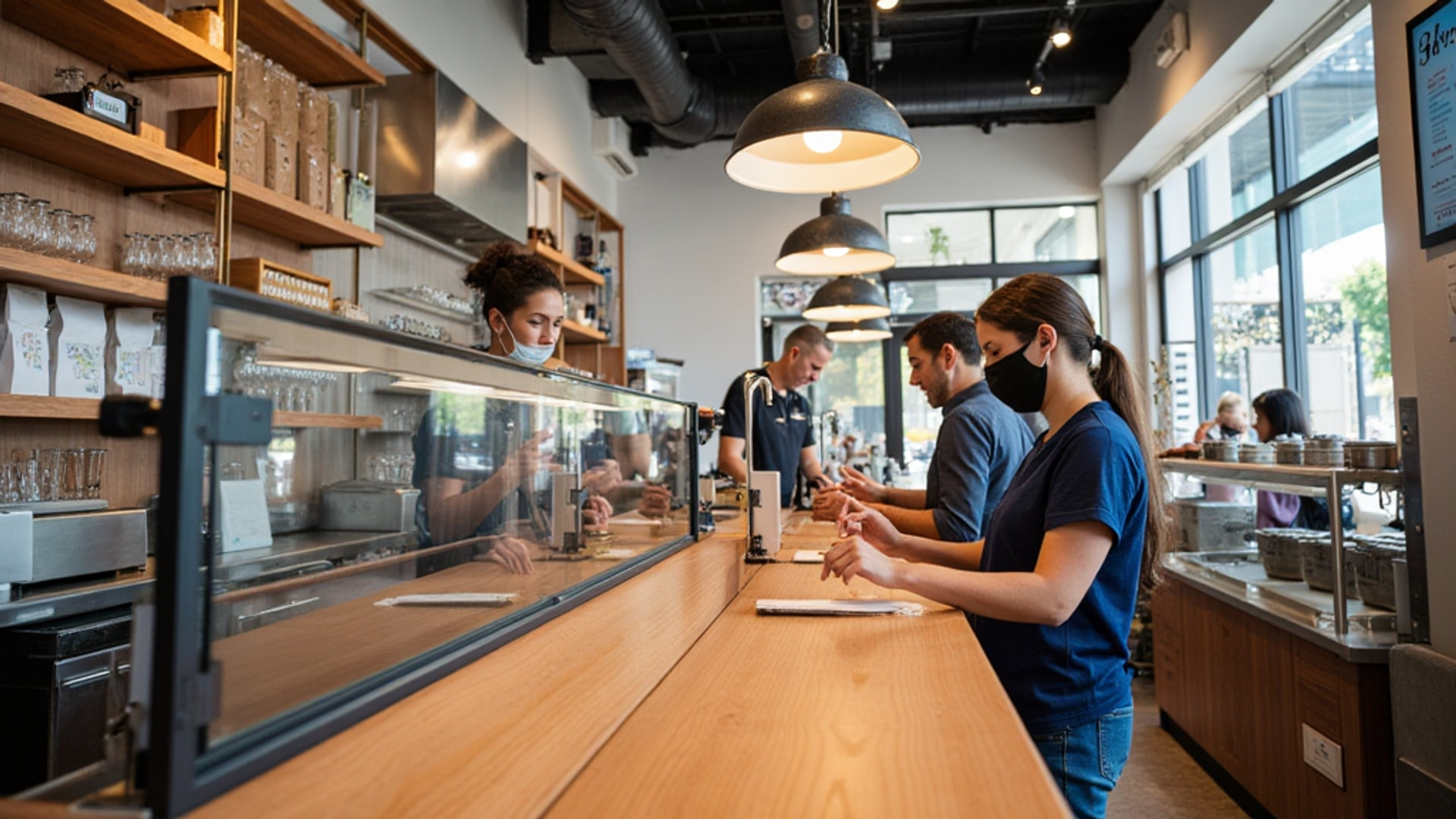
According to Peppr POS, quick-service restaurants report net margins of 4-6%. According to Lightspeed, the range extends to 6-9% for the best performers. QSR benefits from:
- Streamlined operations with faster ticket times
- Lower labor requirements per dollar of revenue
- Higher throughput and table (or counter) turnover
- Simplified menus that reduce food waste
According to Peppr POS, in 2024, QSR saw a 5% increase in transactions and an 8% rise in profits, driven significantly by digital engagement and loyalty programs. The operational simplicity of QSR also makes these concepts more resilient to labor shortages, as fewer specialized positions need filling.
Fast-Casual Restaurants
According to the topic synthesis, fast-casual restaurants operate at margins of 3-6%, occupying the sweet spot between QSR efficiency and casual dining quality.
The growth trajectory of this segment is compelling. According to the topic synthesis, the global fast-casual market was valued at $168.1 billion in 2023 and is projected to reach $301.6 billion by 2032. Standout brands demonstrate the potential: Wingstop posted nearly 21% same-store sales growth, Cava achieved 18% growth, and Chipotle maintained 6% same-store increases.
Full-Service and Casual Dining
According to Peppr POS, full-service restaurants average 2-4% net margins. This is the most challenging segment for profitability due to:
- Higher labor intensity from table service
- Larger dining rooms with higher occupancy costs
- More complex operations and longer service times
- More extensive menus requiring larger inventory
According to the topic synthesis, many legacy casual dining brands have posted flat or declining comparable sales in recent periods, reflecting the margin pressure in this segment.
Fine Dining
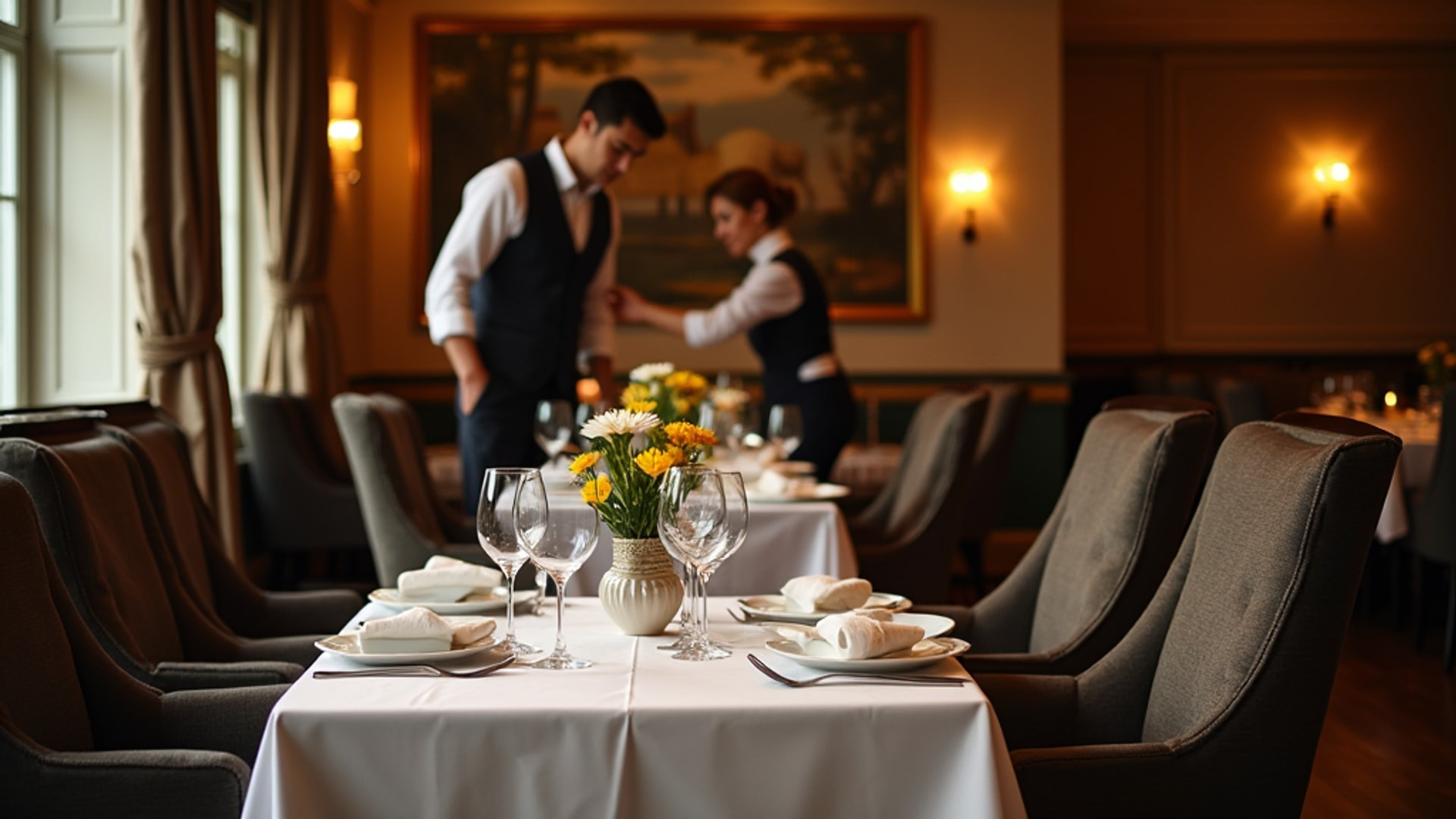
According to Financial Models Lab, fine dining typically achieves 6-10% net margins thanks to premium pricing, with average per-customer spending of $70-$150. However, the path to those margins is steep.
According to Financial Models Lab, fine dining requires:
- A higher staff-to-guest ratio than any other segment
- Specialized positions: sommeliers, experienced servers, pastry chefs
- Higher wages across all positions compared to casual dining
- Fixed costs averaging approximately $41,883 per month
According to Financial Models Lab, the contribution margin on each dollar of sales is high at approximately 82%, but the high fixed cost floor means profitability is highly sensitive to customer volume. Location in affluent, urban, or tourist-heavy areas is critical.
The financial trajectory improves with maturity. According to Financial Models Lab, first-year EBITDA of $267,000 can grow to over $1,057,000 by Year 5 as the restaurant builds reputation and optimizes operations.
Bars and Beverage-Focused Concepts
According to Peppr POS, bars achieve the highest net margins in the industry at 10-25%, driven by the inherent markup on alcoholic beverages. Pour costs on spirits run 14-20%, leaving substantial margin.
Catering Operations
According to Lightspeed, catering businesses average 7-8% margins through volume pricing and controlled environments. Upfront deposits improve cash flow predictability.
Summary Table
| Concept Type | Net Profit Margin | Key Advantage |
|---|---|---|
| Bars / Beverage | 10-25% | High beverage markup |
| Fine dining | 6-10% | Premium pricing |
| QSR / Fast food | 4-9% | High throughput, low labor |
| Catering | 7-8% | Volume pricing |
| Fast-casual | 3-6% | Efficiency-quality balance |
| Full-service / Casual | 2-4% | Broad appeal |
Prime Cost Benchmarks by Segment
Prime cost (COGS plus labor) is the most important controllable metric. According to Baker Tilly, clear targets exist by segment and volume level.
| Segment / Volume | Prime Cost Target |
|---|---|
| Quick-service | 55-60% |
| Full-service | 60-65% |
| Annual sales above $850,000 | 55% or lower |
| Annual sales below $850,000 | 60% or lower |
| Maximum viable | 65% (above this, profitability is extremely difficult) |
According to Baker Tilly, higher-volume restaurants can achieve lower prime cost percentages due to economies of scale in both food purchasing and labor efficiency. Lower-volume restaurants have less flexibility because fixed labor (management, opening and closing staff) represents a larger percentage of sales.
According to Baker Tilly, prime cost exceeding 65% makes profitability extremely difficult regardless of concept type. If you are above this threshold, it is an urgent problem requiring immediate attention.
→ Read more: Prime Cost Management: The Most Important Number in Your Restaurant
Why Volume Matters
According to Over Easy Office, the prime cost benchmark decreases as sales increase because many labor costs are semi-fixed. You need a manager whether you serve 50 guests or 100. You need opening prep staff regardless of how many covers you do at lunch. As sales volume increases, these fixed labor components become a smaller percentage of revenue.
Food Cost Targets by Segment
Food cost percentage benchmarks reflect the dramatic differences in ingredient quality and menu complexity across segments.
| Segment | Food Cost Target | Notes |
|---|---|---|
| Quick-service | 18-22% | Simplified menus, bulk purchasing |
| Fast-casual | 28-30% | Higher-quality ingredients than QSR |
| Full-service | 30-40% | More complex menus, premium ingredients |
| Steakhouses | ~35% | Premium protein costs |
| Pasta-focused | ~28% | Lower-cost primary ingredients |
According to Peppr POS, food expenses rose 34% in 2024, with beef prices up 60%, fats up 50%, and eggs up 40%. These increases have compressed margins across all segments, making food cost management more critical than ever.
According to Peppr POS, overall COGS should target 28-35% of revenue, with most restaurants aiming for gross margins of 65-70%.
Labor Cost Benchmarks by Segment
According to 7shifts, the average labor cost percentage ranges from 29-33% of sales across the industry, but targets vary by format:
| Segment | Labor Cost Target | Notes |
|---|---|---|
| Quick-service / Fast-casual | Below 30% | Fewer staff, faster service |
| Casual dining | 30-35% | More staff, longer service times |
| Fine dining | 35%+ | Specialized positions, higher wages |
According to 7shifts, all labor cost figures should include wages, overtime, payroll taxes, healthcare, benefits, and workers’ compensation — not just hourly wages.
The Labor Challenge in 2025
According to Lightspeed, the labor environment is historically tight:
- 26% of restaurants lack sufficient cooks
- 50% of operators cite recruitment and retention as their biggest challenge
- 70% report understaffing
- Employee turnover costs average $5,864 per employee
These pressures make labor cost management more about retention and scheduling efficiency than about cutting headcount.
The Revenue Allocation Rule of Thumb
According to Lightspeed, a common benchmark divides revenue roughly into thirds:
- One-third to food and beverage costs
- One-third to labor
- One-third for overhead, occupancy, and profit
If any one-third is significantly out of balance, you have a structural problem that needs investigation. A restaurant spending 40% on food has to cut labor below 25% or reduce overhead to compensate — both of which have limits.
Essential KPIs Across All Concepts
According to Pacific Accounting, ten essential metrics apply across all restaurant types:
| KPI | Target | Frequency |
|---|---|---|
| Prime cost % | Below 65% (55-65%) | Weekly |
| Food cost % | 28-35% (varies by segment) | Weekly |
| Labor cost % | 25-35% (varies by segment) | Weekly |
| Gross profit margin | 65-75% | Monthly |
| Net profit margin | 2-9% (varies by segment) | Monthly |
| RevPASH | Varies by daypart | Weekly |
| Average check size | Varies by concept | Weekly |
| Cash reserves | 3-6 months expenses | Monthly |
| Break-even point | Specific to location | Quarterly |
| ROI on investments | Varies by project | Per project |
According to Baker Tilly, weekly prime cost tracking is the minimum standard. Setting specific targets and sharing them with your management team is essential for accountability.
How to Use These Benchmarks
Step 1: Identify Your Segment
Determine which concept type best describes your restaurant. If you are a hybrid (a fast-casual concept with some table service, for example), compare against both adjacent segments and aim for the middle.
Step 2: Calculate Your Current Metrics
Run the numbers for prime cost, food cost, labor cost, and net profit margin using at least the last three months of data. One month can be an anomaly; three months reveals a pattern.
Step 3: Compare Against Segment Benchmarks
Where do you stand relative to the benchmarks for your concept type? A full-service restaurant at 63% prime cost is performing well. The same restaurant at 70% has a serious problem.
Step 4: Investigate Outliers
If any metric is significantly above or below the benchmark for your segment, investigate. High food cost might indicate waste, portioning issues, or supplier pricing problems. Low labor cost might indicate understaffing that is hurting service quality.
Step 5: Set Improvement Targets
According to Baker Tilly, set SMART goals for gradual improvement. Trying to cut prime cost from 68% to 58% in one month is unrealistic and will hurt your operation. Target 1-2 percentage point improvements per quarter.
Strategies That Work Across All Segments
According to Peppr POS, several strategies for improving margins apply regardless of concept:
Revenue strategies:
- Regular menu analysis to eliminate low-margin items
- Menu engineering to promote high-margin items in prime menu positions
- Staff training on upselling
- Revenue diversification through catering, delivery, and retail products
Cost strategies:
- Waste reduction programs (according to Lightspeed, restaurants save $6 for every $1 invested)
- Labor scheduling optimization based on historical sales data
- Vendor negotiation and competitive bidding
- Technology adoption to reduce labor-intensive tasks
According to Peppr POS, small improvements across multiple areas compound into meaningful margin gains. A 1% improvement in food cost, a 1% improvement in labor cost, and a 1% increase in average check size can collectively add 2-3 percentage points to your net margin — potentially doubling it.
The Bottom Line
The right benchmark is the one that matches your concept. A full-service restaurant should not panic about a 4% net margin — that is strong performance for the segment. A QSR at the same margin should be investigating why it is not reaching 6-9%.
According to Baker Tilly, prime cost exceeding 65% makes profitability extremely difficult regardless of concept. That is the universal red line. Everything else is segment-specific: food cost, labor cost, and net margin all need to be evaluated against the right comparison set.
Know your segment, track your numbers weekly, compare against the right benchmarks, and take action when any metric drifts outside its target range. That is the discipline that separates the restaurants that survive from the 50% that do not.
→ Read more: 10 Financial KPIs Every Restaurant Owner Must Track
→ Read more: Daily Sales Reporting: The Numbers Every Restaurant Owner Should Track
→ Read more: Break-Even Analysis and Restaurant Profitability