· Finance · 9 min read
10 Financial KPIs Every Restaurant Owner Must Track
No single metric tells the whole story. Here are the ten financial KPIs that together reveal your restaurant's cost control, revenue efficiency, and profitability -- with industry benchmarks and formulas for each.
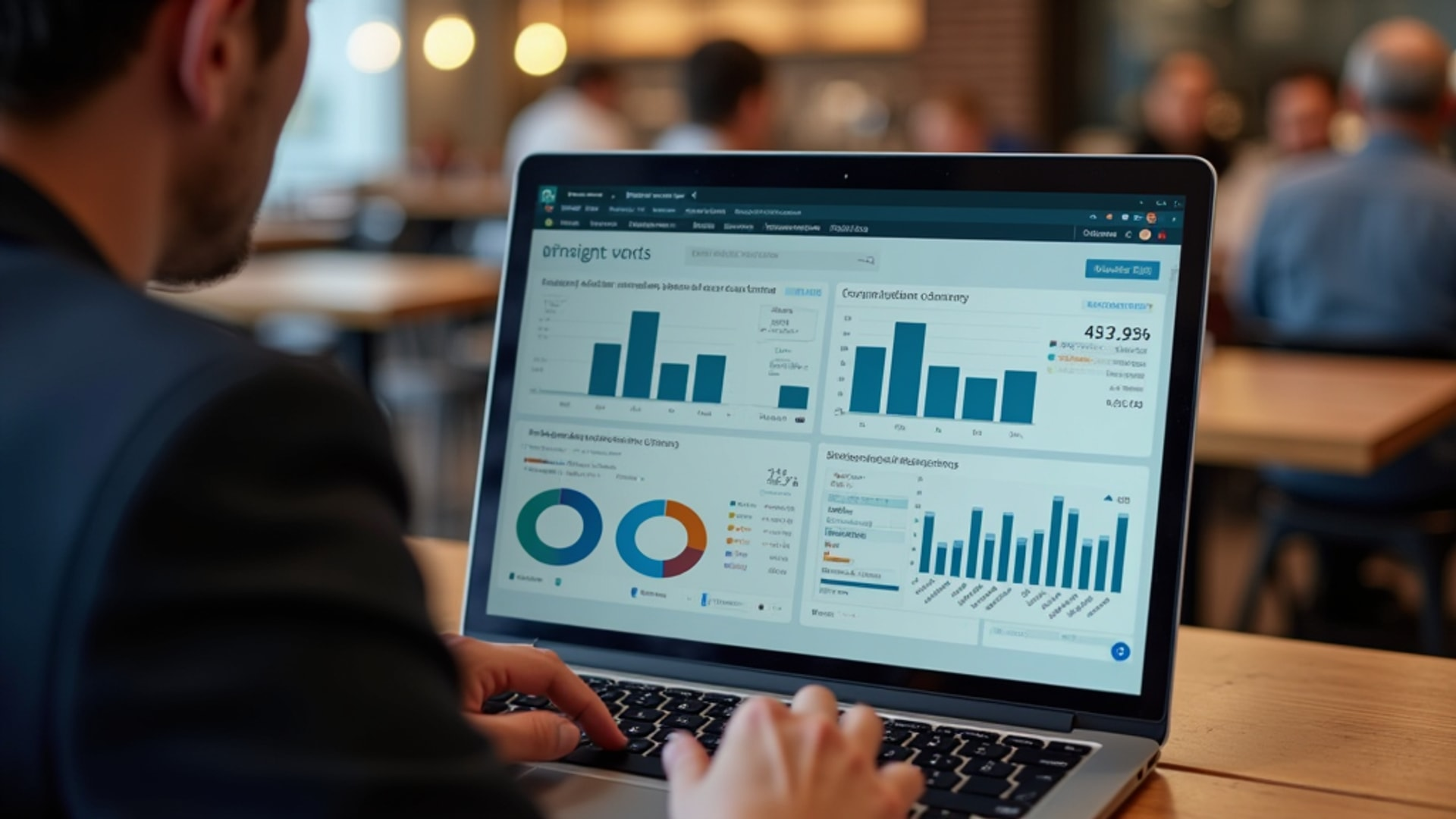
Managing a restaurant by instinct might work for a while. But instinct does not catch a 2% food cost creep over three months, or a labor percentage that is slowly climbing because you added one too many shifts. Data catches those things — if you are tracking the right numbers.
According to Pacific Accounting, no single KPI tells the whole story. Operators need a dashboard of interconnected metrics that together reveal cost control effectiveness, revenue efficiency, and return on investment. Here are the ten financial KPIs every restaurant operator should track, with the formulas, benchmarks, and practical context you need to use them.
KPI 1: Prime Cost
Formula: Prime Cost = Total COGS + Total Labor Costs
Prime Cost Percentage = Prime Cost / Total Sales
This is the most important number in your restaurant’s finances. According to Pacific Accounting, prime cost is the first number to check because it captures your two largest controllable expenses in a single metric.
According to Restaurant365, prime cost typically represents 55-65% of total sales. The benchmarks break down by concept:
| Restaurant Type | Prime Cost Target |
|---|---|
| Full-service | 60-65% |
| Quick-service | 55-60% |
| Annual sales above $850,000 | 55% or lower |
| Annual sales below $850,000 | 60% or lower |
Worked Example
According to Restaurant365, here is a real calculation: For one week with COGS of $6,000 (starting inventory $12,000 + purchases $3,000 - ending inventory $9,000) plus labor of $7,000, the prime cost is $13,000. Against $22,000 in weekly sales, the prime cost percentage is 59.1% — right in the target range.
Why Prime Cost Matters Most
Every other KPI flows from prime cost. If your prime cost is 70%, it does not matter how good your marketing is or how beautiful your dining room looks — there is not enough margin left for rent, utilities, and profit. According to Restaurant365, restaurants should track prime cost weekly or monthly rather than annually, and analyze variance between theoretical and actual food costs to identify waste, theft, or portioning issues.
→ Read more: Prime Cost Management: The One Number That Predicts Restaurant Profitability
KPI 2: Food Cost Percentage
Formula: Food Cost Percentage = (Beginning Inventory + Purchases - Ending Inventory) / Total Food Sales x 100
According to Pacific Accounting, food cost percentage should target 28-35%. The ranges vary by format:
| Format | Food Cost Target |
|---|---|
| Quick-service | 18-22% |
| Fast-casual | 28-30% |
| Full-service | 30-40% |
According to Pacific Accounting, consistently exceeding 35% signals pricing, waste, or portioning problems. This is the metric that tells you whether you are buying efficiently, storing properly, and portioning consistently.
KPI 3: Labor Cost Percentage
Formula: Labor Cost Percentage = Total Labor / Total Revenue x 100
According to Pacific Accounting, labor cost should target 25-35% of total sales. This is the most controllable major expense category. Total labor includes not just wages, but also payroll taxes, benefits, and workers’ compensation.
Managing labor cost is a balancing act. According to Lightspeed, cutting labor too aggressively harms service quality and revenue, while overstaffing erodes margins. The goal is matching staffing levels precisely to revenue levels, which requires scheduling based on historical sales data by daypart and day of week.
KPI 4: Revenue Per Available Seat Hour (RevPASH)
Formula: RevPASH = Total Revenue / (Seats x Operating Hours)
According to Pacific Accounting, RevPASH measures how effectively your dining space generates income. It is the most granular efficiency metric available, and it varies significantly by daypart.
For example, a 50-seat restaurant open for 10 hours generating $5,000 in daily revenue has a RevPASH of $10. That same restaurant might achieve $15 RevPASH during dinner and $6 during lunch — highlighting where seat utilization needs improvement.
RevPASH reveals opportunities that total revenue obscures. If your Friday dinner RevPASH is $18 but your Tuesday lunch is $4, you know exactly where to focus marketing, staffing adjustments, or menu promotions.
KPI 5: Gross Profit Margin
Formula: Gross Profit Margin = (Net Sales - COGS) / Net Sales x 100
According to Pacific Accounting, gross profit margin should target 65-75%. According to Lightspeed, approximately $70 of every $100 a guest spends represents gross profit. This margin must cover all other expenses — labor, rent, utilities, marketing — before producing net profit.
Gross profit margin is the clearest measure of whether your menu pricing and food costs are in balance. If your gross margin is below 65%, either your prices are too low or your ingredient costs are too high.
KPI 6: Break-Even Point
Formula: Break-Even Point = Total Fixed Costs / Contribution Margin Ratio
Or, in guest terms:
Break-Even Point = Total Fixed Costs / (Average Revenue Per Guest - Variable Cost Per Guest)
According to Restaurant365, the break-even point represents the revenue needed to cover all operating costs without generating a profit or loss. It is specific to each location and tells you the minimum revenue you need to avoid losing money.
Fixed vs. Variable Costs
According to Restaurant365, costs break into two categories for break-even analysis:
- Fixed costs (constant regardless of sales): rent, insurance, property taxes, phone, internet, marketing, licenses, utilities (averaged monthly)
- Variable costs (fluctuate with sales): food and beverage costs, labor, credit card processing fees, takeout packaging
When to Recalculate
According to Restaurant365, most restaurants should revisit break-even analysis monthly or whenever there is a major change in costs, pricing, or operating hours. Seasonal businesses may need separate break-even points for peak and off-peak periods.
Understanding your break-even point helps you decide whether to stay open during slow periods, how aggressively to price new items, when to add or cut staff, and whether a proposed renovation will pay for itself.
KPI 7: Cash Flow
According to Pacific Accounting, the target is 3-6 months of operating expenses in reserve. Track cash flow weekly at minimum. Cash flow is essential for meeting payroll and obligations — a restaurant can be profitable on the P&L but cash-poor if the timing of inflows and outflows is misaligned.
Cash flow is not the same as profit. You can show a net profit on your P&L while running out of cash if your payroll hits before your credit card deposits clear, or if you prepaid for a large catering order that has not been invoiced yet.
KPI 8: Average Check Size
Formula: Average Check Size = Total Revenue / Number of Covers
According to Pacific Accounting, average check size varies by concept and daypart. It is a key lever for improving revenue without increasing guest count. Rather than spending on marketing to attract new guests, increasing your average check by $3-5 per person delivers immediate revenue growth from your existing traffic.
Levers that influence average check size:
- Menu engineering (positioning high-margin items prominently)
- Upselling training for servers
- Beverage program promotion
- Dessert menu strategy
- Pricing adjustments
KPI 9: Accounts Payable Turnover
Formula: Accounts Payable Turnover = Total Purchases / Average Accounts Payable
According to Pacific Accounting, this metric shows how quickly you pay suppliers. It balances vendor relationships with cash management. Paying too fast reduces your cash buffer. Paying too slowly damages supplier relationships and may cost you early-payment discounts.
KPI 10: Return on Investment
Formula: ROI = (Net Profit from Investment / Cost of Investment) x 100
According to Pacific Accounting, ROI evaluates the payback period for major capital expenditures like renovations, equipment purchases, or technology upgrades. Every significant investment should have a projected ROI before you commit the capital.
According to Lightspeed, restaurants save an estimated $6 for every $1 invested in waste reduction programs. That is a 500% ROI — the kind of return that makes a $5,000 investment in waste tracking technology an easy decision.
Industry Benchmarks at a Glance
Understanding where your restaurant fits in the broader industry context helps you set realistic targets. According to Lightspeed, net profit margins by format:
| Restaurant Type | Net Profit Margin |
|---|---|
| Full-service | 2-6% |
| Quick-service / Fast food | 6-9% |
| Cafes | 2.5-15% |
| Food trucks | 6-9% |
| Catering | 7-8% |
| Industry average | 2-6% |
According to Lightspeed, approximately 50% of U.S. restaurants close within five years, largely due to insufficient margins and poor cost control. These slim margins explain why small cost overruns have outsized effects — a 2% increase in food cost on a restaurant doing $1 million annually is $20,000, which could represent a third or more of total net profit.
The Revenue Allocation Rule of Thumb
According to Lightspeed, a common benchmark divides revenue roughly into thirds:
- One-third to food costs
- One-third to labor
- One-third for overhead, occupancy, and profit
If any one of these thirds is significantly larger than the others, you have an imbalance that needs investigation.
Building Your KPI Dashboard
The value of KPIs comes from tracking them consistently and comparing over time. Here is how to build a practical dashboard.
Weekly Dashboard
| KPI | This Week | Last Week | 4-Week Avg | Target |
|---|---|---|---|---|
| Prime cost % | 55-65% | |||
| Food cost % | 28-35% | |||
| Labor cost % | 25-35% | |||
| RevPASH | Varies | |||
| Average check size | Varies | |||
| Cash on hand | 3-6 months |
Monthly Dashboard
Add these to your weekly tracking:
- Gross profit margin (target: 65-75%)
- Net profit margin (target: 3-9% by format)
- Break-even analysis (recalculate if costs changed)
- Accounts payable turnover
- ROI on active investments
Practical Application
According to Restaurant365, set SMART goals for gradual improvement in underperforming metrics. Use automated systems — integrated POS and accounting software — for data collection and reporting.
→ Read more: Daily Sales Reporting: The Numbers Every Restaurant Owner Should Track And critically, no metric should be optimized in isolation. According to Lightspeed, cutting labor too aggressively harms service quality and revenue, while cutting food costs too deeply erodes the product that drives sales.
Strategies to Improve Your KPIs
According to Lightspeed, improvement strategies fall into two categories:
Revenue-Side Strategies
- Optimize menu pricing within the 28-35% food cost target
- Use menu engineering to highlight high-profit items
- Train staff on upselling techniques
- Boost marketing and loyalty programs
- Improve table turnover through faster seating and payment processing
Cost-Side Strategies
- Optimize scheduling based on revenue data by daypart
- Reduce food waste (restaurants save an estimated $6 for every $1 invested in waste reduction, according to Lightspeed)
- Lower utility bills through energy-efficient equipment
- Analyze variance between theoretical and actual food costs, according to Restaurant365
- Regularly evaluate supplier pricing and vendor agreements
The Bottom Line
These ten KPIs form a complete picture of your restaurant’s financial health. No single metric tells the full story, but together they reveal exactly where money is being earned, where it is being lost, and where the opportunities for improvement lie.
Start with prime cost. If that number is in range, drill into the components. If it is not, you have your priority. Build a weekly dashboard, compare against your own history and industry benchmarks, and investigate any metric that moves more than 2 percentage points in either direction. The restaurants that track these numbers consistently are the ones that survive past year five.