· Case Studies · 13 min read
Fast-Casual Success: What Separates Winners from the Rest
Fast casual posted 11.2% growth in 2023 and 9% in 2024, outpacing every other restaurant segment. Here is what the brands that dominate this space actually do differently — and what you can steal for your own concept.
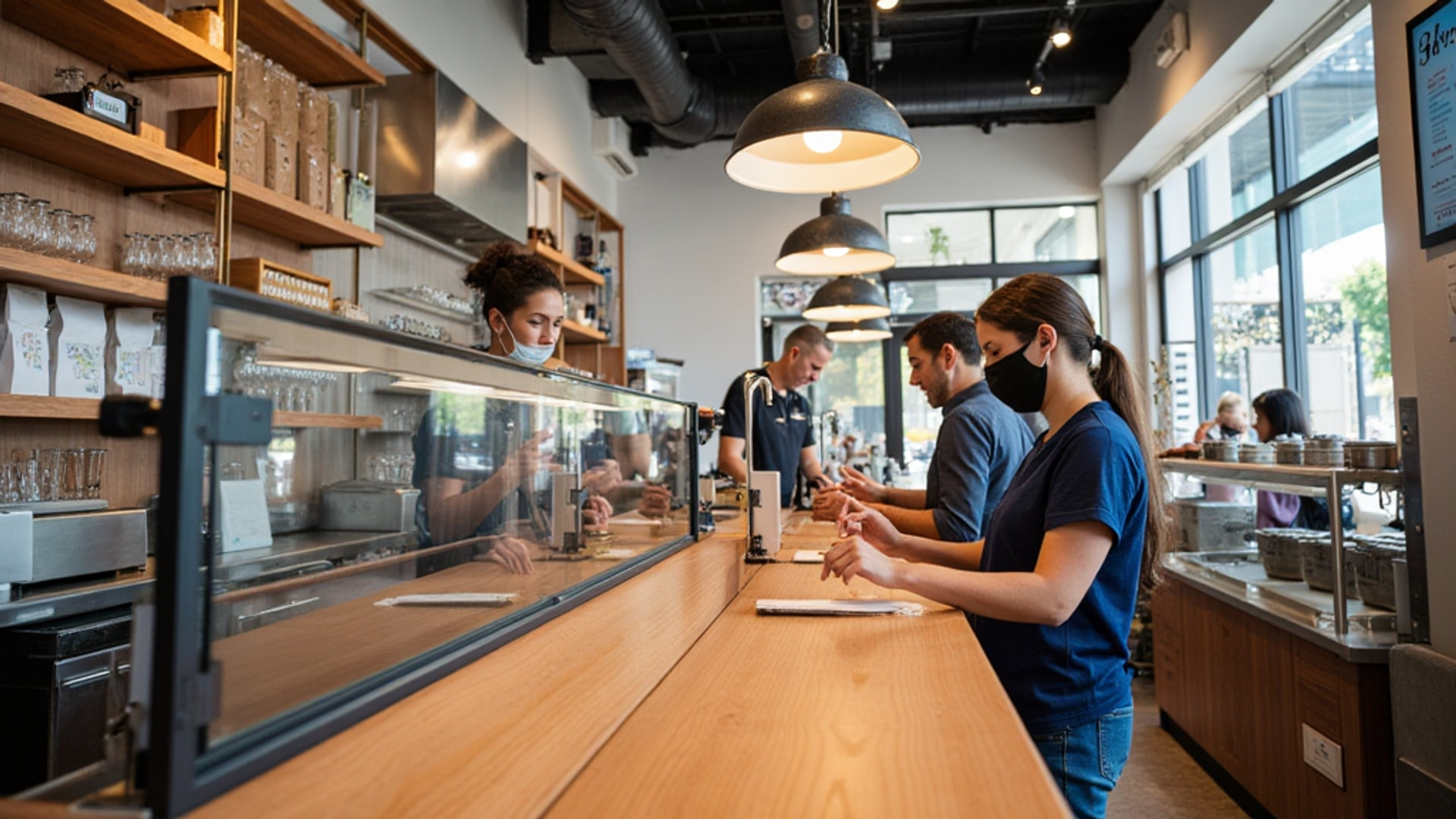
The global fast-casual market hit $168.1 billion in 2023 and is projected to reach $301.6 billion by 2032, growing at 6.6% annually, according to Restaurant Dive. That is not a trend. That is a structural shift in how people eat.
The segment posted 11.2% growth in 2023 and 9% in 2024, outpacing every other restaurant category. Meanwhile, many casual dining chains posted flat or declining comparable sales. The gap between these two segments keeps widening, and the reasons are not mysterious. They are replicable.
This article breaks down the operating model, financial benchmarks, and strategic decisions behind the fastest-growing brands in fast casual. Whether you are building a new concept or trying to sharpen an existing one, these are the patterns that actually matter.
This article is part of the Restaurant Case Studies collection on NineGuides.
Why Fast Casual Keeps Winning
Fast casual outperforms casual dining through a fundamentally leaner cost structure. Without full table service, extensive bar programs, and oversized dining rooms, operators maintain healthier margins at lower check averages. Understanding these financial benchmarks by concept is critical for any operator evaluating their format. According to Restaurant Dive, the operational simplicity also makes the model more resilient to labor shortages — fewer skilled positions, shorter training timelines, and less exposure to the industry’s persistent 80% annual turnover rate cited by the National Restaurant Association.
But the structural advantage only tells part of the story. The segment dominates because the best operators execute on four principles simultaneously:
- Radical menu focus — fewer items, done perfectly
- Digital infrastructure — not as an add-on, but as a core revenue channel
- Disciplined expansion — density before breadth, systems before speed
- Clear value proposition — quality food, quickly, at a fair price
The brands that nail all four are the ones posting double-digit growth. The ones that miss even one tend to stall.
The Financial Reality of Fast Casual
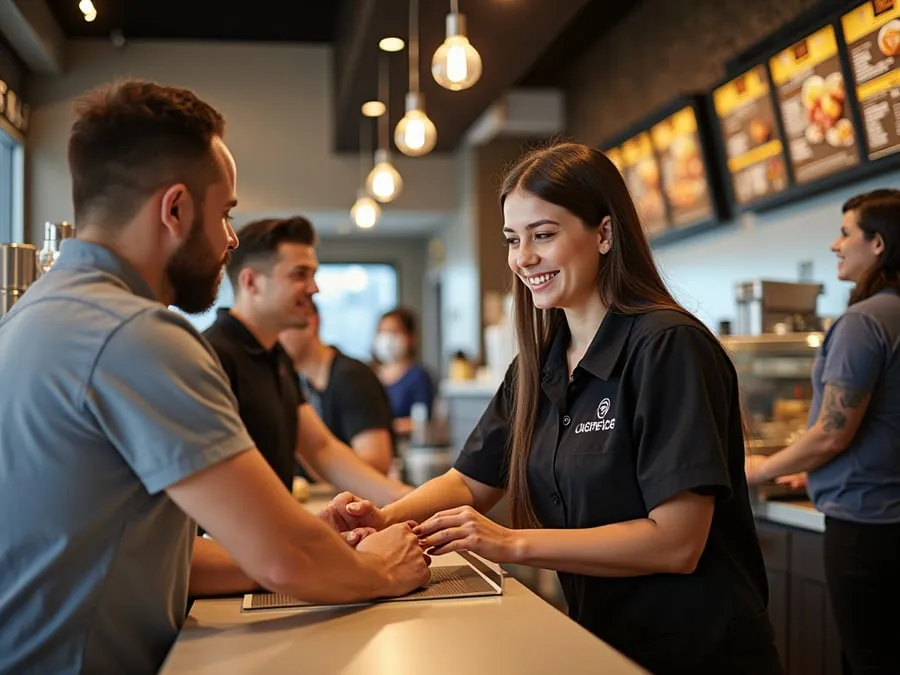
Before diving into brand case studies, you need to understand the numbers. According to financial benchmarks compiled from multiple industry sources, fast-casual restaurants typically operate within these ranges:
| Metric | Fast-Casual Benchmark |
|---|---|
| Net profit margin | 3–6% |
| Food cost | 28–30% |
| Labor cost | Below 30% |
| Prime cost (COGS + labor) | 55–60% |
| Average check | $10–$18 per person |
Compare this to full-service casual dining, which averages just 2–4% net margins with higher labor intensity and overhead. The fast-casual model generates similar or better returns at a lower price point with fewer employees.
The standout brands blow past these averages. Sweetgreen’s first automated Infinite Kitchen location hit 31.1% restaurant-level margins in its first year, according to QSR Magazine. CAVA’s restaurant-level profits exceeded 25% in Q1 2023, per Consumer Edge. These are exceptional results, but they show what is possible when the model is executed with discipline.
Case Study: Raising Cane’s — The Power of Doing One Thing
If you want proof that menu simplicity works, look at Raising Cane’s. The chain serves exactly four items: chicken fingers, fries, Texas toast, and coleslaw. That menu has been essentially unchanged for nearly 30 years.
The results, according to Nation’s Restaurant News: over 900 locations generating $5.1 billion in system sales, a 32% year-over-year increase. The chain surpassed KFC to become the third-largest chicken chain in America. Their Times Square location did $25 million in sales in a single year — more than the busiest Chick-fil-A ($19 million) or McDonald’s ($20 million) location, per The Wall Street Journal.
Here is what that simplicity buys you operationally:
- Training is fast. Employees master a narrow set of tasks, reaching competence weeks faster than at chains with 50-item menus.
- Kitchen throughput is high. No menu complications means no ticket bottlenecks.
- Supply chain is lean. A short ingredient list simplifies purchasing and reduces waste.
- Pricing stays competitive. Lower operational complexity supports attractive price points even with premium ingredients.
Raising Cane’s is also privately held with 97% company-owned U.S. locations. No franchising domestically. That structure lets management make long-term investments — like $200 million in capital expenditures in a single year — without quarterly earnings pressure. The company has posted 64 consecutive quarters of same-store sales growth.
Your takeaway: You do not need a 50-item menu. You need a narrow menu executed perfectly. Every item you add increases training time, slows the line, raises inventory complexity, and dilutes your brand identity.
→ Read more: Menu Simplification: How Fewer Choices Drive More Revenue
Case Study: CAVA — Growth Through Strategic Acquisition
CAVA’s rise shows a different playbook: grow fast by acquiring an established footprint.
The pivotal move was buying Zoe’s Kitchen in 2018 for roughly $300 million. Zoe’s Kitchen was five times CAVA’s size, with about 145 locations. Rather than operating two brands, CAVA systematically converted those restaurants to the CAVA format — 54 conversions in 2021, 63 in 2022, according to Consumer Edge.
This strategy gave CAVA an established real estate footprint without the time and cost of finding and building new locations from scratch. It is one of the smartest expansion plays in recent fast-casual history.
The results were strong enough to support the first consumer growth U.S. IPO since 2022. CAVA raised $365 million in June 2023, with shares opening at $42 (priced at $22), ending the first day up 99% with an approximately $4.9 billion valuation.
Key metrics from the CAVA story:
- Same-store sales growth: 18% (one of the highest in the segment)
- Restaurant-level margins: 20.3% for full year 2022, exceeding 25% in Q1 2023
- Digital acquisition: Nearly one-third of new guests first experienced CAVA through digital ordering
- Digital spend per order: Grew 33% since 2020
- Long-term target: 1,000 U.S. locations by 2032
CAVA’s geographic expansion follows a deliberate pattern the company calls the “coastal smile” — building density along the East and West Coasts while extending through the Southeast into Texas. This approach maximizes regional marketing efficiency.
Your takeaway: If the opportunity exists, acquiring an underperforming competitor with good real estate can be faster and cheaper than building from scratch. CAVA turned someone else’s struggling concept into fuel for their own growth.
Case Study: Shake Shack — From Scarcity to Scale
Danny Meyer started Shake Shack as a hot dog cart in Madison Square Park in 2001. His father’s travel company had gone bankrupt after overexpanding, and Meyer associated rapid growth with existential risk, according to Restaurant Business Online.
So he grew slowly. Deliberately. Customers waited two to three hours before any expansion began. That scarcity built brand equity that money cannot buy.
The strategy has since shifted dramatically. In January 2025, Shake Shack raised its long-term target from 450 to over 1,500 company-owned locations. In 2025, the chain planned to add 45 to 50 new restaurants — the most ever opened in a single year — with 55 to 60 planned for 2026.
But here is the critical detail: before accelerating expansion, Shake Shack invested heavily in operational foundations. According to Restaurant Business Online, the brand:
- Refined kitchen design for consistency at scale
- Improved labor deployment, cutting one minute from average service times
- Installed self-service kiosks in every U.S. restaurant
- Built a digital ecosystem including third-party delivery and a branded app
The expansion also follows a multi-format strategy: drive-throughs for suburban markets, experiential flagships with full bars for entertainment districts, and smaller footprints for secondary markets. And geographically, it builds density within existing markets before entering new regions.
→ Read more: Multi-Unit Restaurant Operations
Your takeaway: There is a right sequence. First, nail the product. Then build the systems. Then scale. Shake Shack spent years perfecting execution before turning up the growth dial. If you reverse that order, expansion amplifies problems instead of profits.
Case Study: Sweetgreen — Betting on Automation
Sweetgreen is making the boldest technology bet in fast casual. In 2021, the company acquired Spyce, an MIT-founded robotics company, for approximately $50 million. The result: the Infinite Kitchen, an automated food assembly system.
According to QSR Magazine, the results from early locations are compelling:
- The first Infinite Kitchen (Naperville, IL) generated $2.8 million in first-year sales with 31.1% restaurant-level margins
- The Hingham, MA location hit 30% margin in its first month — 400 basis points above the prototype
- The system processes up to 500 orders per hour, keeping wait times under five minutes at peak
- Automated locations show 45% lower employee turnover than traditional stores
- Average tickets run 10% higher in automated locations
Sweetgreen plans to deploy the Infinite Kitchen in 50% of new store openings, targeting 40 automated locations by end of 2025. But they have also pulled back from full automation to a hybrid model where humans and robots work together — a pragmatic adjustment that suggests restaurant automation will be evolutionary, not revolutionary.
Beyond automation, Sweetgreen’s business model combines local sourcing (shaping supplier relationships, menu development, and site selection) with AI-driven demand forecasting to reduce food cost volatility. Menu diversification beyond salads into warm bowls and higher-protein items drives visit frequency and check growth.
Your takeaway: You probably are not going to build a $50 million robotics system. But the underlying principle applies at any scale: invest in systems and technology that reduce labor dependency, improve consistency, and increase throughput. Even a well-designed kitchen layout or a solid digital ordering integration can deliver meaningful margin improvement.
Case Study: Chipotle — Surviving a Near-Death Experience
Chipotle’s 2015-2016 food safety crisis is one of the most instructive turnaround stories in the industry. Multiple outbreaks of E. coli, norovirus, and salmonella devastated the brand. According to Cascade Strategy, sales fell more than 30%, the stock dropped over 50%, and net income collapsed from $475 million in 2015 to $22.9 million in 2016.
The recovery required three things most operators are reluctant to do:
1. Spend aggressively on the problem. Chipotle invested $25 million in enhanced food handling protocols, supplier audits, and DNA-based food testing. They hired food safety consultant Mansour Samadpour, who recommended changes at every step of the supply chain, including moving more food preparation to commissaries. In February 2016, every Chipotle location closed simultaneously for a company-wide food safety training.
2. Change leadership. Co-CEO Monty Moran resigned in December 2016. Founder Steve Ells stepped down in November 2017. Brian Niccol, formerly CEO of Taco Bell, took over in February 2018 and relocated the company headquarters — signaling a complete cultural and strategic reset.
3. Pivot the business model. Rather than just restoring the old Chipotle, Niccol invested heavily in digital ordering, partnering with DoorDash for delivery at 95% of locations and building a mobile app. The Chipotlane drive-through, purpose-built for mobile order pickup, became a key growth driver. The digital channel gave customers an ordering method that sidestepped trust concerns about in-store dining.
Net income rebounded to $176 million by 2017. Same-store sales have since grown 6% year-over-year, and the stock eventually surpassed its pre-crisis high.
→ Read more: Chipotle’s Food Safety Crisis and Recovery
Your takeaway: A crisis is survivable if you respond with transparency, operational overhaul, and a willingness to reimagine the business. Half-measures — PR campaigns without real operational change — do not work. Chipotle’s recovery required spending real money, changing real leaders, and building real new capabilities.
The Digital Advantage: Not Optional Anymore
Across every fast-casual success story, digital infrastructure is a non-negotiable. The numbers make the case:
- Panera Bread now generates over 60% of sales through digital channels. Its MyPanera loyalty program has 40+ million members generating over half of total sales, with an 84% increase in customer retention rates.
- Wingstop has nearly 67% of orders through digital channels and is investing $50 million in a proprietary ordering platform, pursuing a goal of 100% digital orders.
- CAVA found that nearly a third of new guests first discover the brand through digital ordering.
- Chick-fil-A reports $22 billion in systemwide sales from just 3,109 locations — an average of $7.5 million per location, the highest among all major U.S. fast-food chains.
Digital ordering creates a flywheel: it improves throughput, generates customer data, enables loyalty programs, and reduces order errors. Brands that invested early are now reaping compounding returns.
But Wingstop’s experience during COVID is instructive: digital orders jumped from 40% to 65% of sales. Rather than treating that as temporary, the company doubled down, opening a prototype restaurant in Dallas with no dining room at all — digital orders only.
Your takeaway: If your digital ordering experience is an afterthought, you are leaving money on the table. At minimum, you need a functional mobile ordering system, a loyalty program that captures data, and the operational capacity to handle digital orders without disrupting in-store flow.
Expansion Discipline: The Pattern That Separates Winners from Casualties
According to Gilkey Restaurant Consulting, the most common mistake in multi-unit expansion is opening new locations before the existing ones have proven, repeatable operational processes. Opening a second location while your first is still running on the owner’s personal hustle is a recipe for failure.
The brands covered in this article all follow the same sequence:
- Prove the unit economics. One profitable, well-run location with documented systems.
- Build the management bench. You cannot be in two kitchens at once. Train leaders who can execute without constant oversight.
- Expand within proven markets first. Shake Shack builds density before breadth. CAVA follows the “coastal smile.” In-N-Out stays within 500 miles of its patty-making facilities.
- Pace the openings. Allow recovery periods between new locations to stabilize systems and learn from each launch.
Raising Cane’s company-owned model lets it control this sequence tightly. Chick-fil-A accepts fewer than 130 operators per year from over 8,000 applicants — a lower acceptance rate than Stanford, according to The Wall Street Journal — because it knows that the wrong operator destroys unit economics faster than any other variable.
What You Can Apply Today
You do not need to be opening a 900-location chain to use these principles. Here is a practical checklist drawn from the patterns across these case studies:
Menu
- Can you describe what you serve in one sentence?
- Could a cook with 90 days of training execute your menu consistently?
- Have you removed items that complicate operations without meaningfully driving revenue?
Digital
- Do you have a functional mobile ordering system?
- Are you capturing customer data through a loyalty program?
- Can your kitchen handle digital orders without disrupting in-store flow?
Expansion readiness
- Are your operations documented — recipes, procedures, financial controls?
- Do you have managers who can run the business without you present?
- Is your first location consistently profitable before you consider a second?
Value proposition
- Is the quality-speed-price equation clear to your customer?
- Can a first-time visitor understand your concept in under 10 seconds?
- Are you competing on something other than just price?
The fast-casual segment did not grow to $168 billion by accident. It grew because the best operators in the space figured out that discipline and simplicity, executed with relentless consistency, beat complexity and ambition every time. That lesson applies whether you are running a single neighborhood restaurant or planning your twentieth location.
Continue Reading
- Restaurant Case Studies — More real stories and lessons from across the restaurant industry.
- Menu Strategy and Design — How to build a menu that balances creativity, profitability, and operational feasibility.
- Restaurant Operations — Systems and processes for running an efficient, consistent restaurant.
- Starting a Restaurant — Complete guides for concept development, business planning, and launch.