· Operations · 8 min read
Server Upselling Techniques: Training Your Team to Increase Check Averages
Well-trained servers who upsell effectively boost revenue by 10-15% per table while improving the guest experience — here is how to build that capability in your team.
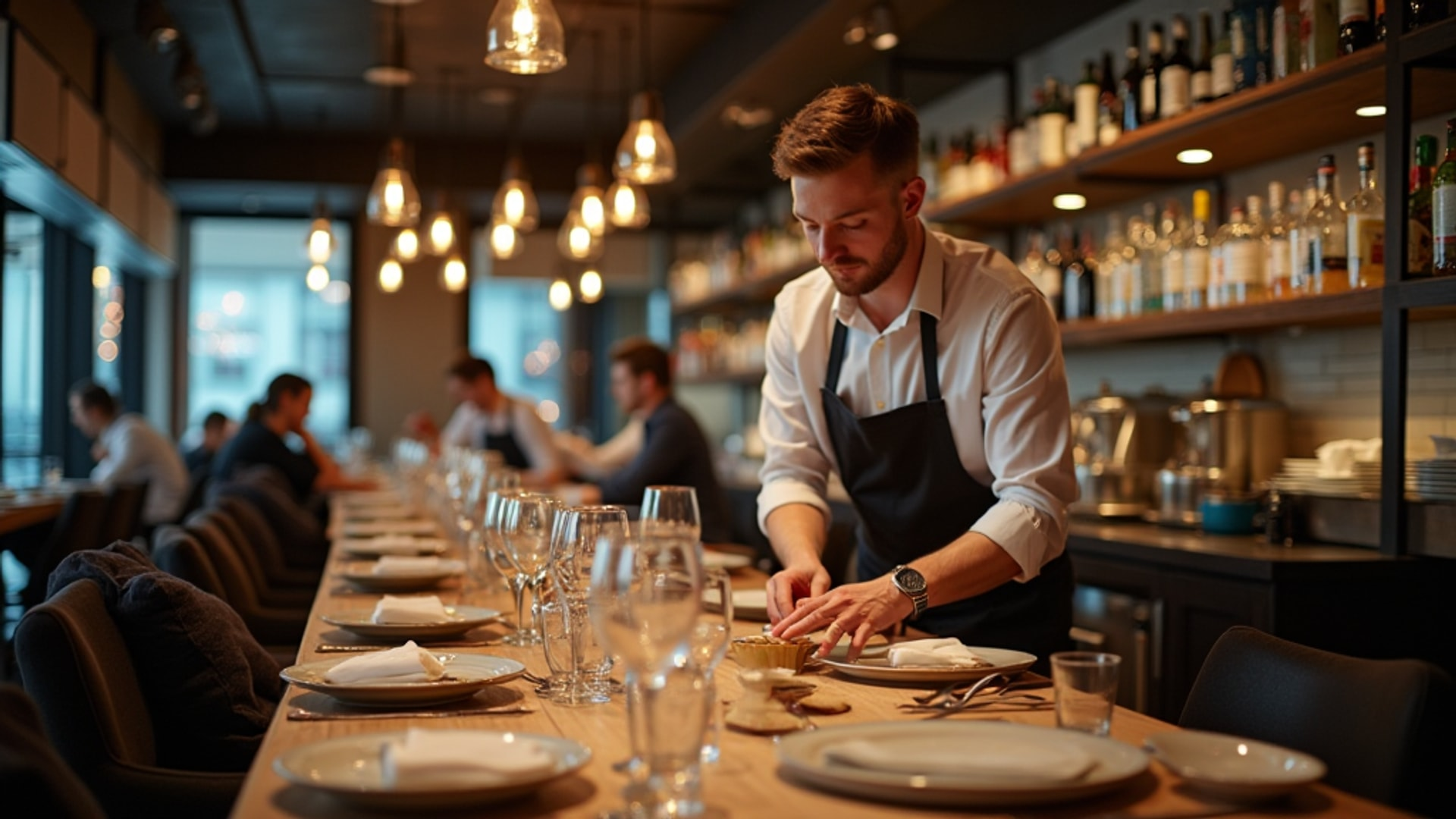
There is a version of upselling that every restaurant guest has experienced and hated: the server who mechanically recites specials no one asked about, pushes add-ons at every opportunity, and makes you feel like a transaction rather than a guest. This is not the version worth training your team to deliver.
Effective upselling is consultative. It serves the guest’s experience first and the restaurant’s revenue second — and the best upselling accomplishes both simultaneously. According to Toast, restaurants that train servers in focused upselling techniques can boost revenue by 10 to 15 percent per table. That is not a small number. On a $60 average check, even a $6 increase per table compounds significantly across a full service period and over the course of a year.
The financial case is real. The method determines whether you get there by improving the guest experience or damaging it.
Why Upselling Works When Done Right
The most important reframe for server training is this: upselling done correctly is actually a service upgrade. Guests who receive informed, personalized recommendations from a server who knows the menu deeply tend to order better food and drink combinations, try items they would not have considered on their own, and leave with a higher overall satisfaction rating.
According to Wenford Simpson’s ABCDXO training system, the goal is to serve guests in a way that goes “above and beyond the call of duty.” The financial outcome — higher checks, better tips — is a natural consequence of providing genuinely helpful service, not a manipulation tactic.
The numbers reinforce this. Simpson’s framework illustrates the compound effect: a server who increases each check from $60 to $66 through thoughtful suggestions while simultaneously improving tip percentage from 15 to 18 percent earns $11.88 per table versus $9.00 previously. Extrapolated across a full shift, week, and year, that represents thousands of dollars in additional income. The training investment is self-reinforcing from the server’s perspective.
When servers understand that they benefit directly — through higher tips — from increasing check averages, their motivation aligns naturally with the restaurant’s revenue goals.
Foundation: Deep Menu Knowledge
No upselling technique works without a foundation of genuine menu knowledge. A server who cannot describe the difference between two wines, does not know which appetizers pair well with which entrees, or cannot speak with confidence about preparation methods and ingredients will produce stilted, ineffective recommendations that guests find off-putting.
According to Toast’s upselling techniques guide, servers who understand ingredient profiles, preparation methods, flavor relationships, and beverage pairings can make authentic recommendations based on the guest’s stated preferences. This knowledge transforms upselling from a scripted pitch into a consultative service that guests appreciate and trust.
Build menu knowledge into every aspect of employee training. Pre-shift tastings let servers speak with personal conviction rather than guessing. Flash cards or training quizzes on ingredients, allergens, and preparation methods create knowledge that sticks. Role-play exercises that simulate common guest questions prepare servers for real service interactions without the awkward improvisation that comes from being underprepared.
Identify which items on your menu have the best margins and ensure servers know them, understand what makes them excellent, and can speak to them naturally. High-margin items that servers recommend and guests enjoy are the intersection where upselling most directly improves both the guest experience and the business’s profitability.
Reading the Table Before Making Recommendations
According to the ABCDXO training framework, effective server performance begins before the first word is spoken. Within seconds of approaching a table, a skilled server reads the social situation: the guests’ apparent mood, the occasion type, whether they seem rushed or relaxed, the presence of children, and the group’s dynamic.
This reading informs every subsequent interaction. A table celebrating a birthday is likely receptive to dessert suggestions and premium beverage recommendations. A business lunch with people checking watches needs efficient service and concise guidance. Guests who are already in conversation when you approach prefer a brief, warm greeting over an extended specials recitation.
The server who matches their approach to the actual table in front of them creates the rapport that makes later recommendations feel helpful rather than intrusive. A recommendation that feels appropriately timed and personally directed lands completely differently than the same words delivered as a rote recitation to every table.
Timing: When to Suggest and When to Stay Silent
Timing determines whether a suggestion feels like service or sales pressure. According to Toast, effective upselling opportunities occur at specific, natural moments in the service flow.
During the beverage order: This is the first natural suggestion point. Offering a craft cocktail, a premium wine, or an interesting beer creates an opportunity to improve the guest’s experience from the first minute. Servers who know the beverage program well can make specific suggestions tied to what the guest indicates they like rather than defaulting to the house wine.
When the food order is placed: After taking entree orders, the server has context to suggest appetizers that complement the meal or premium protein upgrades that match the guest’s apparent preferences. “The tuna tartare pairs really well with the branzino if you want to start with something light” is specific, knowledgeable, and helpful.
After entrees are served: Guests who are mid-meal are not receptive to upselling. After entrees are cleared, the dessert and after-dinner drink window opens. The approach should be warm and brief: a specific dessert recommendation rather than the entire dessert menu, a digestif mention for guests who seem to be lingering.
When guests express indecision: This is the single most valuable upselling moment because the guest is explicitly asking for guidance. A server who responds with a thoughtful, specific recommendation earns trust immediately and almost always closes the suggestion.
What to avoid: suggesting add-ons mid-meal when guests are focused on eating, repeating suggestions after a polite decline, or appearing to rush guests through courses to free the table.
Language and Approach
The words and tone servers use when making suggestions largely determine how they are received.
According to Toast, the approach must be conversational rather than transactional. Phrases like “have you tried our…” or “that pairs really well with…” frame recommendations as helpful suggestions rather than sales pressure. The server’s tone should be that of someone who knows the menu well and is genuinely trying to help the guest have a better experience.
The contrast is with scripted language that reads as procedural: “Would you like to start with an appetizer today?” or “Can I interest you in a dessert?” These phrases signal that the server is executing a sales process, not engaging personally. Guests respond to personal engagement and deflect from sales processes.
After a guest declines a suggestion, accept the decline gracefully without restating or showing disappointment. A guest who feels respected after declining is more receptive to the next suggestion at the appropriate moment. A guest who feels pressured after declining is actively looking for the end of the interaction.
The ABCDXO system uses custom order pads with built-in prompts — reminder sections for specials, beverage highlights, appetizer suggestions, and dessert options — that keep servers focused on the service flow without memorizing an exhaustive script. This structure ensures that upselling opportunities are not missed due to the server forgetting to mention them, while still allowing the conversation to be natural and responsive.
Bundling and Perceived Value
Bundling creates a different kind of upselling opportunity: the guest is not choosing between ordering and not ordering an item, but between two ordering configurations where one provides better perceived value.
According to Toast, a prix fixe option, wine pairing with a multi-course meal, or dessert-and-coffee combination gives guests a reason to add items they might not have ordered individually. The key is that the bundle genuinely represents better value than ordering components separately — guests who feel the bundle is good value will order it willingly.
Seasonal prix fixe menus, weekend brunch combos with a mimosa or Bloody Mary included, and dessert pairings with after-dinner drinks are all bundle structures that have proven effective across restaurant formats. The server’s job is to present the bundle as a natural option — “we do a three-course prix fixe tonight for $45 if you want to try several things” — rather than as an upsell.
Tracking and Sustaining Performance
Upselling skills, once trained, require reinforcement to sustain. According to Toast, tracking individual sales metrics, running friendly competitions for specific promotion items, and offering rewards ranging from cash bonuses to preferred shift assignments keep the team engaged over time.
The natural financial incentive of higher tips from larger checks provides ongoing motivation, but short-term competitions and recognition create the additional energy that keeps servers actively applying their skills rather than falling into service habits.
Review check averages by server regularly. Significant differences between servers who are otherwise similar in experience level often indicate differences in upselling confidence or technique — and those differences can be addressed through targeted coaching. The server with consistently lower check averages than peers may not know they are underperforming without data to contextualize it.
Upselling is not a script. It is a skill set built on menu knowledge, social awareness, precise timing, and authentic communication. Trained well and reinforced consistently, it is one of the most direct revenue levers available to a restaurant operator — while simultaneously making the guest’s experience better than they might have arranged on their own.
→ Read more: Customer Service Excellence: Building a Culture of Hospitality → Read more: Employee Training in Restaurant Operations: From Onboarding to Mastery → Read more: Handling Customer Complaints: The Recovery Techniques That Save Guest Relationships → Read more: Operations KPI Dashboard: The Numbers Every Restaurant Manager Should Track Daily