· Menu & Food · 9 min read
Dynamic Pricing for Restaurants: Demand-Based Strategies That Work
A practical guide to implementing demand-based pricing in restaurants, from proven time-of-day models to automated systems, with data on revenue impact and customer acceptance.
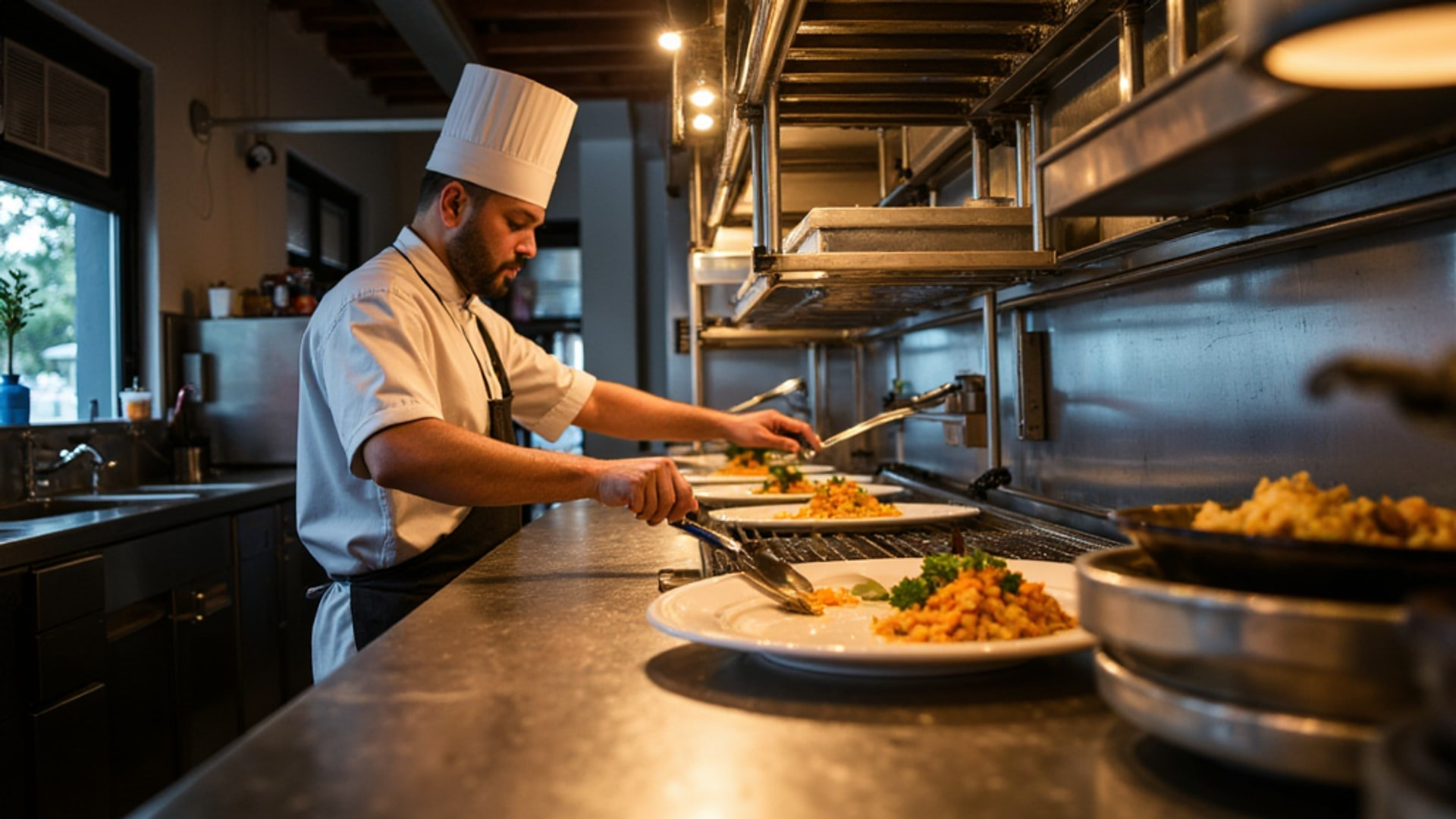
Dynamic pricing — adjusting prices based on demand, time, and cost factors in real time — is already operating in your restaurant. You just might not be calling it that. Happy hour discounts, lunch specials, and early-bird pricing are all forms of demand-based pricing that most operators have run for years. What’s changed is the technology, the granularity, and the scale at which dynamic pricing can now operate.
NetSuite cites research from hotel and airline revenue management — industries where dynamic pricing has been standard for decades — suggests that applying similar principles to restaurants can generate 3-5% revenue gains. Given that a typical restaurant operates on net profit margins of 3-9%, that improvement is transformational. The same research shows that a 1% price increase, applied strategically, can yield approximately a 12% increase in profit.
Understanding what works, what doesn’t, and where the customer perception risks lie is essential before any operator moves beyond traditional discount formats.
The Revenue Case for Dynamic Pricing
The economic logic of dynamic pricing is straightforward: price is a mechanism for matching supply to demand. When demand exceeds your capacity (Friday dinner service, Valentine’s Day, local events), static pricing leaves money on the table. When demand falls below capacity (Tuesday lunch, late-night weekday service), static pricing either fails to generate traffic or generates it at unprofitable volume.
Dynamic pricing addresses both sides of this equation. Adjusting prices upward during high-demand periods captures more revenue per cover. Adjusting prices downward during slow periods drives incremental traffic that would otherwise go elsewhere.
NetSuite cites a real-world example: Bartaco, a regional taco chain, implemented 5-10% delivery price adjustments and saw 4-6% monthly revenue increases. This is not a theoretical model — it is documented operator experience with a modest price variation producing meaningful top-line improvement.
The math on margin amplification is significant. In a business with 5% net profit margins, a 1% revenue increase from pricing optimization drops nearly entirely to the bottom line (assuming it doesn’t generate additional variable costs). A restaurant with $2 million in annual revenue that achieves a 3% revenue gain from dynamic pricing generates $60,000 in additional profit — potentially more than doubling net income.
Forms of Dynamic Pricing Already in Practice
Most restaurants are already practicing forms of dynamic pricing without formal recognition. The evolution is toward more systematic, data-driven, and automated implementation.
Time-of-day pricing. This is the most accepted form. Happy hour discounts, lunch specials, breakfast menus priced below dinner equivalents, and late-night menus at adjusted price points all represent prices that vary by time. Customers have accepted this model for decades because it aligns with intuitive fairness: paying less at an off-peak time feels like a benefit rather than a price change.
Day-of-week pricing. Weeknight prix fixe at a lower price point than weekend à la carte, or a Monday-Thursday lunch special, represents pricing adjusted for predictable demand variation. This is practiced widely and generates minimal resistance because the discount framing is consistent.
Channel-based pricing. Delivery orders priced higher than dine-in to account for platform fees and packaging costs has become widespread and is increasingly accepted. OneHub POS notes that delivery and online ordering platforms already implement surge pricing and demand-based adjustments. Consumer acceptance of delivery premiums (typically 10-20% above in-house pricing) is well established.
→ Read more: Takeout and Delivery Menu Optimization: Designing for Off-Premise Success
Early-bird pricing. Dinner service pricing that rewards customers who eat at 5:30 PM versus 8:00 PM redistributes demand more evenly across service, improving table turns and kitchen efficiency. Operators who time early-bird promotions well can meaningfully improve total revenue per service period.
Technology Enablers: What Makes Granular Dynamic Pricing Possible
The technology that enabled dynamic pricing in airlines and hotels was always about real-time data and real-time price delivery. Restaurants lacked both until recently.
Digital menus — through QR codes, tablets at the table, or digital display boards — now allow price updates in real time without reprinting costs. According to OneHub POS, integrated POS systems can track demand patterns by hour, day, and season, providing the data foundation for informed pricing adjustments. Analytics platforms identify optimal price points for different items across different time periods.
For operators at the technology vanguard, this creates the possibility of fully automated price adjustments: AI-driven systems that monitor reservation counts, walk-in traffic, current weather, local events, and ingredient costs simultaneously, adjusting prices within predefined parameters to optimize revenue per available seat per hour.
For most operators, the practical entry point is much simpler: using POS data to identify your slow and busy periods, then applying discount promotions during slow periods and standard (or slightly elevated) pricing during peak periods. This can be executed with basic digital menu capabilities and existing staff training.
Ingredient-Cost Triggered Pricing
One form of dynamic pricing that generates very little customer resistance is adjusting prices when specific ingredient costs change materially. Automated price adjustments triggered by ingredient cost fluctuations protect margins in a way that feels fair to customers because it reflects actual cost reality.
Seafood prices fluctuate significantly with season and supply. A fish dish priced at $28 when salmon costs $8 per pound becomes a margin problem when salmon goes to $12 per pound. An automatic $3-4 price adjustment triggered by that cost change is operationally sensible and, communicated transparently (“Market price today: $32”), is generally accepted by customers.
The key is transparency. Ingredient cost-driven pricing that is hidden or unexplained feels like gouging. The same pricing change communicated as a reflection of current market costs feels honest.
This principle extends to the wider menu. If a commodity price (beef, cooking oil, eggs) spikes materially, a transparent, modest menu adjustment is better than absorbing the loss indefinitely or abruptly removing items. Customers who understand that food costs fluctuate — and most do — respond better to honest communication than to unannounced changes.
Event-Based and Weather-Driven Pricing
Local events create predictable demand spikes that static pricing cannot capture. A restaurant near a stadium will see significantly higher demand before home games. A venue near a convention center will see demand variation directly tied to convention schedules. A downtown restaurant will experience elevated demand during major festivals.
Static pricing during these periods leaves significant revenue on the table. Event-based pricing — either by raising prices modestly (10-15%) during peak event periods or by eliminating promotional discounts that are normally in place — captures this value.
Weather-driven pricing adjustment follows similar logic. Cold weather drives more indoor dining and hot beverage consumption. Extreme weather of either type reduces casual dining traffic. Operators who track weather-demand correlations from historical POS data can anticipate these patterns and adjust both pricing and staffing accordingly.
The Customer Perception Problem
The single biggest constraint on broader dynamic pricing adoption in restaurants is customer acceptance. OneHub POS frames this clearly: diners generally accept paying less during off-peak times (perceived as a benefit) but resist paying more during peak periods (perceived as exploitation). The psychological framing matters enormously.
NetSuite identifies the same dynamic: price volatility has made consumers more sensitive to perceived fairness. When the same item costs different amounts at different times, the explanation matters more than the variation itself.
The research suggests two principles for managing perception:
Frame discounts as promotions, not peak prices as standard. If your baseline price is $15 and you offer it at $10 during happy hour, communicate this as a $10 happy hour special — not as $15 with a $5 surcharge during dinner. Mathematically identical. Psychologically very different.
Be transparent. Dynamic pricing that customers discover accidentally generates backlash. Dynamic pricing that is communicated proactively — “Our delivery prices are slightly higher to cover packaging and platform fees,” or “Check our weeknight menu for our Tuesday special pricing” — is accepted because customers feel informed rather than manipulated.
NetSuite’s Bartaco example worked in part because the pricing adjustment was on delivery (a channel where premiums are already normalized) and was applied at a modest level (5-10%) rather than a dramatic one.
What to Implement and in What Order
For operators new to dynamic pricing beyond traditional happy hour, a staged approach reduces risk:
Stage 1: Audit your current pricing by daypart. Use POS data to identify your slow periods (typically Monday-Wednesday lunch and early evening). Quantify the revenue opportunity if you could fill 15-20% more covers during these periods.
Stage 2: Implement off-peak promotions. These are discounts on drinks, prix fixe options at lower price points, or specific weeknight meal deals that create an incentive to visit during slow periods. This is the lowest-risk entry point — it’s additive (you’re offering value) rather than extractive.
Stage 3: Evaluate channel pricing. If you’re on delivery platforms, ensure your delivery menu pricing reflects the full cost of that channel. If it doesn’t, adjust it — this is now market standard and well-accepted.
Stage 4: Implement event-based and ingredient-cost adjustments. Build into your operations a protocol for reviewing and adjusting prices when material cost triggers occur (specific ingredient price thresholds, upcoming events) rather than waiting for annual menu reprints.
Stage 5 (advanced): Explore automated pricing tools. Several POS and restaurant management platforms now offer integrated dynamic pricing modules. These are most appropriate for operators with multiple locations, high transaction volume, and the analytical capacity to monitor and tune the system.
The Trust Foundation
The technology and economics of dynamic pricing are available to any operator willing to implement them. The limiting factor, as both OneHub POS and NetSuite emphasize, is the customer relationship.
Dynamic pricing works when customers trust that the price variation reflects genuine value logic — real cost changes, real demand differences, real fairness — rather than opportunistic extraction. Restaurants that have built strong customer relationships and communicate changes transparently will find that customers accept and even appreciate dynamic pricing.
Restaurants that have strained customer relationships, communicate poorly, or implement changes abruptly will face backlash that erases the revenue gains. The technology is mature, according to OneHub POS; the implementation challenge is psychological and relational. Get the relationship right first, and the pricing tools will amplify it rather than undermine it.
→ Read more: Menu Pricing Mistakes: The Errors That Cost Operators Real Money → Read more: Menu Pricing Psychology: 9 Tactics That Influence What Guests Order