· Menu & Food · 9 min read
Menu Pricing Mistakes: The Errors That Cost Operators Real Money
The most expensive pricing errors restaurant operators make — from guesswork markup to ignoring contribution margin — and the systems that fix them.
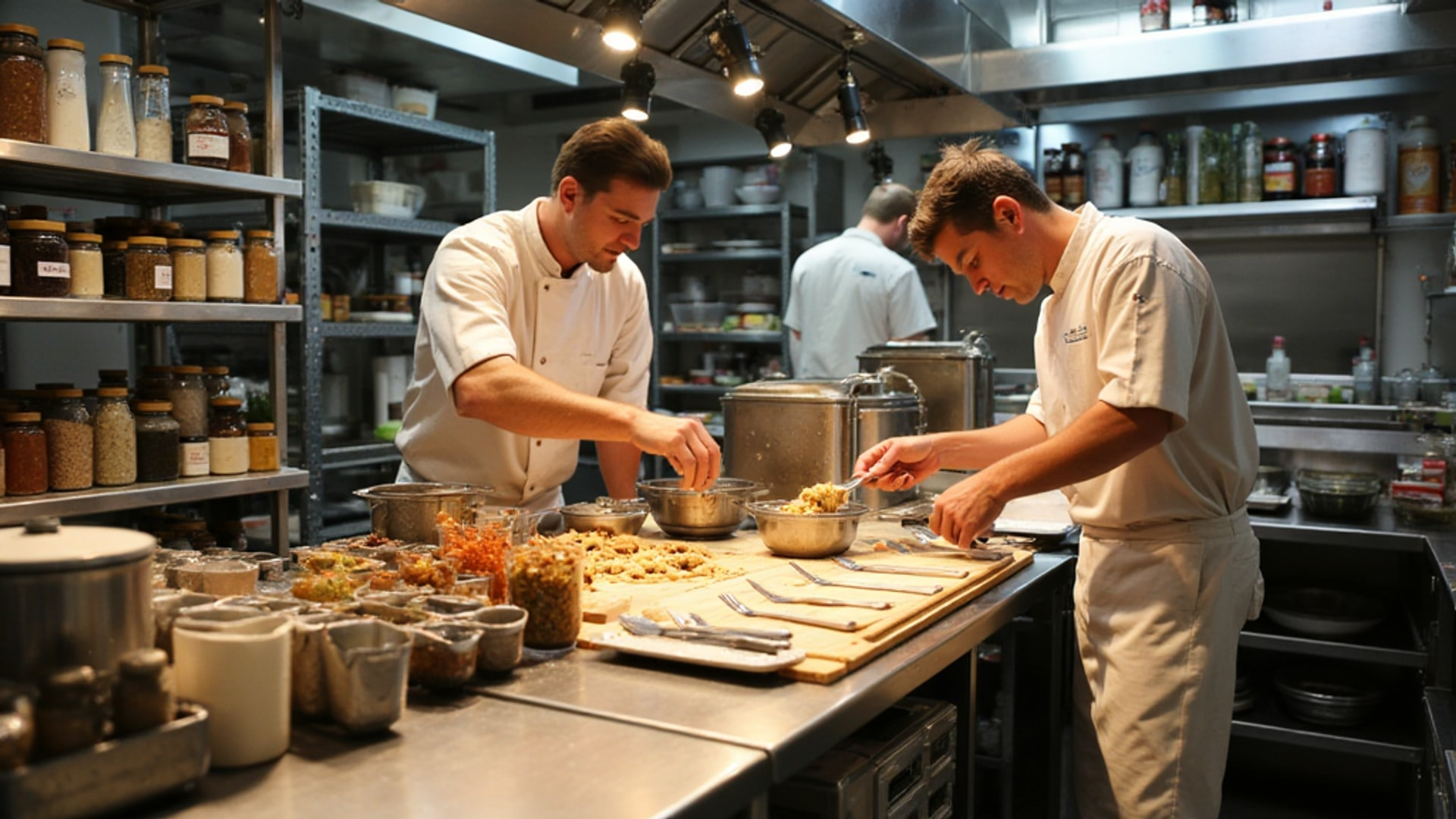
Restaurants operate on margins that average 3–6% for full-service concepts. That number is so thin that pricing errors do not take long to compound into serious losses. Yet most operators make the same mistakes repeatedly, often without realizing it, because the errors are baked into habits that feel like normal operating procedure.
This is a direct look at the most expensive menu pricing mistakes and the specific corrections that fix them.
Mistake 1: Pricing by Guesswork or Competitor Copying
The most fundamental pricing error is not calculating the actual cost of each dish. Instead, operators either apply a rough markup factor to an estimated cost, or they look at what competitors charge and price similarly. David Scott Peters, author of Restaurant Prosperity Formula, identifies this as the single biggest pricing mistake: “Without accurate costing, every pricing decision is a guess.”
Competitor pricing as a reference point is not wrong in principle — market awareness matters. But treating competitor prices as a substitute for your own cost calculations ignores the reality that two restaurants serving similar dishes can have vastly different cost structures based on their suppliers, portion sizes, waste levels, and kitchen efficiency. If your production cost for a dish is $6 and a competitor’s is $4 for a comparable item, matching their price leaves you losing money on every plate sold.
The correction is building recipe costing cards for every menu item. These are not optional for serious operators. They document every ingredient, its quantity per portion, its current unit cost, and the resulting per-dish cost. They must be updated when ingredient prices change — which is more frequently than most operators update them.
Mistake 2: Ignoring Yield and Hidden Costs
Recipe costing cards that only capture the visible ingredients and ignore yield losses and hidden costs produce systematically low cost estimates. Chef’s Resources identifies this as a critical gap that separates amateur costing from professional costing.
The core concept is the distinction between As Purchased (AP) cost and Edible Portion (EP) cost. When you pay for a pound of asparagus, you are paying for the whole spear including the woody root end that gets trimmed before service. The actual cost of the portion on the plate is higher than the raw per-pound price implies. For whole proteins, the gap is even wider. A 10-pound pork loin purchased at $5/lb has a nominal cost of $50. After trimming, deboning, and cooking loss, the usable yield might be 6.5 pounds — meaning the effective cost is $7.69/lb, not $5.
Yield percentage charts exist for common proteins and produce and are freely available. Using them takes minutes. Not using them means every protein cost estimate is understated, sometimes by 30–40%.
Hidden costs that many operators miss include complimentary bread and butter (which must be amortized across entree costs), cooking oils (which depreciate through use), and garnishes. Chef’s Resources recommends dividing monthly oil usage by monthly entrees sold and adding that per-plate cost to relevant items. A basket of bread with butter that costs $0.80 per table but gets allocated across four entrees adds $0.20 per dish to actual plate costs — not dramatic in isolation, but multiplied across thousands of covers per month, it matters.
→ Read more: Menu Item Costing Spreadsheet: Building Your Recipe Costing System
Mistake 3: Applying Blanket Markups Across the Entire Menu
Applying a uniform 3x or 4x multiplier to all ingredient costs ignores the structural differences between high-cost and low-cost items. The result is that expensive proteins get underpriced while inexpensive carbohydrates and plant-forward dishes get overpriced — distorting both margins and customer value perception.
The more sophisticated approach is Market-Minus pricing, where you start with what the market will pay for a category of dish and work backward to determine your ingredient budget. According to data from The Restaurant Boss YouTube channel, a five-star hotel charging $29 for a hamburger has approximately $7–$10 available for ingredients, enabling premium beef, a homemade bun, and high-end toppings. A neighborhood burger joint priced at $3 has roughly $0.75–$1.00 for ingredients, requiring entirely different product decisions. Both can be profitable if the ingredient budget is designed around the price, not the other way around.
Blanket markups also fail to account for the difference between food cost percentage and contribution margin. A steak dish with 40% food cost generating $24 in contribution margin puts significantly more cash toward covering rent, labor, and other fixed costs than a pasta dish with 35% food cost generating only $16.50 per order. Meez’s analysis of this distinction found that scaling a 500-cover month at that difference generates $3,750 more profit from the “worse” percentage item. Pricing decisions based purely on food cost percentage miss this entirely.
Mistake 4: Emotional Attachment to Price Points
Price anchoring in an operator’s own mind is a common trap. A restaurant opens with a signature burger at $12, and three years and several rounds of ingredient cost inflation later, the owner still prices it at $12 because “customers expect it” or “it’s always been $12.” Meanwhile, the actual food cost has drifted from 28% to 38%, silently eroding the margin on every order.
Peters notes this explicitly in his consulting work: operators get emotionally attached to price points and refuse to adjust them over years as cost structures change. The correction requires separating the emotional identity of the dish from its financial reality. Customers are not as price-sensitive on modest increases as most operators fear — particularly when a price adjustment is accompanied by a menu reprint that presents the change as part of a natural menu evolution rather than an obvious emergency markup.
According to Tableo’s analysis of pricing strategy, even a 1% price increase can reduce customer satisfaction ratings by up to 5%. This finding argues for gradual, strategic adjustments rather than sudden large increases. A $0.50–$1.00 adjustment on key items, done at the time of a scheduled menu reprint, typically goes unnoticed by most guests. A $3 jump on a popular item announced through crossed-out prices attracts negative attention.
Mistake 5: Relying on Theoretical Food Cost Instead of Actual
Many operators calculate theoretical food cost — what the cost should be based on recipe cards and sales mix — and never compare it against their actual food cost derived from inventory calculations. The gap between these two numbers is one of the most powerful diagnostic tools in restaurant management, and ignoring it means leaving significant profit improvement on the table.
According to Popmenu’s food cost analysis, the actual versus theoretical gap reveals specific operational failures: portion control inconsistency (cooks plating generously above the recipe spec), ingredient waste in prep and production, unrecorded comps and staff meals, purchasing at higher prices than recipe cards assume, or outright theft. Each of these failure modes requires a different corrective action, but none can be identified without first measuring the gap.
The calculation is straightforward. Track theoretical food cost by multiplying the recipe cost of each item by the number of units sold. Track actual food cost using the inventory method: beginning inventory plus purchases minus ending inventory, divided by total food sales. If theoretical shows 28% and actual shows 34%, 6 points of food cost are disappearing somewhere. Finding where requires further investigation, but at least you know the problem exists.
Mistake 6: Uniform Price Increases Instead of Strategic Adjustments
When ingredient costs rise and operators need to respond, the instinct is often to raise every item by the same dollar amount or percentage. This is operationally simple but strategically blunt. It raises prices on items where customers are already price-sensitive, risks damaging demand on high-volume items, and misses the opportunity to maximize revenue on items where demand is inelastic.
The smarter approach identifies where price sensitivity is lowest and applies adjustments there first. High-protein signature dishes that customers specifically travel to order tolerate price increases better than commodity items available at many competitors. Items toward the bottom of the menu that are rarely ordered can absorb increases without significant sales impact. Beverages — where margins are already high — are often an overlooked lever for revenue improvement without triggering the psychological resistance that food price increases create.
Mistake 7: Not Running Menu Mix Analysis
A restaurant can have accurate recipe costing cards and still be making poor strategic decisions if it never analyzes which items are actually being sold and at what contribution margins. Menu mix analysis — examining POS data to understand the volume and margin contribution of every menu item — reveals the true financial picture that individual item costing cannot show alone.
The insight from Peters’ consulting work is direct: a high-volume dish with thin margins may contribute less to the bottom line than a lower-volume dish with strong margins. Menu mix analysis reveals these dynamics and informs which items to promote through server training, menu placement, and descriptions, which items need pricing or reformulation attention, and which should simply be removed.
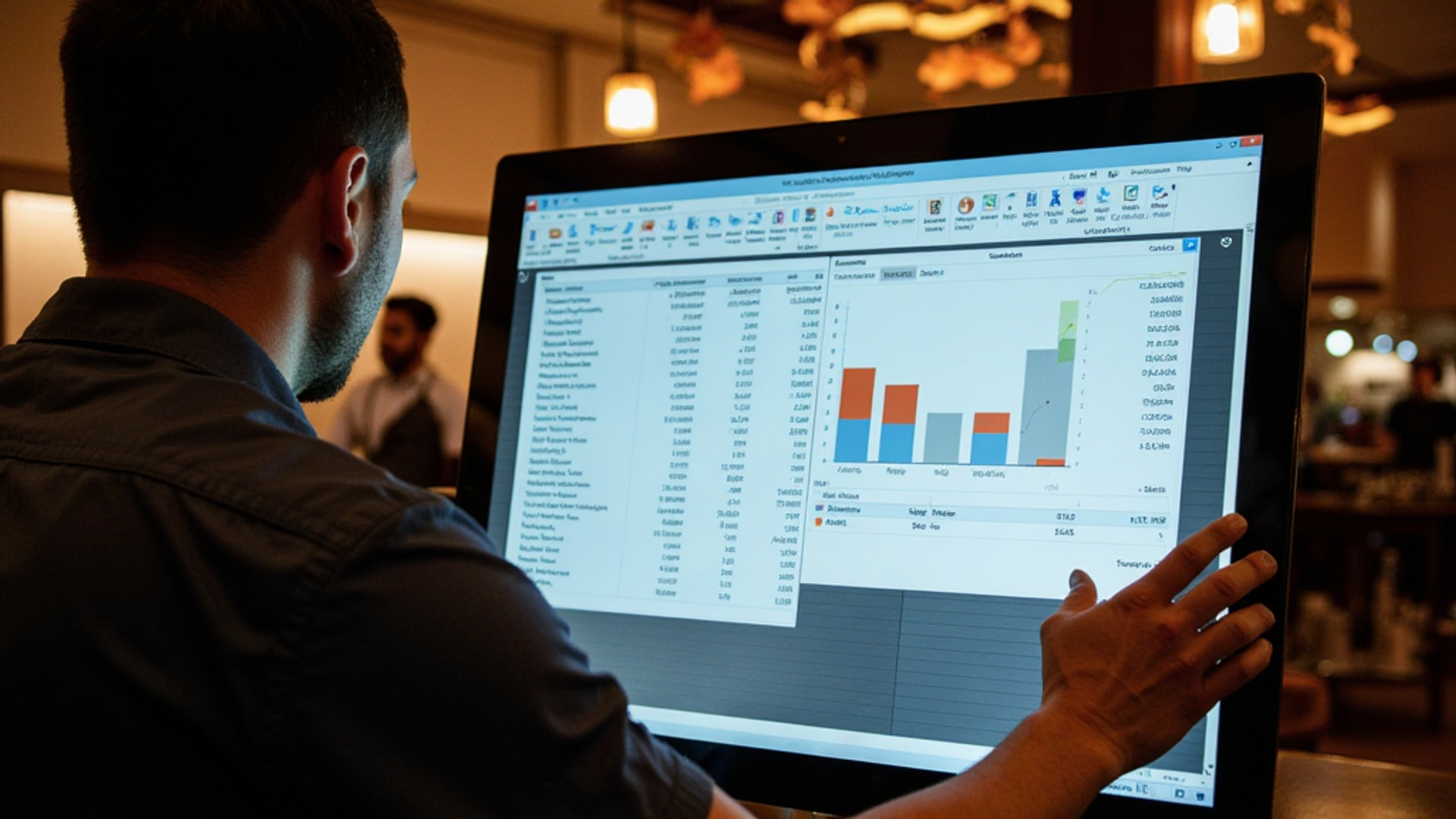
Running a PMIX report from your POS system monthly and comparing contribution margins across the full menu takes less than an hour. Most operators never do it. The ones who do consistently find one or two items where modest changes — a slightly higher price, a cheaper ingredient substitution, or improved server promotion — would significantly improve total profitability without any customer-facing drama.
The System That Prevents All of These Mistakes
The common thread through every pricing mistake above is the absence of a feedback loop between actual cost data and pricing decisions. Building that system means: recipe costing cards updated at least quarterly; actual versus theoretical food cost comparison monthly; menu mix analysis monthly; price reviews tied to ingredient cost changes rather than calendar dates; and all price adjustments made deliberately and communicated through proper menu design rather than ad-hoc changes.
This is not a complex system. It requires discipline and a few hours per month from someone with authority to make changes. The return — even modest improvements across multiple pricing errors — compounds into meaningful margin recovery on restaurants that are already operating at 3–6% net profit.
→ Read more: Menu Profit Margin Optimization: Strategies to Maximize Restaurant Profitability → Read more: Menu Pricing Psychology: 9 Tactics That Influence What Guests Order → Read more: Food Cost Control Tips: Practical Strategies for Reducing Restaurant Food Costs