· Menu & Food · 6 min read
Menu-Driven Margin Optimization: Small Changes That Compound Into Real Profit
How compounding small improvements across food cost, check average, and item mix can double restaurant profit margins.
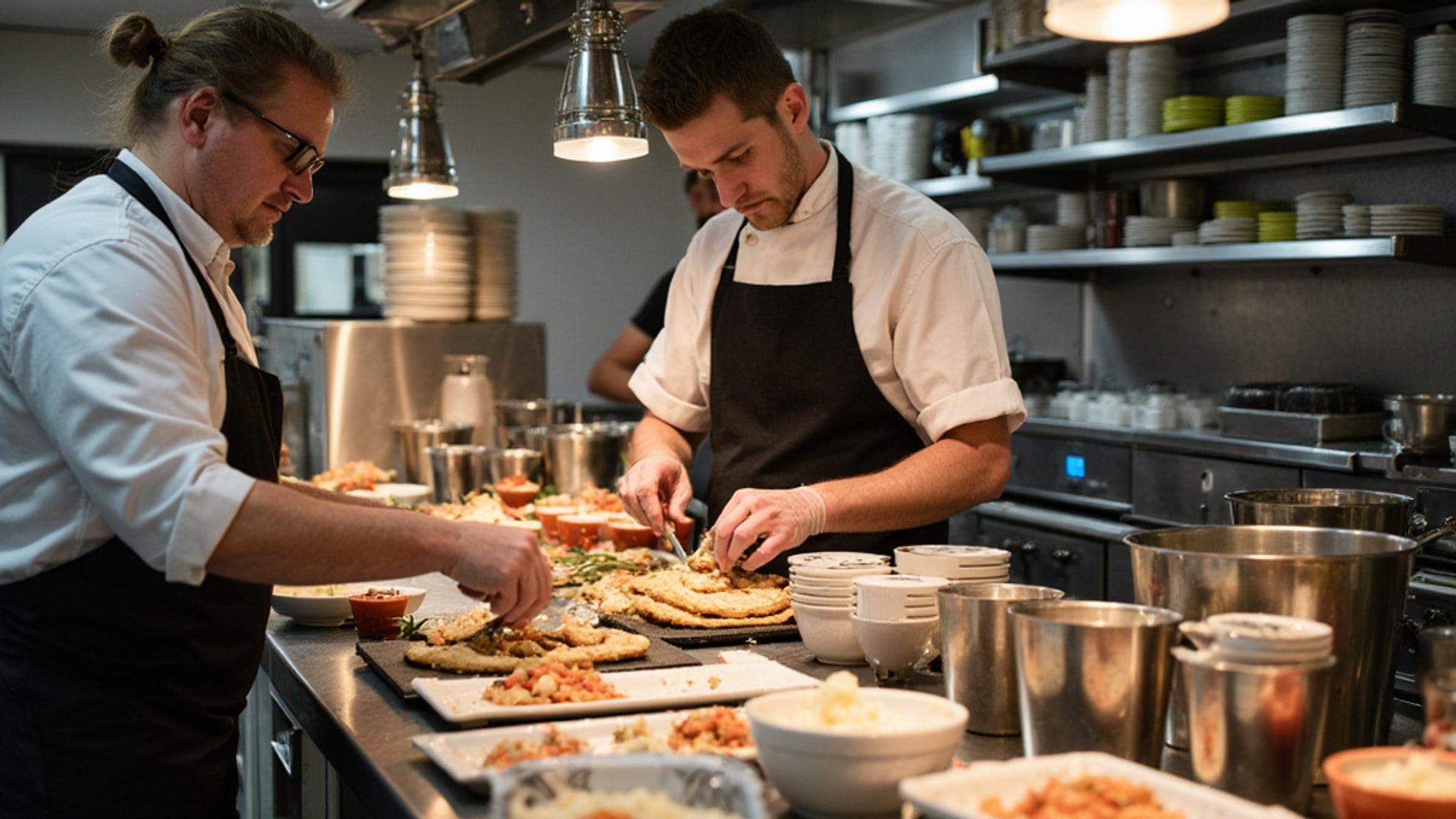
Restaurant profit margins are the thinnest of any major industry. According to Peppr POS, full-service restaurants average 3 to 6% net profit margin, with top performers reaching 9.8%. Quick-service operations average 6 to 10%. These numbers reflect the reality that every cost element — food, labor, and overhead — consumes an enormous share of revenue before anything reaches the bottom line.
The instinct is to look for a single large fix: renegotiate rent, cut staff, raise prices across the board. These approaches either aren’t available or aren’t sustainable. The more reliable path is compound improvement across multiple levers — small, achievable changes that multiply each other’s effect.
According to Peppr POS, a 1% reduction in food cost, combined with a 2% improvement in labor efficiency and a 5% increase in average check size, can potentially double net profit margins from 3% to 6%.
Benchmark Reality Check
Before optimizing, understand where you stand.
| Concept Type | Average Net Margin | Top Performer |
|---|---|---|
| Full-service restaurant | 3–6% | 9.8% |
| Quick-service restaurant | 6–10% | 12–15% |
| Ghost kitchen / delivery-only | 10–30% | 30%+ |
| Café / bakery | 5–8% | 10–12% |
| Food truck | 6–10% | 15%+ |
The “Big Three” cost categories per Peppr POS:
- Food: 28–35% of revenue
- Labor: 25–35% of revenue
- Overhead: Rent alone can consume 5–10% of revenue
These three categories together consume 60 to 75% of revenue before any other expense. Menu strategy directly affects two of them (food cost and, through operational design, labor efficiency) and indirectly affects the third by increasing revenue against fixed overhead.
Lever 1: Food Cost Reduction Through Menu Engineering
The most direct menu-driven margin improvement comes from the menu engineering matrix. According to meez, the Stars, Plowhorses, Puzzles, and Dogs framework categorizes every item by popularity and profitability — and the strategic actions for each category create systematic margin improvement.
Key actions by category:
Stars (high margin, high popularity): Protect these. Do not modify recipes in ways that reduce quality. Resist supplier pressure to substitute cheaper ingredients that will degrade the dish. These items are your margin foundation.
Plowhorses (high popularity, low margin): These are the highest-leverage improvement opportunities. Options:
- Incremental price increases (according to Tableo, test carefully — a 1% price increase can reduce ratings by up to 5%)
- Ingredient substitution that maintains dish quality
- Portion adjustment (reduce by 5–10%, confirm customers don’t notice)
- Bundle with high-margin sides to improve per-ticket margin
Puzzles (high margin, low popularity): Invest in visibility:
- Move to prime menu position (first in section, top-right of page)
- Improve description with sensory language
- Server training incentives for recommending them
- Feature as daily special to increase trial
Dogs (low margin, low popularity): Remove. The kitchen resources consumed by dogs — prep time, inventory holding, station attention — are better deployed elsewhere.
According to Restaurant Peers, many restaurants that invest in systematic menu engineering see profits increase by 10 to 15% or more.
Lever 2: Plant-Forward Item Integration
According to Peppr POS, plant-forward menu items offer 5 to 10% lower food costs than meat-centered dishes. At a restaurant running 30% average food cost, incorporating plant-forward items strategically can lower the blended food cost meaningfully.
The key is placement: plant-forward items should be positioned as attractive options for all customers, not just as dietary accommodations. Priced at levels commensurate with their experience quality, they deliver better margin per plate than comparable meat preparations.
A pasta dish with seasonal vegetables and a housemade pesto at $22 may have a $5.50 food cost (25% FCP) and $16.50 CM. A comparable chicken pasta at $24 may have a $9 food cost (37.5% FCP) and $15 CM. The plant-forward version delivers better margin despite the lower price point.
Lever 3: Technology-Driven Waste Reduction
According to Peppr POS, AI-powered inventory management systems have demonstrated waste reductions of 25 to 40% for early adopters. Predictive ordering algorithms reduce over-purchasing by 20 to 30%. Vendor management platforms that automate price comparison and purchasing generate 3 to 5% savings on cost of goods sold.
These tools are increasingly accessible to independent operators through restaurant management platforms. The ROI calculation is straightforward: if your annual food cost is $300,000 and a system reduces waste and over-purchasing by 25%, the savings are $75,000 per year — significantly more than the typical platform cost.
Implementation priority: Even without AI tools, basic demand-based prep scheduling dramatically reduces waste. Menu engineering data from POS reports tells you which items sell how many covers per shift. Building prep quantities from that data rather than estimates reduces waste without technology investment.
Lever 4: Check Average Improvement Through Menu Design
Increasing average check size by 5% from the same customer count and table count has zero marginal cost for food preparation overhead (rent, utilities, management) and minimal variable cost. It is the highest-efficiency revenue improvement available.
Check average improvement tactics:
Beverage attach rate: According to GetSauce, coffee drinkers spend 22% more on breakfast orders. Beverage attachment across all dayparts has a similar effect. A beverage ordered with every food transaction increases per-ticket revenue without kitchen complexity.
Add-on visibility: According to Restaurant Resource Group, items in prime menu positions (first in section, golden triangle zones) sell more. Moving add-on categories into visibility positions increases attach rates passively.
Bundle pricing: Well-designed bundles priced at 10 to 15% below equivalent à la carte pricing increase order value by getting customers to add items they might otherwise skip. The net effect is higher revenue per transaction despite the nominal discount.
Lever 5: Pricing Discipline
Many restaurants undercharge because pricing decisions are made emotionally (“our customers can’t afford more”) rather than analytically. The data-driven approach: test price increases on individual items rather than across the board, monitor reorder rates and satisfaction after changes, and calibrate based on actual response.
According to Tableo, dynamic pricing software can adjust prices in real-time based on demand patterns, time of day, and ingredient costs. Even without software, operators can apply this logic manually: weekend dinner prices modestly higher than weekday lunch prices, peak-season specialty items priced to reflect premium ingredient costs.
The Compound Effect in Practice
The math of compounding is the reason small improvements matter:
| Improvement | Impact on $1M Revenue Restaurant |
|---|---|
| 1% food cost reduction ($300K food cost) | +$3,000 per year |
| 2% labor efficiency gain ($280K labor) | +$5,600 per year |
| 5% check average increase | +$50,000 per year |
| 25% waste reduction (saves 3% of food cost) | +$9,000 per year |
| Combined effect | +$67,600 per year |
On a $1M restaurant running at 4% net margin ($40,000 net profit), a combined improvement of $67,600 represents a margin increase from 4% to 10.76% — effectively tripling net profit without a single new customer.
This is the math that makes menu-driven margin optimization the highest-leverage operational discipline in the restaurant business. None of these individual improvements are dramatic. Together, they transform the financial performance of the business.
→ Read more: Menu Engineering: A Data-Driven System to Boost Restaurant Profits by 10-15% → Read more: Food Cost Control Tips: Practical Strategies for Reducing Restaurant Food Costs → Read more: Contribution Margin vs. Food Cost Percentage: Why You’re Using the Wrong Metric