· Marketing · 8 min read
Restaurant Mobile App Marketing: Doubling Orders with Push Notifications and First-Party Data
Why restaurants with branded mobile apps see 2x order volume, how to build one without enterprise budget, and how to use push notifications and automated campaigns to drive repeat business.
Owner.com’s data shows restaurants with their own branded apps see a 2x increase in orders. Mobile app users demonstrate 112% higher reorder rates compared to non-app customers. These are not incremental improvements. They are dramatic performance differences driven by a single factor: reduced friction between a customer’s decision to order and the completed transaction.
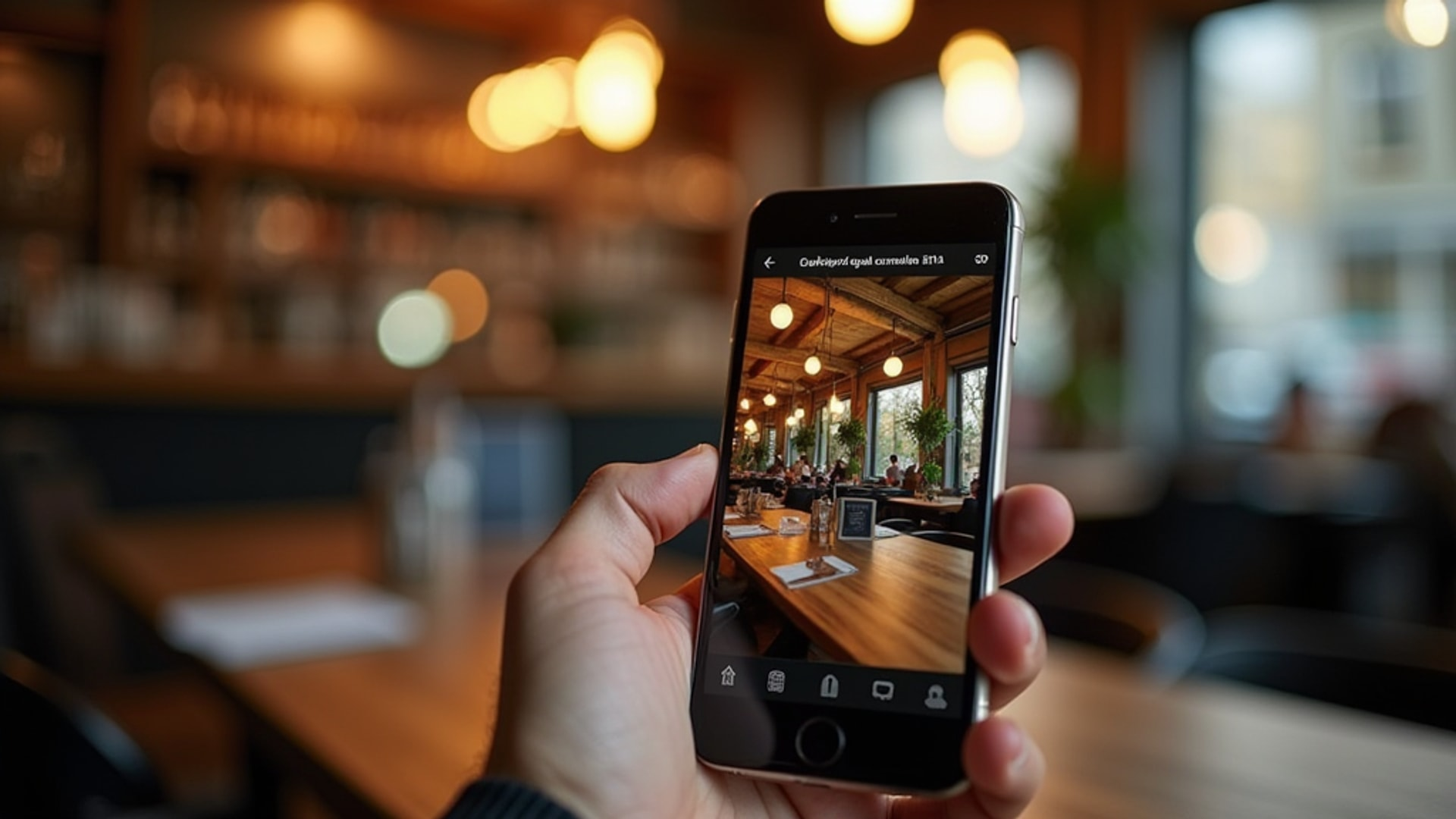
The mobile app is not a luxury for large chains. White-label solutions have democratized access to the point where an independent restaurant with one location can deploy a fully branded app, with loyalty integration, push notifications, and order-ahead functionality, for a monthly cost comparable to a couple of hours of labor.
Why Apps Outperform Every Other Order Channel
The performance gap between app ordering and every other channel comes down to friction. When a customer thinks “I want that restaurant for lunch,” the path from thought to order through different channels looks like this:
| Channel | Steps to Complete Order |
|---|---|
| Branded app | Open app → tap “reorder” → confirm → done (30-45 seconds) |
| Restaurant website | Search → find site → navigate menu → create account or guest checkout → enter details → submit (3-5 minutes) |
| Third-party delivery | Open app → search restaurant → navigate menu → submit → platform takes 20-30% commission |
| Phone | Find number → call → wait → place order verbally → wait for confirmation |
Every additional step loses customers. The app eliminates steps. Mobile app users can save preferences, use stored payment methods, and access one-tap reordering — all of which compound the convenience advantage.
Building a Branded App Without Enterprise Budget
White-label app solutions have democratized mobile app marketing for smaller operations, as Owner.com documents. Rather than investing $50,000+ in custom app development, independent restaurants and small chains can deploy branded versions of established platforms customized with their logo, menu, colors, and promotional content.
White-label app platforms for independent restaurants:
- Owner.com (also handles website and ordering)
- Bopple
- Lunchbox
- Olo (mid-market scale)
- GoTab
What to look for in a platform:
- Monthly fee under $300 for basic tier
- Custom branding (your logo, colors, name — not the platform’s)
- Push notification capability
- Loyalty program integration or built-in loyalty
- Order-ahead and scheduling functionality
- Analytics dashboard showing customer behavior
- Direct integration to your POS
Platforms like Apple’s App Store and Google Play are where your branded app will live. Avoid platforms that limit your ownership of customer data. You should be able to export your entire customer list at any time. Any platform that restricts this is building a relationship with your customers, not you.
Push Notifications: The Most Immediate Marketing Channel
Push notifications appear directly on the customer’s device screen, demanding attention in the moment. Owner.com identifies effective push notification strategies including flash sale announcements, order-ready alerts, loyalty reward notifications, and personalized recommendations based on past orders.
Unlike email (which sits in an inbox until the user checks it) or social media (which competes with thousands of other posts), a push notification is seen immediately. Open rates for restaurant push notifications average 40-60% compared to 20-25% for email — and the “action” rates (taps that result in an order) are proportionally higher.
Push notification campaign types that drive revenue:
Flash Promotions
“For the next 3 hours: free delivery on any order over $25.” Send at 11 AM on a Tuesday (a slow ordering day). The time limit creates urgency. The relevance (lunchtime) creates immediacy. The specific threshold encourages slightly higher order values to qualify.
Abandonment Recovery
“You left something behind! Complete your order and save 10%.” Send 30 minutes after a customer opens the app, adds items to the cart, but does not complete the purchase. This segment converts at dramatically higher rates because the customer had clear intent.
Weather and Occasion Triggers
“It’s raining — perfect night for delivery. Our lamb stew is ready.” Weather-triggered messaging aligns the offer with a customer’s actual mood and situation. These context-aware messages feel relevant rather than intrusive.
Loyalty Milestone Alerts
“You’re 2 orders away from a free dessert!” Motivate completion of loyalty milestones before they stall. These messages prompt action with a specific, achievable goal in view.
Win-Back Campaigns
“It’s been 6 weeks — we miss you. Here’s 15% off your next order.” Owner.com’s data shows win-back campaigns sending messages after 45 days of inactivity brought over $1,500 in repeat orders monthly. The automated nature means this runs continuously without manual effort. A CRM platform can further extend this kind of automation across all customer touchpoints.
Automated Win-Back: Continuous Re-Engagement
The win-back campaign is the single highest-ROI automation available to restaurant app marketers. The campaign works like this:
- Define your inactivity threshold (30 days, 45 days, 60 days — test to find what works)
- Set an automated trigger: any customer who has not ordered in X days enters the campaign
- On day X+1, send a push notification (and/or email) with a compelling offer
- If no response after 7 days, send a second message with a stronger offer
- If still no response after 7 more days, move to a “long-inactive” segment for quarterly outreach
The campaign runs continuously. Every customer who becomes inactive automatically enters the flow. You set it up once and it operates indefinitely.
The economics are straightforward. If 100 customers per month lapse into inactivity, and 20% respond to the win-back campaign, you recover 20 customers who otherwise would have churned permanently. At an average monthly order value of $45, that is $900 per month in recovered revenue from a campaign that required no ongoing effort after initial setup.
Panera’s Crunch Time: What Advanced Personalization Looks Like
Panera’s Crunch Time feature, documented by Owner.com, allows loyalty members to designate favorite items and schedule recurring orders with automatic reminder notifications. A customer who orders the same grain bowl every Tuesday at 12:30 PM receives a reminder at 11:45 AM every Tuesday.
Independent restaurants cannot replicate this level of infrastructure immediately, but the principle is accessible at smaller scale:
- App users can mark favorite items for quick reordering
- Saved orders are surfaced prominently on return visits
- Scheduled ordering allows customers to plan ahead for pick-up at a specific time
Every friction reduction in the ordering process increases conversion. The customer who can place their regular lunch order in 15 seconds orders more frequently than the customer who navigates the full menu each time.
The App as Loyalty Platform
Exclusive app deals, unique menu items, and limited-time offers drive app adoption. The app is most effective when it provides genuine, exclusive value that customers cannot access through other channels.
App-exclusive value ideas:
- A menu item only available through app ordering (creates a specific reason to have the app)
- App-only pricing for certain items or during certain hours
- Early access to new menu items before they launch publicly
- Special app-member events (tasting dinners, behind-the-scenes tours)
- Accumulated loyalty points for every app order, redeemable for specific rewards
The goal is making the app feel like membership in something, not just an ordering tool. When customers feel they get tangible benefits from having your app that non-app customers miss out on, download and retention rates both improve.
Measuring App Marketing Performance
| Metric | Target Benchmark |
|---|---|
| App download rate (% of email list who download) | 20-35% within 90 days of launch |
| Monthly active users (% of downloads) | 40-60% |
| Average order frequency per month | 2x higher than non-app customers |
| Push notification open rate | 40-60% |
| Win-back campaign conversion rate | 15-25% |
| Average order value (app vs. non-app) | 10-20% higher for app users |
Review these monthly. If push notification open rates are declining, you are sending too frequently or the content is not sufficiently relevant. If win-back campaign conversion is below 15%, the offer may need strengthening or the timing threshold adjusted.
Launch Sequence: Getting to Your First 500 App Users
The hardest part of any app launch is the first 500 downloads. Here is a sequence that works:
Week 1: Email your full customer list with the app announcement and a launch incentive (“Download the app and get $10 off your first in-app order”)
Weeks 2-4: Feature QR code to download the app on every receipt, every table tent, and every takeout bag. Train staff to mention it with every check: “If you haven’t downloaded our app yet, there’s a $10 credit for your first order.”
Month 2: Run a social media campaign specifically targeting app downloads. Use your email list to build a lookalike audience on Facebook/Instagram for paid promotion to similar customers in your area.
Month 3: Activate a referral component — existing app users can share their referral code for a reward when a friend downloads and orders.
By month 3, a restaurant with 2,000 email subscribers should realistically have 400-800 active app users — a segment that will generate 2x the order frequency of your general customer base, continuously, without additional acquisition cost.
Build the infrastructure once. It works indefinitely.
→ Read more: Restaurant Loyalty Programs: How to Design a Retention Engine That Pays for Itself → Read more: Restaurant SMS and Mobile Marketing: The High-Open-Rate Channel → Read more: Email Marketing for Restaurants: Building Campaigns That Fill Tables