· Case Studies · 8 min read
Immigrant Restaurant Success: Building Community Through Food
From a failed Quiznos franchise to a beloved Ethiopian restaurant, and from a 10-seat Fukuoka ramen shop to a global brand — immigrant food entrepreneurs follow patterns that reveal important truths about what makes restaurants durable.
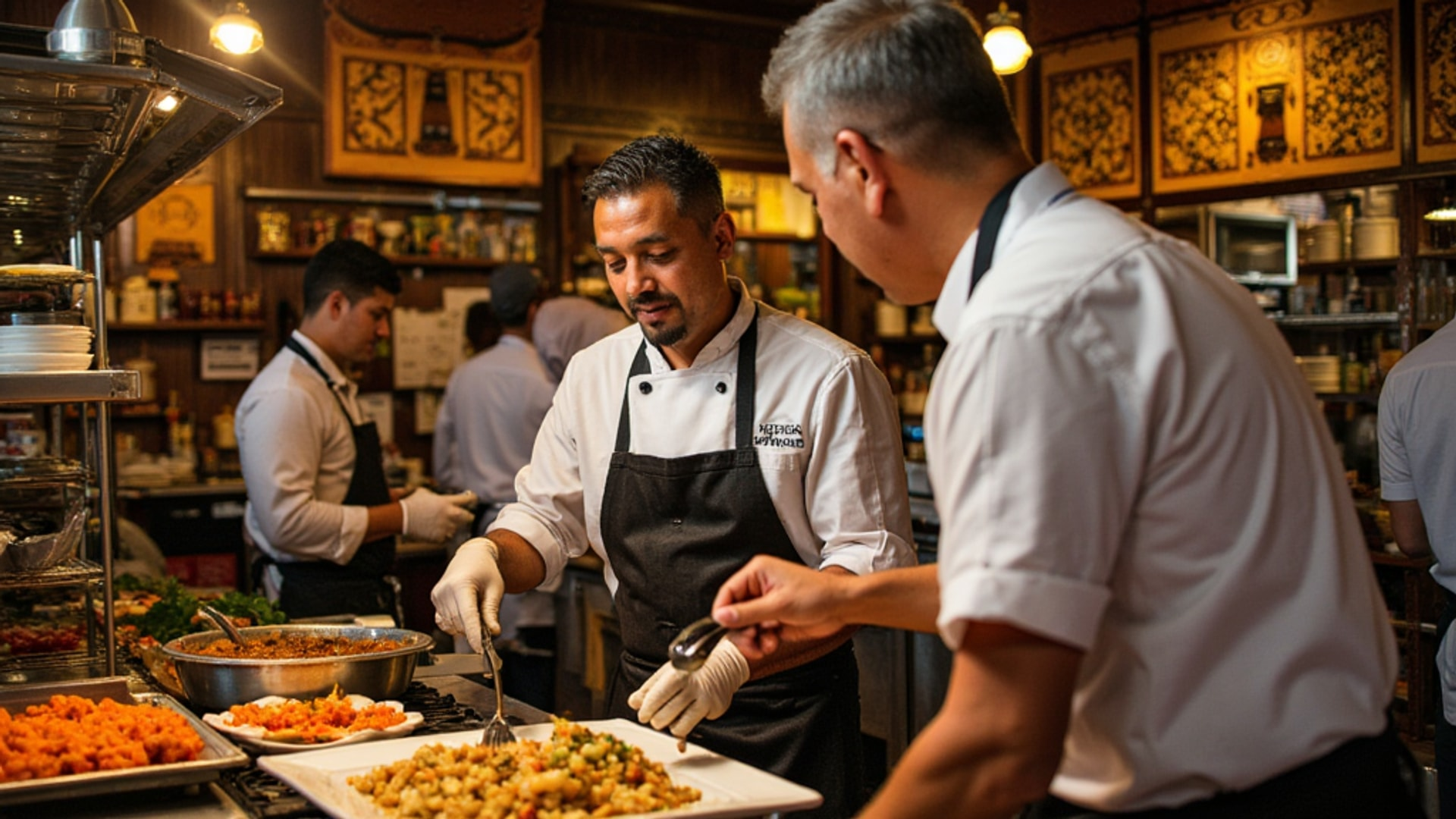
There is a pattern in the history of American cuisine that repeats with remarkable consistency: immigrant communities open restaurants to feed themselves, then attract a broader audience that falls in love with something it had never tasted before. Korean, Vietnamese, Ethiopian, Mexican, Japanese. Each wave follows a similar arc. The community restaurant becomes the cultural ambassador becomes the mainstream dining category.
This pattern is not sentimental. It is a business model with distinctive structural characteristics, and understanding those characteristics explains why immigrant-owned restaurants often outperform competitors in both loyalty and longevity.
The Ethiopian Restaurant Story
According to Addis Insight’s February 2025 report, there are 616 Ethiopian restaurants operating across the United States as of January 2025. A handful existed in the 1960s and 1970s. The growth to more than 600 restaurants represents the arc of an immigration wave — significant Ethiopian immigration began in the 1970s, driven by political upheaval, and concentrated initially in cities like Washington D.C., Los Angeles, and New York.
The D.C. area retains the highest concentration of Ethiopian restaurants and the largest Ethiopian immigrant community in the country. The geographic concentration is not coincidental. Immigrant restaurant success depends partly on community density: a critical mass of community members provides a reliable initial customer base, a network of suppliers for specialty ingredients, and a pipeline of culturally knowledgeable employees.
The Langano Ethiopian Restaurant in Silver Spring, Maryland illustrates a specific and instructive trajectory. Owners Engeda and Almaz arrived in the U.S. and worked multiple jobs while saving capital. Their first entrepreneurial attempt was a Quiznos Subs franchise, a mainstream American fast-food concept that failed financially. Rather than treating this as a reason to abandon restaurant entrepreneurship, they treated it as education in American business operations.
In 2008, they purchased an existing Ethiopian restaurant and transformed it into one of the area’s most-loved dining establishments. The Quiznos failure taught them financial management, supplier relationships, and customer service systems that they could not have learned any other way. The Ethiopian concept succeeded where the franchise had not because they brought cultural authenticity that no franchise manual could provide — family recipes, community relationships, and the hospitality norms of their home culture applied to a restaurant context. That Quiznos failure turned out to be the best education they could have paid for.
Within a few years, the Langano’s success enabled a second location, demonstrating that the concept was replicable and scalable rather than dependent on a single location’s specific circumstances.
Dual Role: Business and Community Institution
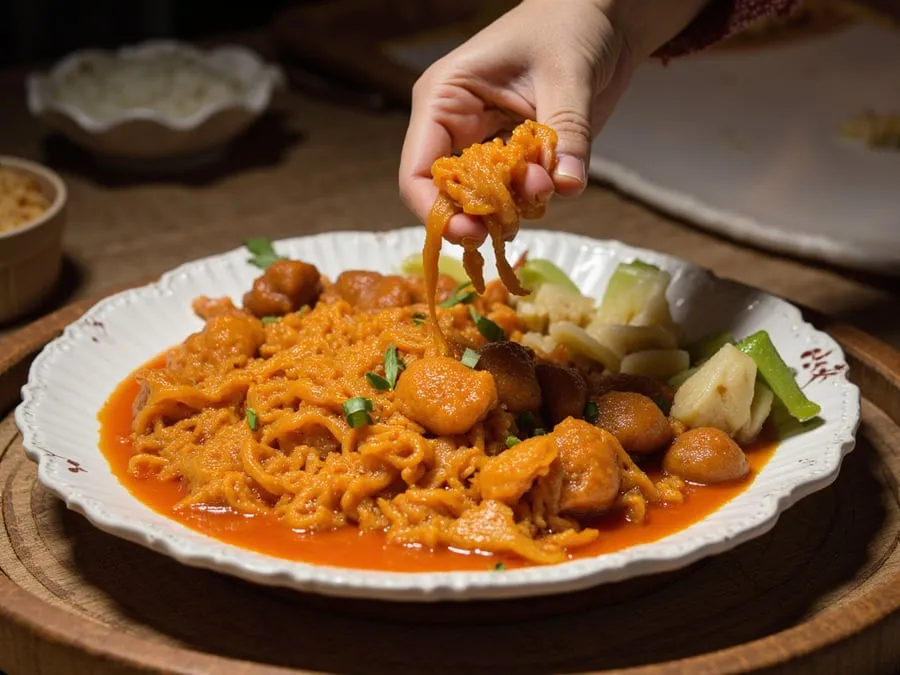
What distinguishes Ethiopian restaurants as a category, and immigrant restaurants more broadly, is their dual role as business operations and community institutions. Addis Insight’s research identifies this dual function as a consistent characteristic of successful Ethiopian restaurant businesses.
These establishments serve as gathering places for the Ethiopian diaspora: hosting cultural events, providing familiar food and language, connecting immigrants with their heritage in a foreign country, and serving as informal community centers for people navigating the difficulties of life in a new place. This community function generates loyalty that pure transactional restaurant relationships rarely achieve. Regulars at an Ethiopian restaurant are not just repeat customers; they are members of a community that the restaurant helps sustain.
Simultaneously, the restaurant functions as a cultural bridge to the broader American community. Elsa’s Kitchen in Washington D.C. reports that most of its customers are not Ethiopian but rather diverse neighborhood residents and visitors who have discovered Ethiopian cuisine and made it part of their regular dining rotation. The restaurant maintains strict authenticity, offering traditional dishes that Ethiopian-American diners value for their genuine connection to home.
This combination (deep community loyalty from within the diaspora, growing mainstream appeal from outside it) creates a customer base that is both stable and expanding. The community loyalty provides a floor of revenue that sustains the business through slow periods. The mainstream crossover provides growth that community-only businesses often cannot achieve.


The Family Advantage
The economic structure of many immigrant restaurants includes family labor as a significant competitive factor. Family members working in the business represent a reduction in the formal payroll costs that can make or break a restaurant operating on thin margins. Beyond the economic factor, family involvement typically means management-level care at every position: owners cooking, serving, and managing because they are invested in the outcome in ways that hourly employees cannot always match.
This advantage is real and should be named honestly rather than romanticized. Family labor reduces labor costs. Family ownership reduces the management distance between decision-making and operations. Family networks provide informal capital access (loans from relatives, help with the build-out, suppliers from within the community) that formal financing channels may not offer.
These advantages are not unlimited. Family businesses face their own governance challenges. Disagreements between family members can disrupt operations in ways that would not affect a professionally managed organization, making clear partnership agreements essential. Scaling beyond the family’s capacity to staff the operation requires transitioning to professional management, which introduces new complexity.
But at the stage most immigrant restaurants occupy (one to three locations, serving a defined community) the family model creates structural resilience that corporate-managed competitors often cannot match.
Ippudo: From 10 Seats to 15 Countries
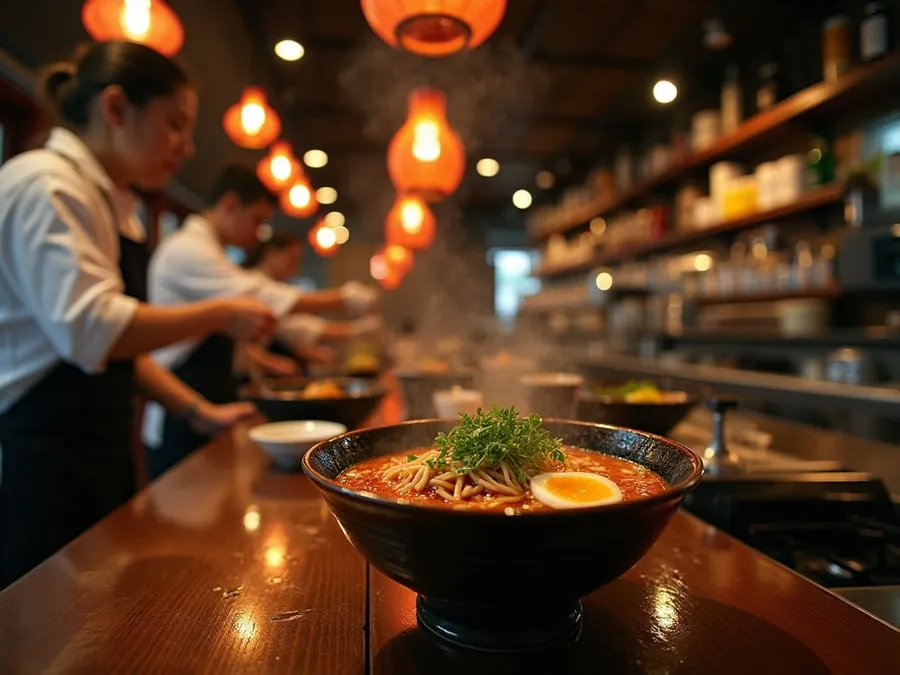
Shigemi Kawahara opened the first Ippudo in 1985 in the Hakata district of Fukuoka, Japan. The restaurant had 10 seats. According to the Honolulu Star-Advertiser’s reporting, Kawahara set out to change the negative perception of ramen shops, which at the time were associated with grimy late-night establishments rather than serious cuisine.
His approach was methodical brand-building. He eliminated the strong odors traditionally associated with tonkotsu ramen by refining the 18-hour broth simmering process. He adopted modern interior design. He trained staff in hospitality and genuine service, a departure from the transactional gruffness common in traditional ramen shops. He even played jazz music in the restaurant, signaling to a broader audience that this was not their grandfather’s ramen joint.
The turning point came in 1994 when Ippudo opened a location at the Yokohama Ramen Museum, a food court dedicated to ramen. This exposed the brand to Tokyo’s massive consumer market and built recognition that extended beyond Fukuoka’s regional boundaries.
International expansion began in New York City in 2008. The opening quickly became a cultural event, generating long lines and critical attention that established ramen as a serious dining category in the American market.
→ Read more: Community Engagement: Local Marketing That Builds Loyalty Ippudo now operates more than 100 international branches across 15 countries, according to the Star-Advertiser.
The key to international success, as Ippudo credits it: localization. The brand adapts flavors, ingredients, and menu offerings to suit local tastes while maintaining the core identity of high-quality Hakata-style tonkotsu ramen. This is not mere cultural sensitivity. It is market strategy. A product that does not resonate with local preferences will not achieve the volume needed to sustain international operations, regardless of its quality in its country of origin.
The Ramen Wave and Collective Impact
Ippudo is part of a broader pattern in which Fukuoka-based ramen brands have collectively elevated ramen from an ethnic niche to a mainstream international dining category. Ichiran opened in New York in 2016. Ikkousha has expanded into international markets. All three share the Hakata ramen heritage and have mutually reinforced each other’s impact on global ramen culture.
This collective impact matters because no individual restaurant can shift a cuisine’s perception in a new market alone. The recognition of ramen as serious food in America is partly the result of Ippudo’s specific efforts, but it is also the result of a broader wave of Japanese ramen culture (chefs, cookbook authors, food media, and restaurants) arriving in the market simultaneously and building on each other’s work.
For immigrant restaurant operators thinking about their position in a market, this dynamic suggests that community matters beyond the economic benefits of shared labor and customer networks. Being part of a recognizable cuisine category that the broader market is beginning to discover is a form of market tailwind that individual restaurant quality cannot generate alone.
What These Cases Teach
The Ethiopian restaurant story and the Ippudo story are superficially different: one is small-scale community entrepreneurship in America, the other is Japanese brand-building going global. But they share structural characteristics worth noting.
Both start with authenticity as a non-negotiable value. Langano succeeded because it offered genuine Ethiopian cuisine, not a diluted version of it. Ippudo succeeded because it delivered genuinely great ramen, refined over decades, not a westernized approximation. The immigrant restaurant’s competitive advantage begins with the genuine article, not the adapted version.
Both convert community membership into customer loyalty. The Ethiopian diaspora in D.C. is Langano’s most loyal base. The Japanese food community in New York was Ippudo’s early adopter base. This community-first approach produces loyalty depth that marketing-first approaches rarely achieve.
Both demonstrate that authenticity and mainstream appeal are not opposites. Elsa’s Kitchen serves mostly non-Ethiopian customers. Ippudo operates in 15 countries. Authentic concepts, executed with quality and genuine hospitality, reach beyond their original community. The community is the foundation, not the ceiling.
The immigrant restaurant story, at its core, is a story about what happens when people cook the food that actually means something to them. That authenticity, the absence of calculation about what the market wants, is often exactly what the market most responds to.
→ Read more: Restaurant Concept Development
→ Read more: Global Cuisine and Fusion Trends