· Case Studies · 13 min read
Crisis and Turnaround: Real Stories of Restaurants That Pulled Back from the Brink
From Chipotle's food safety disaster to pandemic pivots that doubled sales, these documented turnaround stories reveal the counterintuitive playbook for saving a failing restaurant — and the mistakes that guarantee failure.
Every restaurant is one crisis away from catastrophe. A food safety outbreak, a pandemic, a slow bleed of declining sales — any of these can push a once-thriving operation to the edge. But the documented cases of restaurants that clawed their way back reveal something important: recovery follows a predictable framework, and the operators who understand that framework dramatically improve their odds.
This article examines real turnaround stories across three crisis types — brand-threatening disasters, pandemic disruptions, and gradual operational decline — and extracts the specific strategies, timelines, and financial realities that drove recovery.
This article is part of the Restaurant Case Studies collection on NineGuides.
Chipotle: The Defining Case in Crisis Recovery
Chipotle’s 2015-2016 food safety crisis remains the most instructive example of restaurant brand recovery ever documented. Multiple outbreaks of E. coli, norovirus, and salmonella linked to its restaurants didn’t just hurt sales — they threatened the company’s survival.
According to Cascade Strategy’s analysis, the damage was staggering:
| Metric | Impact |
|---|---|
| Sales decline | Over 30% |
| Stock price drop | Over 50% |
| Net income (2015) | $475 million |
| Net income (2016) | $22.9 million |
| Market cap loss | Billions wiped out |
That is a 95% collapse in net income in a single year. Most brands never recover from that kind of devastation.
The Four-Front Recovery
Chipotle’s turnaround succeeded because the company attacked the problem on four fronts simultaneously. Doing just one or two would not have been enough.
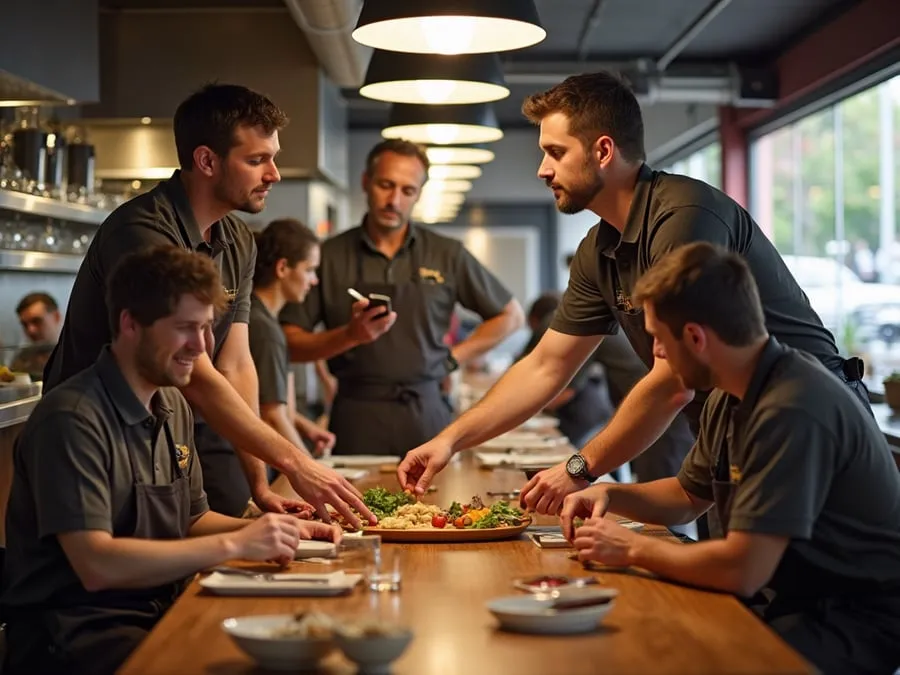
1. Operational overhaul. The company hired food safety consultant Mansour Samadpour of IEH Laboratories, who recommended changes at every step of the supply chain. More food was prepared at commissaries before reaching restaurants, reducing the risk of in-store contamination. Chipotle spent $25 million on enhanced food handling protocols, supplier audits, and DNA-based food testing. New protocols required employees to wash hands every 30 minutes and fresh produce to be immersed in hot water for bacterial elimination.
2. Leadership transformation. Co-CEO Monty Moran resigned in December 2016. Founder Steve Ells stepped down in November 2017. Brian Niccol, formerly the CEO of Taco Bell, took over in February 2018 and relocated the company headquarters — a symbolic and practical break with the past. This is a pattern you will see repeated: turnarounds almost always require new leadership. The people who created the problem are rarely the ones who can fix it.
3. Aggressive marketing pivot. Chipotle shifted from minimal advertising to aggressive nationwide campaigns and free food distribution. According to Cascade Strategy, this generated a 17.8% revenue increase in the first quarter of 2017. But the marketing only worked because the operational foundation had already been rebuilt. Chipotle did not try to market its way out of a food safety crisis — it fixed the problem first, then told people about it.
4. Digital transformation. Under Niccol, Chipotle partnered with DoorDash for delivery at 95% of locations and built a robust mobile app. This was strategically brilliant: digital ordering gave customers a way to re-engage with the brand without walking into a restaurant where their trust had been broken. The digital channel became a bridge back to in-store dining.
The Results
By 2017, net income rebounded to $176 million — a dramatic recovery from the $22.9 million low. By March 2020, 65 underperforming locations had been closed to improve overall system efficiency. The stock eventually surpassed its pre-crisis high.
What You Can Learn
The Chipotle case establishes several principles that apply to any restaurant crisis:
- Transparency beats defensiveness. A full-page newspaper ad signed personally by the founder was more effective than any corporate PR statement could have been.
- Spend real money on the fix. The $25 million investment in food safety was not optional — it was the cost of survival.
- Leadership change signals seriousness. Keeping the same team after a crisis tells customers and employees that nothing has really changed.
- Create new channels of trust. Digital ordering let customers return on their own terms.
Chili’s: Reversing a Decade of Casual Dining Decline
While Chipotle’s crisis was sudden and acute, Chili’s story is about something equally common and arguably more insidious: slow decline. According to CNBC and Forbes reporting, the chain had been losing ground since its peak of over 1,300 U.S. locations in 2008, hollowed out by menu bloat, misguided investment in third-party delivery, and a deteriorating in-restaurant experience.
CEO Kevin Hochman, appointed in 2022, engineered one of the most studied casual dining turnarounds in recent memory.
The Strategy: Ruthless Simplification
Hochman cut more than 20% of the menu. This move is counterintuitive — removing items typically costs sales. But at Chili’s, the bloated menu was degrading execution quality, a perfect illustration of how menu simplification can drive growth. During peak Friday and Saturday service, kitchen staff struggled to produce a sprawling menu at consistent quality. The simplified menu allowed each station to produce fewer, better-executed dishes.
The results, documented by CNBC, speak for themselves:
| Metric | Result |
|---|---|
| Per-restaurant sales growth | $440,000 (14%) over two fiscal years |
| Fiscal 2024 revenue (Brinker International) | $4.4 billion (all-time high) |
| Capital expenditure (fiscal 2024) | $200 million |
| Additional staffing investment | $5 million, with $15-20 million more planned for 2025 |
Value Positioning That Exploited Competitors’ Weakness
As fast food prices rose throughout 2023 and 2024, Chili’s launched its $10.99 Big Smasher meal with pointed marketing: why pay fast food prices for fast food when you can get a sit-down meal for the same price? This value positioning captured customers who felt fast food no longer justified its rising costs. According to Forbes, this meal and a viral TikTok item (the Triple Dipper mozzarella sticks) together drove the majority of recent growth — with the viral item alone accounting for an estimated 40% of one quarter’s growth.
Investing Ahead of Growth
What makes the Chili’s case particularly instructive is what Hochman did with the growth. Five percent traffic growth sounds modest, but it concentrates during peak hours, meaning some periods saw 20-30% more guests. Without adequate staffing and facility improvements, that growth would have degraded the very experience that generated it.
Hochman invested ahead of Wall Street expectations — spending on people and infrastructure before the growth demanded it. This temporarily compressed earnings and surprised analysts, but it protected the guest experience during rapid growth. The lesson: if your turnaround is working, you have to invest to sustain it. The worst thing you can do is let success overwhelm your operations.
Pandemic Pivots: Speed Over Resources
COVID-19 forced the most rapid adaptation period in restaurant history. According to an analysis of 200 industry articles cited by Axios, restaurants that survived and thrived responded along three themes: expansion of takeout and delivery, innovative operational practices, and community outreach.
Beauvine Burger Concept: From Adequate to Doubled Sales
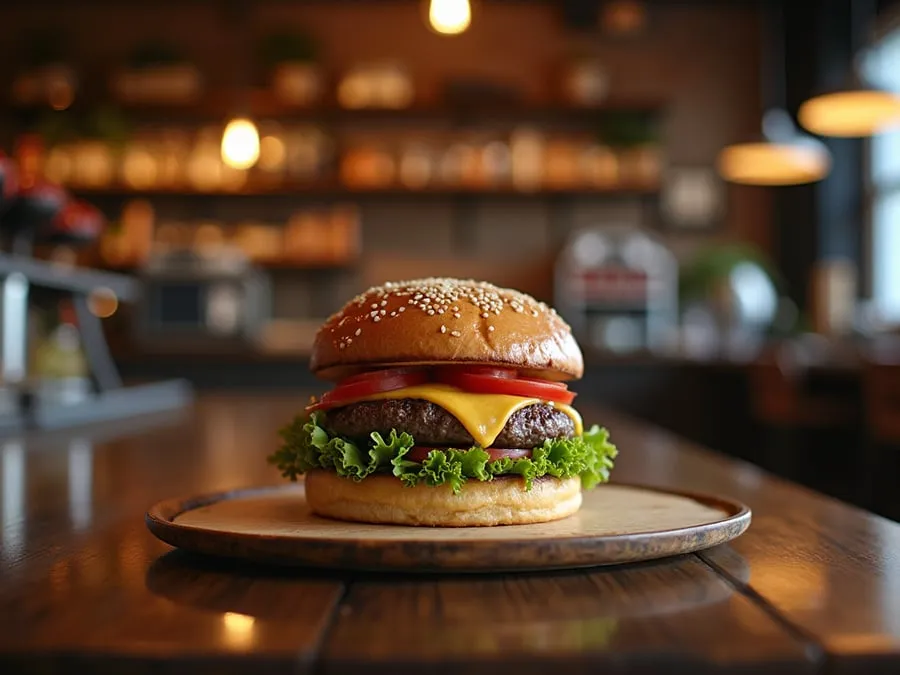
Before the pandemic, Beauvine Burger Concept in Richmond, Virginia was performing adequately but unremarkably. When restrictions hit in March 2020, the restaurant immediately pivoted to takeout and delivery, converting the dining room into a food packaging assembly line. Servers and bartenders became phone operators and delivery drivers.
The result: sales more than doubled compared to pre-COVID levels, and the changes became permanent operational improvements. This case demolishes the common assumption that crises only destroy value. The pandemic forced Beauvine to discover a more profitable operating model that was available all along.
Taqueria Xochi: Crisis as Launchpad
Two furloughed chefs, Teresa Padilla and Geraldine Mendoza, launched Taqueria Xochi as a Mexican street food venture during the pandemic. Starting as a pop-up, their concept gained enough traction to secure a permanent physical space and eventually plan a second location in Washington, D.C.’s Adams Morgan neighborhood. The pandemic created openings — lower rents, reduced competition, a consumer base hungry for authentic food — that entrepreneurial operators seized.
Industry-Wide Adaptations That Stuck
Several changes made under crisis conditions proved to be genuine improvements:
- Family meal deals and DIY kits. Chains including Firebirds Wood Fired Grill and California Pizza Kitchen introduced these offerings, tapping into a revenue stream that outlasted the pandemic.
- QR code menus and contactless payment. Adopted as temporary hygiene measures, these became permanent fixtures because they reduced printing costs and sped up table turns.
- Digital ordering infrastructure. Many restaurants discovered that off-premises revenue was not just a survival mechanism but a profitable business line worth maintaining.
- Cooperative ownership. When White Electric Coffee was put up for sale during the pandemic, its workers organized a bid through GoFundMe and other fundraising, preserving the business through a cooperative ownership model.
The Pandemic Lesson
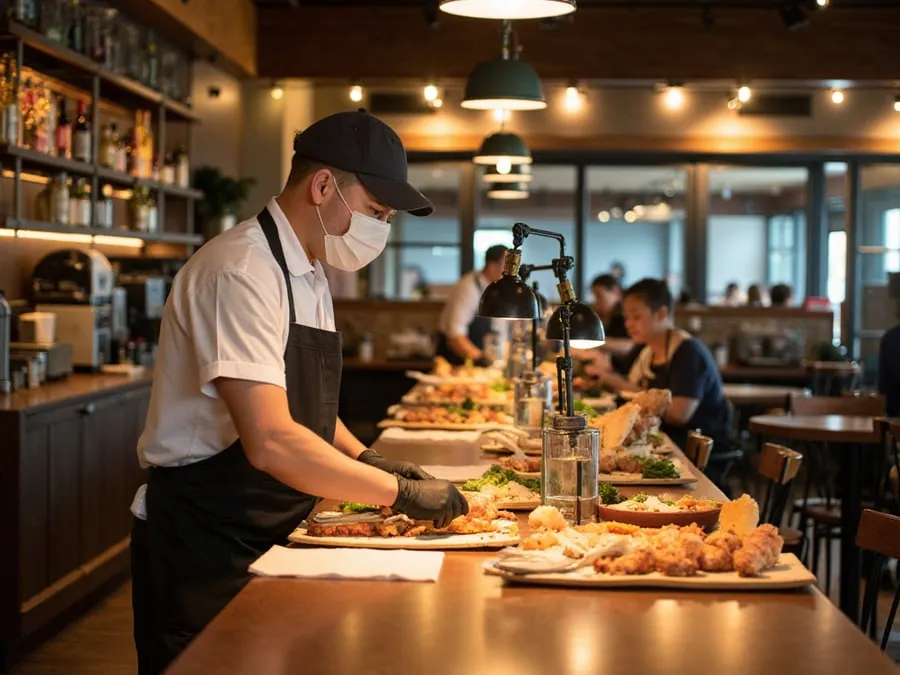
The pandemic revealed that operational flexibility and speed of adaptation mattered more than size or resources. The restaurants that survived were those willing to rethink every assumption about how they served customers, deployed staff, and generated revenue. You do not need deep pockets to survive a crisis. You need the willingness to change fast.
The Anatomy of Gradual Decline
Not every crisis arrives suddenly. According to Pennultimate Consulting, the most common and most dangerous pattern is gradual decline — a slow erosion that owners often do not recognize until it is nearly too late.
The typical trajectory follows predictable stages:
- Strong opening. High initial revenue driven by novelty and a motivated founding team.
- Drift. Leadership changes or gradual complacency shift focus from guest experience to cost management.
- Quality erosion. Labor reductions, recipe changes, and deferred maintenance degrade the product.
- Inconsistency. The “hit or miss” experience drives away both new and loyal customers.
- Death spiral. Declining revenue triggers further cost cuts, accelerating the decline.
A Documented Case
A restaurant that opened with annual sales of approximately $2.5 million experienced this exact pattern. Over four to five years, following leadership changes that shifted emphasis from guest satisfaction to cost reduction (particularly labor), annual sales fell to approximately $1 million — a 60% decline. The operation was losing over $100,000 per year when a turnaround consultant was engaged.
This is not unusual. What is unusual is that the owners sought help at all. Most operators in this situation either close or continue the slow bleed until the money runs out.
The Turnaround Playbook
Across all documented cases, according to Aaron Allen & Associates, successful turnarounds follow a three-phase framework:
Phase 1: Assessment (Weeks 1-4)
Before you fix anything, you need to understand what is actually broken.
- Unit-level economics. Where exactly are you losing money? Which dayparts, which menu items, which labor shifts?
- Menu performance. What sells, what does not, and what costs more to produce than it returns?
- Customer experience audit. Visit your own restaurant as a customer. Eat there. Wait for a table. Use the restroom. The experience will tell you more than any report.
Phase 2: Strategic Planning (Weeks 4-8)
With the assessment complete, develop the recovery plan around three priorities:
- Stabilize cash flow. This comes first, always. You cannot execute a turnaround if you run out of money during the process.
- Streamline operations. Simplify the menu, fix broken processes, address deferred maintenance.
- Reposition if necessary. Sometimes the concept itself needs adjustment — not a complete reinvention, but a sharper focus on what actually works.
Phase 3: Execution (Months 3-12)
This is where most turnarounds succeed or fail. According to Pennultimate Consulting, several counterintuitive principles are critical:
Restaff to service-ready levels. Treat labor as an investment in guest experience, not an expense to minimize. This is the hardest pill to swallow for a money-losing operation, but understaffing ensures that every guest encounter reinforces the perception that the restaurant has declined.
Temporarily eliminate marketing. If you are not executing at your highest level, increased marketing will expose more potential customers to a substandard experience. That generates negative word-of-mouth that compounds the problem. The restaurant that markets a mediocre experience accelerates its own decline by creating informed detractors rather than advocates.
Standardize recipes to original quality. If you have been quietly reducing portion sizes or substituting cheaper ingredients, your regulars have noticed. Return to the standards that built your reputation.
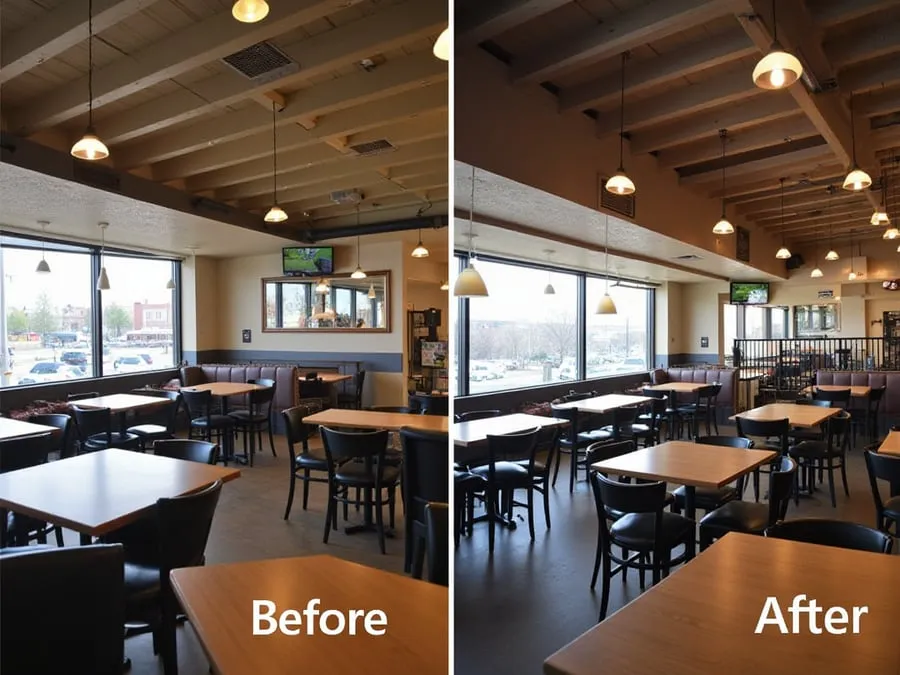
Address deferred maintenance. Stained ceiling tiles, flickering lights, worn-out seating — these details tell customers you have given up. Fix them before you invite people back.
Only then resume marketing. Once the guest experience is genuinely restored, bring back marketing and customer acquisition. When new guests arrive, they should encounter an operation that earns their repeat business.
Turnaround Timeline and Financial Reality
According to both Aaron Allen & Associates and Pennultimate Consulting, here is what to realistically expect:
| Phase | Timeline | Key Activities |
|---|---|---|
| Assessment | 2-4 weeks | Financial audit, experience audit, menu analysis |
| Stabilization | 1-3 months | Cash flow management, staffing, recipe standardization |
| Visible improvement | 3-6 months | Guest satisfaction improving, word-of-mouth shifting |
| Measurable financial recovery | 6-12 months | Revenue growth, reduced losses |
| Full turnaround | 12-24 months | Sustainable profitability |
This timeline demands adequate financial reserves. You need enough runway to fund higher labor costs, facility improvements, and a period with no marketing spending — all while the restaurant may still be losing money. If you cannot fund 6-12 months of recovery operations, the turnaround may fail regardless of strategy quality.
Why Turnarounds Fail
Understanding failure patterns is as valuable as understanding success. According to documented cases, the most common failure points are:
- Reverting to cost-cutting too quickly. Initial improvements create a sense that the crisis is over. The temptation to return to the behaviors that caused the decline — cutting staff, reducing portions, deferring maintenance — destroys recovery momentum.
- Insufficient financial reserves. The turnaround plan was sound, but the money ran out before results materialized.
- Unwillingness to change leadership. The people who led the decline rarely possess the skills or perspective to lead the recovery. This is true whether we are talking about Chipotle’s C-suite or a single-unit owner who cannot let go of the habits that caused the problem.
- Marketing before the experience is ready. This is the single most destructive mistake. Every dollar spent driving traffic to a substandard experience generates negative word-of-mouth that costs far more to overcome than the marketing spent.
Critical Success Metrics to Track
According to Aaron Allen & Associates, turnaround operators should monitor three categories of KPIs:
Financial KPIs:
- Revenue growth (week-over-week and month-over-month)
- Profit margin trajectory
- Cash flow position (days of operating reserves remaining)
→ Read more: 10 Financial KPIs Every Restaurant Owner Must Track
Operational KPIs:
- Labor efficiency ratios
- Inventory turnover rates
- Customer satisfaction scores (online reviews, comment cards, direct feedback)
Strategic KPIs:
- Repeat visit rate
- Brand perception (social media sentiment, review scores)
- Employee retention rates (high turnover during a turnaround signals deeper problems)
→ Read more: Chipotle’s Food Safety Crisis and Recovery
The Bottom Line
Restaurant turnarounds follow predictable patterns — in both failure and recovery. The Chipotle case shows that even catastrophic brand damage can be repaired with transparency, massive investment, leadership change, and digital innovation. The Chili’s case proves that slow decline is reversible through menu simplification, strategic pricing, and investing ahead of growth. The pandemic cases demonstrate that speed and flexibility matter more than resources.
But across every case, the core lesson is the same: fix the guest experience first. Before marketing, before expansion, before anything else. The sequence matters more than the strategy.
→ Read more: Restaurant COVID Pivots: Innovation Born From Crisis
If your restaurant is in trouble, here is the honest truth: turnarounds are expensive, time-consuming, and emotionally brutal. They require admitting that something went wrong, spending money you may feel you cannot afford, and often changing the people in charge. Not every restaurant can or should be saved.
But for those with a sound concept, adequate reserves, and the willingness to follow the framework, recovery is possible. The documented cases prove it.