· Operations · 5 min read
Restaurant Closing Procedures: The End-of-Night System That Protects Tomorrow's Open
A complete system for closing your restaurant properly every night — covering FOH, BOH, financials, and security so tomorrow's team inherits a clean, ready operation.
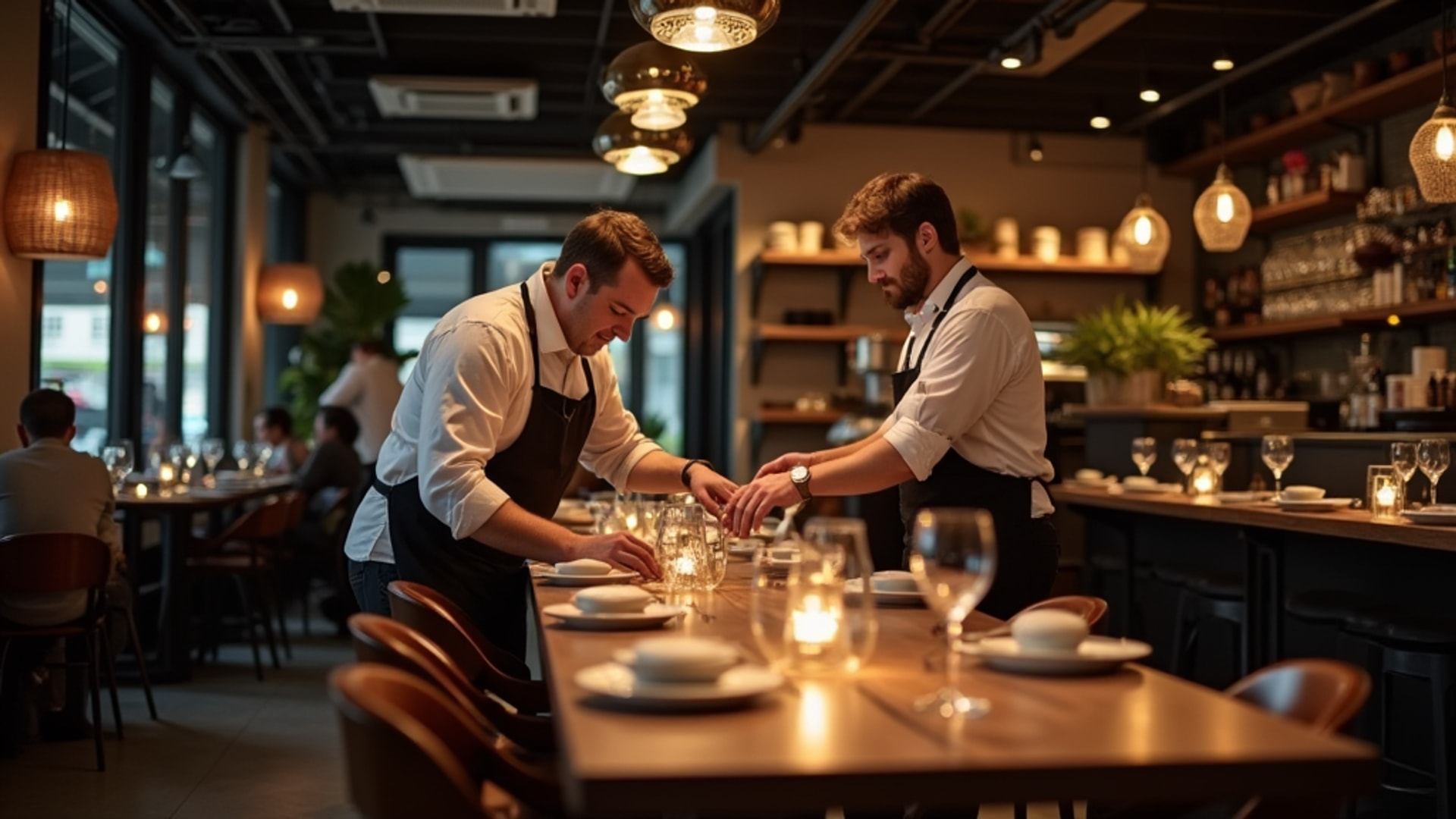
The way you close tonight determines how tomorrow opens. A sloppy close means the opening manager walks in to dirty surfaces, missing prep, unreconciled cash, and a team that already feels behind. A clean close — executed with discipline every night — is one of the highest-leverage operational habits you can build.
This is your complete system for closing the restaurant right.
Why Closing Procedures Fail
According to TouchBistro, closing procedures fail for predictable reasons: tasks are not assigned by role, there is no accountability mechanism, and checklists are not available at point of use. Without a written system that assigns specific tasks to specific people, closing becomes a social negotiation between tired staff — and the critical items are always at risk of getting skipped.
The solution is a closing checklist distributed by role, posted in relevant areas, with a manager walkthrough before anyone leaves. Not optional. Every night.
Manager Closing Responsibilities
The manager is the last person out. Before that happens, according to TouchBistro, the manager closing responsibilities include:
Financial reconciliation:
- Compare cash drawer counts to POS totals — every drawer
- Run end-of-day sales reports and reconcile payment methods
- Process tip distribution accurately and document it
- Complete blind drops before revealing POS expected totals (prevents manipulation)
- Secure cash in the safe
Operational review:
- Review the day’s performance against targets — note wins and gaps in the log
- Document any guest complaints, equipment issues, or incidents
- Record supply shortages and create the purchase order or flag for tomorrow’s manager
- Log any staffing issues or performance notes
Final walkthrough:
- Verify all cleaning tasks are complete — do not take staff’s word for it, look
- Check all refrigeration temperatures and document them
- Confirm all cooking equipment is fully shut down (not just off-cycle)
- Test all locks and secure all entry points
- Arm the security system
Front-of-House Closing Checklist
According to TouchBistro, FOH closing covers the dining room, restrooms, and all guest-facing surfaces:
Dining area:
- All tables wiped down and sanitized with approved solution
- Chairs flipped onto tables for floor cleaning access
- Condiment containers cleaned, refilled, or wrapped and refrigerated
- Salt and pepper shakers cleaned and refilled
- All menus wiped down (physical) or display cleaned (digital)
- Host stand organized — reservation sheet/system prepared for tomorrow
- Floors swept, then mopped — include under tables and banquettes
High-touch surfaces:
- Door handles disinfected
- POS terminals cleaned and covered
- Booth and chair vinyl sanitized
- Light switches and panel covers wiped
Restrooms (complete before final guest departure):
- Toilets and urinals cleaned and sanitized
- Sinks and countertops cleaned
- Mirrors wiped
- Floors mopped
- Supplies restocked (paper, soap, air freshener)
- Trash emptied
Back-of-House Closing Checklist
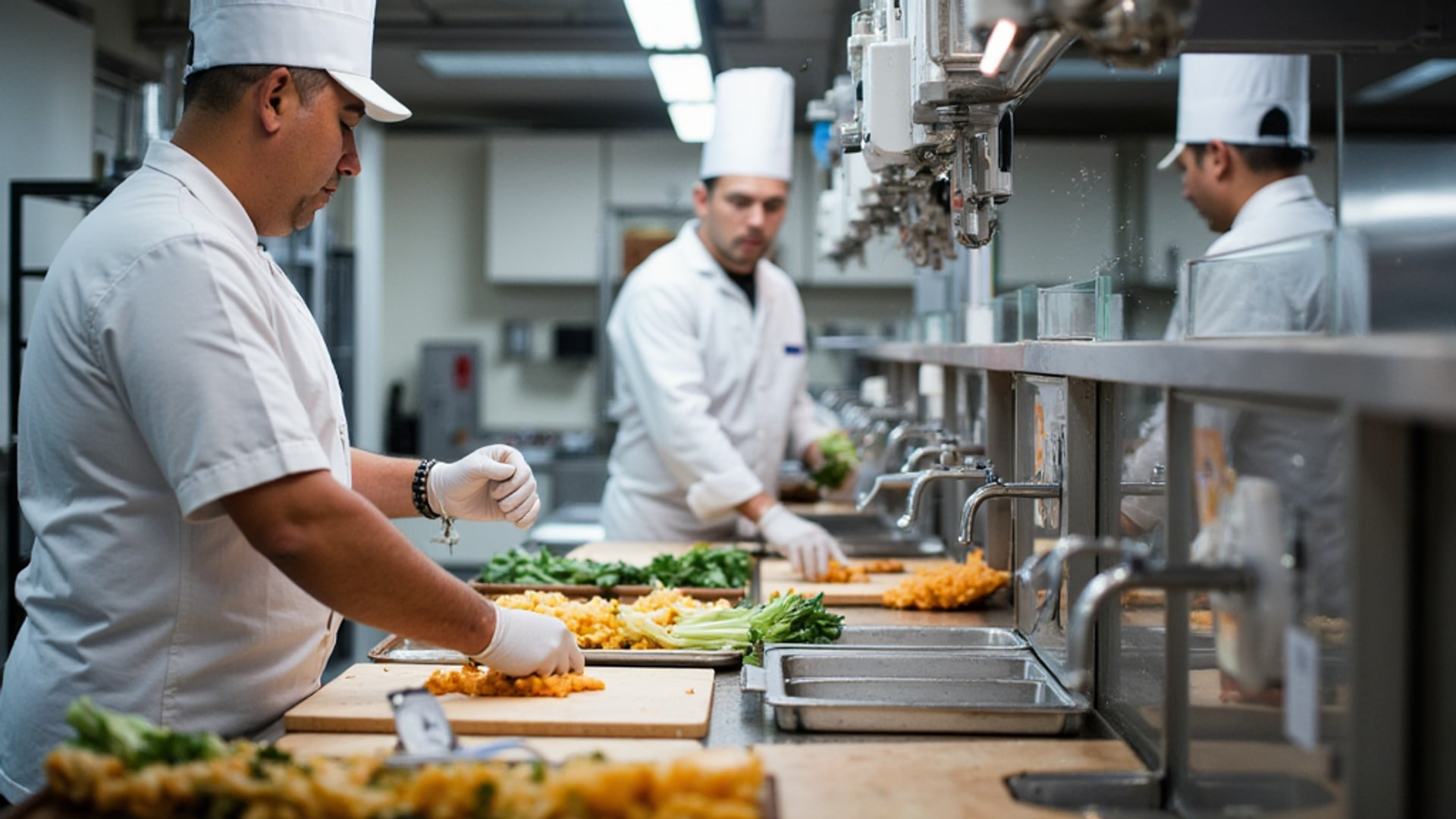
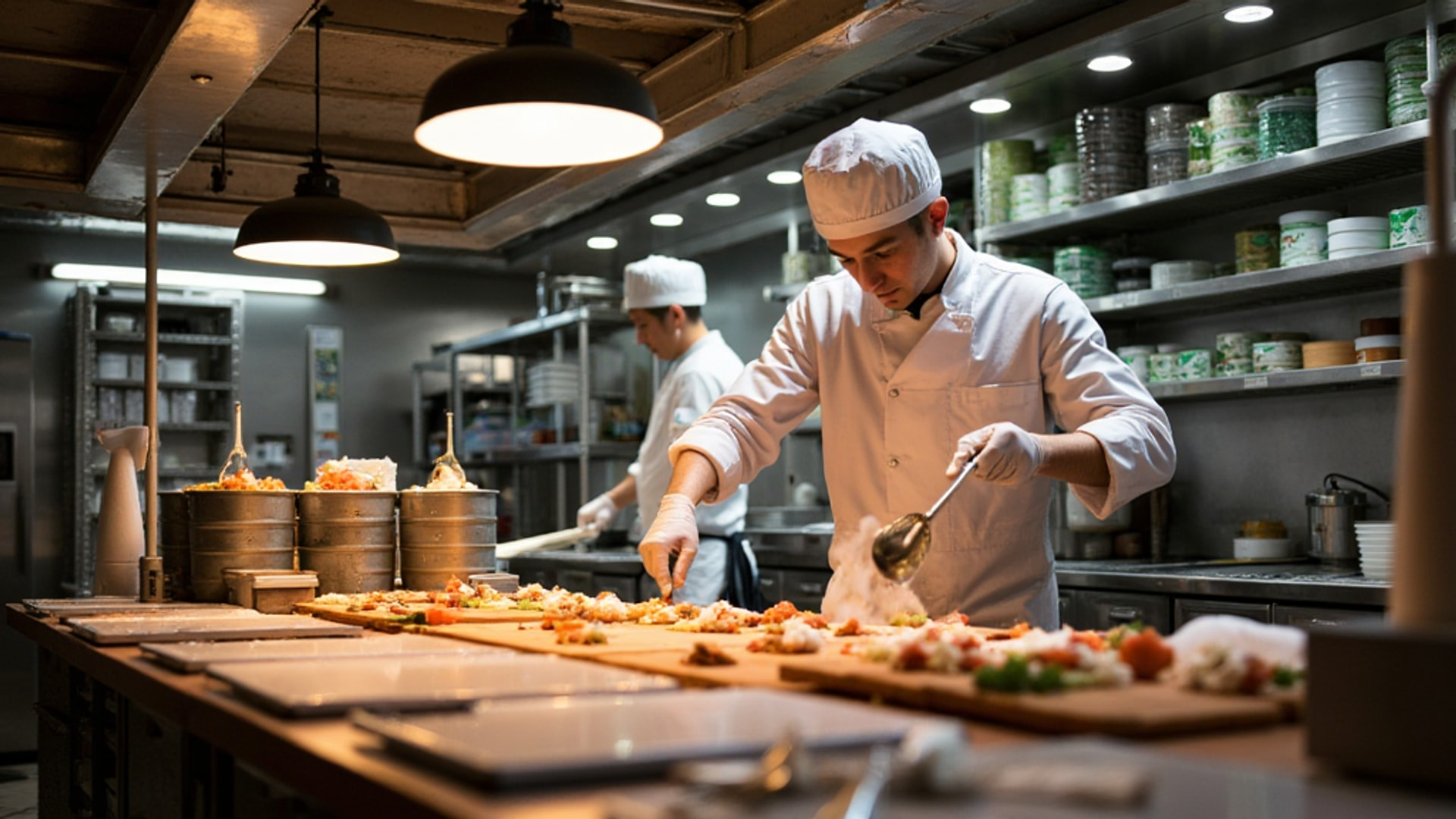
The BOH close is more demanding and has direct food safety implications. According to Cuboh’s closing checklist framework, kitchen closing covers:
Equipment shutdown and cleaning:
- All cooking surfaces (flat tops, grills, ranges) scraped, degreased, and wiped
- Oven interiors wiped or scrubbed per schedule
- Deep fryer oil filtered or changed per schedule; fryer walls cleaned
- Hood filters removed and soaked or replaced per maintenance schedule
- Grease trap checked and cleaned
- All smallwares (hotel pans, utensils, cutting boards) washed and sanitized
Food storage:
- All open containers covered with plastic film or lids and labeled with date and contents
- FIFO rotation checked — older product moved to front
- Walk-in cooler and freezer temperatures verified and logged
- Walk-in doors confirmed closed and sealing properly
- Reach-in temperatures verified
Floors and drains:
- Kitchen floor swept, then wet-mopped with sanitizer solution
- Floor drains cleared of debris and flushed
- Non-slip mats removed, cleaned, and returned
- Trash cans emptied to dumpster — all of them, not just the full ones
Bar Closing Checklist
According to Cuboh, bar closing involves:
- Pull and clean all pour spouts — soak overnight
- Cap or cork all open wine bottles and refrigerate
- Restock beer fridge, coolers, and well
- Consolidate and cover garnishes; discard anything past safe use
- Sanitize entire bar surface including rail and speed well
- Wash and polish all glassware
- Clean ice machine exterior and sanitize dispenser
- Empty and sanitize ice bins
- Clean taps and drip trays
- Close out and balance bar register
Digital vs. Paper Checklists
According to TouchBistro, implementing checklists digitally adds accountability layers that paper cannot provide:
| Feature | Paper | Digital |
|---|---|---|
| Time-stamped completion | No | Yes |
| Photo verification of tasks | No | Yes |
| Auto-escalation for missed items | No | Yes |
| Searchable history | No | Yes |
| Manager remote visibility | No | Yes |
Platforms like 7shifts, Jolt, and Operandio offer digital checklist functionality built for restaurant operations. The investment is modest; the accountability improvement is significant.
The Closing Safety Sequence
Before the final manager exits, run this sequence every night without exception:
- All staff out — do not leave employees behind while you lock up the front
- Kitchen walk — every burner off, every pilot confirmed, every door closed
- Walk-in confirmation — doors sealed, no one inside
- Cash secured — safe closed and locked
- External doors — back door locked and tested
- Security system armed — use the correct code, confirm the armed status
- Lights off — except security lighting on a timer or sensor
The Morning Payoff
A team that closes well saves the opening crew 20 to 30 minutes of remedial cleaning and prep. According to Factorial HR, morning opening procedures are designed to have the facility fully operational before the first guest arrives — and that timeline depends entirely on the previous night’s close being complete.
The best closers are proud of what they leave behind. Build that culture. Recognize it. The staff member who never leaves a dirty station or a half-done checklist is worth more operationally than the flashy one who cuts corners when no one’s watching.
Close like the morning manager is going to inspect every inch of it. Because they should, and the good ones do.
→ Read more: Restaurant Opening and Morning Prep: How to Start Every Service Day Right → Read more: Shift Handoff Procedures: The Communication System That Keeps Service Consistent → Read more: Daily Restaurant Operations: The Workflow That Keeps Everything Running