· Menu & Food · 8 min read
Limited-Time Offers: Creating Urgency and Driving Revenue
How to design and execute limited-time offers that drive traffic, test new menu items, and generate up to 25% revenue lifts during promotional periods.
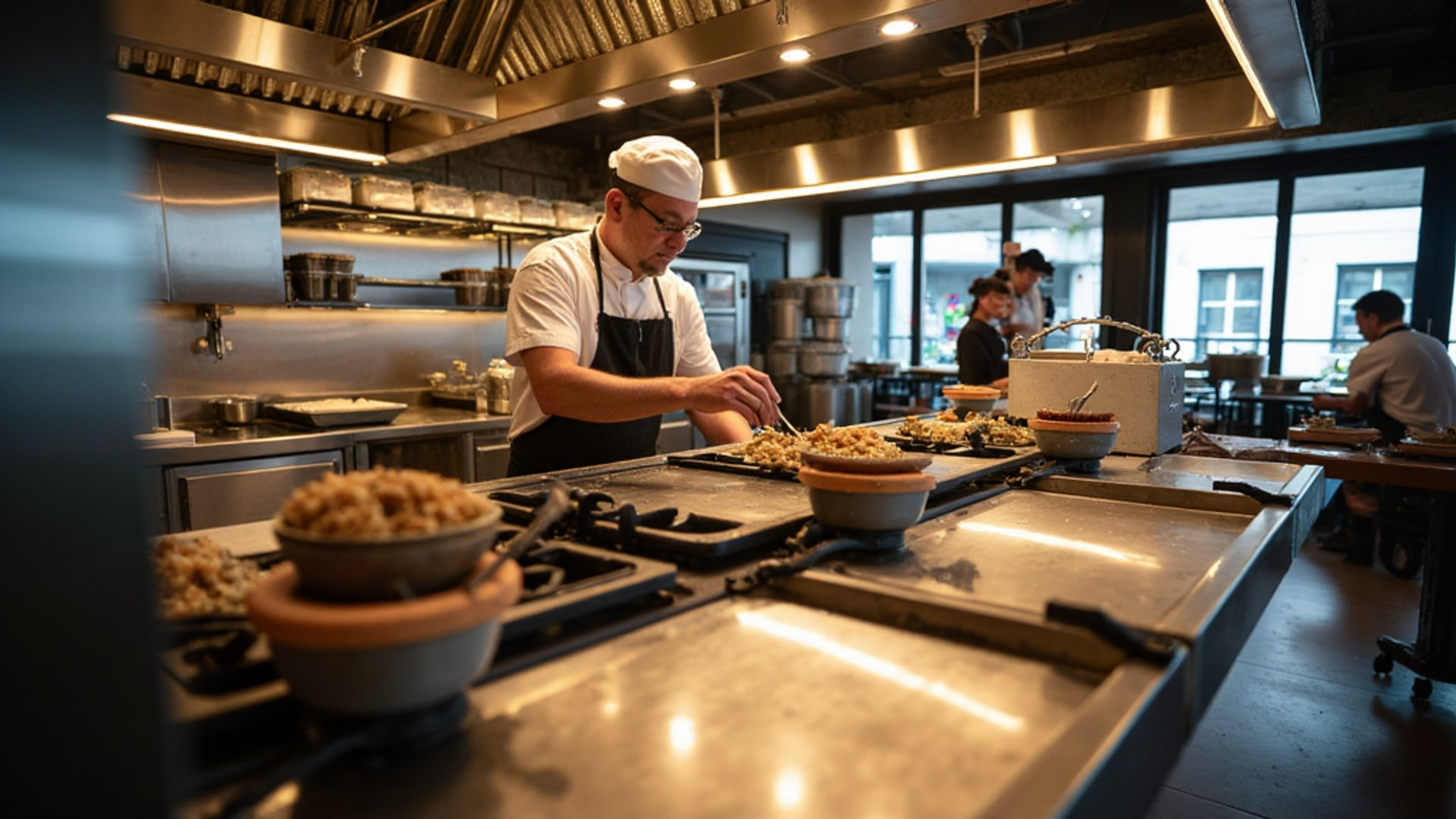
The limited-time offer has become one of the restaurant industry’s most versatile strategic tools, and the data shows operators are using it aggressively. Food & Drink Resources reports that LTO activity is on track for approximately 39,000 restaurant limited-time offers in 2025, compared to 17,790 in 2020. That is more than a doubling in five years. Restaurants at every segment level, from fast food to fine dining, have concluded that structured menu scarcity drives behavior.
The 55% of consumers who say LTO offers are important when deciding where to eat — up from 50% in 2022 — confirms that this is not just operator enthusiasm. Customers are responding. Well-executed programs can boost revenue and traffic by up to 25% during promotional periods.
The difference between operators who use LTOs strategically and those who discount randomly comes down to understanding why the format works and how to design it well.
Why Limited-Time Offers Work
The core mechanism is urgency. When customers know an offer expires — on a calendar date, when a supply runs out, or both — the calculus of “I’ll try it next time” breaks down. There is no next time. This urgency effect is particularly powerful with genuine scarcity: items limited to a specific daily quantity create a race-to-experience dynamic that a distant deadline alone cannot replicate.
The psychology runs deeper than simple deadline pressure. Research from behavioral economics identifies this as the fear of missing out (FOMO) — the anticipatory regret of not acting while you had the chance. For food, where the desire is immediate and sensory, FOMO is especially effective. A consumer who misses a limited seasonal dish they were curious about experiences a real sense of loss. That emotional pattern teaches future behavior: act when the offer is available.
For operators, this dynamic translates to traffic generation during periods that might otherwise be slow, trial among customers who haven’t visited recently, and conversation among customers who share limited offers with their networks.
The Eight Elements of a Successful LTO
Food & Drink Resources identifies eight essential elements for LTO development. Understanding all eight helps operators avoid the most common failure modes.
Seasonal alignment. Connect the offer to real-world events, seasons, or cultural moments. A fall butternut squash dish, a summer grilled peach dessert, or a Super Bowl-week wing special all leverage timing that customers intuitively understand and appreciate. Seasonal alignment also creates repeat-visit patterns: customers who know you do something special in autumn will anticipate and plan for it.
Time urgency. The offer must feel genuinely limited. Vague language like “for a limited time” has less impact than “through Sunday” or “while 30 portions remain.” Specificity makes the limit real.
Exclusivity. The offer should not be available everywhere or all the time. Exclusivity signals that the customer is getting something special. This is especially powerful for loyal regulars who want access to experiences casual visitors don’t get.
Scarcity. Related to exclusivity but distinct: genuine scarcity (limited quantity per day, limited days of the week) amplifies the urgency effect. “Available Thursdays and Fridays only, limit 20 portions per evening” creates a reservation-worthy context around an LTO.
Competitive pricing. LTOs must offer value, whether that value is the novelty of access to something unavailable elsewhere or a price point that makes the decision easy. In current consumer conditions, affordability combined with uniqueness is the winning formula, according to Food & Drink Resources.
Innovation. Present something that customers cannot get from your regular menu or from competitors. The LTO should represent creative output from the kitchen — new flavor combinations, techniques, or formats that generate genuine interest and conversation.
Market validation. Before committing to an LTO, verify that there is a realistic customer base for it. An adventurous ingredient combination may delight a small percentage of regulars while confusing the broader customer base. LTOs that go too far from the restaurant’s core identity tend to underperform.
Brand consistency. This is perhaps the most important guardrail. A pizza restaurant’s LTO should innovate within or adjacent to pizza. A Southern BBQ concept should not suddenly launch a Thai noodle bowl LTO. The offer must feel like it came from your kitchen and your concept, not like a random departure. Customers trust brands with clear identities; LTOs that break that trust damage more than they gain.
→ Read more: Menu Testing and Soft Launch: How to Validate New Items Before You Commit
LTOs as a Product Testing Pipeline
One of the most underappreciated uses of limited-time offers is as a low-risk product development tool. Before committing to a permanent menu addition — which requires kitchen training investment, supply chain relationships, menu reprinting costs, and inventory risk — an LTO lets you test real-world demand with customers who are genuinely choosing to order or not.
A daily specials program with a rotating 15-25% of menu items provides a continuous testing environment. According to AIScreen’s research, this structural approach — a permanent foundation of proven bestsellers plus a rotating layer — creates multiple benefits simultaneously: regulars have reason to visit more frequently, the kitchen can assess demand for potential new items, and purchasing can leverage temporarily abundant or well-priced ingredients.
Digital menu boards have made this operationally feasible at a scale previously impossible. Where updating physical specials boards was a manual, error-prone process, digital displays can be updated centrally in real time. They also enable time-of-day transitions: a lunch special can automatically shift to a happy hour feature, then to a dinner spotlight, without any physical intervention.
The data feedback loop is the product development payoff. Track which specials sell, which generate positive verbal or written feedback, and which achieve strong margins. Items that perform well as specials can graduate to the permanent menu with actual demand data behind them. Items that underperform quietly retire without the sunk cost and public visibility of a full menu change.
AIScreen notes that digital screens displaying daily specials can drive a 25% increase in returning customers. The specials program becomes a retention mechanism — not just a revenue tactic.
Value-Focused LTOs in a Price-Sensitive Market
Current consumer behavior rewards restaurants that combine affordability with novelty. The shift toward bundled meal promotions and value-focused LTOs reflects real purchasing power constraints that are reshaping how customers evaluate dining choices.
Major chains have learned this by creating bundled value meals as limited-time events — finding that the combination of a specific price point and a defined window generates stronger traffic responses than either element alone. For independent operators, the principle scales: a prix fixe LTO, a weeknight bundle at a compelling all-in price, or a “build your own” combo at a fixed price point can drive traffic during slow periods with measurable results.
The key is that affordability cannot come at the cost of quality or identity. A cheap LTO that feels like a clearance sale damages the brand. An LTO that delivers genuine value through smart menu engineering — pairing lower-cost ingredients with strong flavor payoff — creates the perception of generosity without destroying margin.
Cross-Brand Collaborations
Cross-brand collaborations have become central to LTO strategy in 2025-2026, as Food & Drink Resources documents. Restaurants partnering with food producers, beverage brands, local bakeries, or even non-food brands to create unique limited offerings generate media attention and introduce each brand to the other’s customer base.
For independent operators, this means looking at local partnerships. A restaurant + local brewery can co-create a food-and-beer pairing LTO. A restaurant + local farm can launch a seasonal farm dinner. A restaurant + local celebrity chef can run a guest residency week. These collaborations produce genuine novelty that neither partner could create alone, and they distribute the marketing cost across two audiences.
The authenticity premium matters here. Collaborations that feel like genuine creative partnerships get better reception than those that feel commercially manufactured.
Digital Tools and Analytics
The shift toward data-driven LTO development is accelerating. POS platforms like Toast and Square offer built-in analytics to track LTO performance. Analytics from apps, loyalty programs, and POS systems help operators identify which customer segments respond to different LTO types, enabling increasingly targeted promotion. A breakfast LTO promoted to morning regulars is more efficient than a broadcast campaign. A limited-edition cocktail promoted to the bar’s repeat customers converts at a higher rate than social media posts to the general market.
Social media timing matters. Posts about limited offers should go out in early afternoon for after-work or dinner periods, when people are actively planning where to go. Posting after the LTO has started, or in the morning for an evening special, consistently underperforms.
Measuring LTO Performance
Every LTO should have defined performance metrics before it launches. The minimum tracking set includes:
- Unit sales per day (versus comparable days without the LTO)
- Overall traffic change during the promotional period
- Food cost percentage on the LTO item
- Contribution to overall revenue during the period
- Customer feedback (server notes, reviews, direct comments)
Post-LTO analysis should answer three questions: Did it drive incremental traffic, or did customers substitute the LTO for what they would have ordered anyway? Did it achieve target margins? Should it be repeated, refined, or added to the permanent menu?
Without this data, LTOs become gut-feel promotions rather than a strategic pipeline. If you are not tracking these numbers, you are guessing. The operators getting the most from limited-time offers treat them as structured experiments, not just marketing moments.
→ Read more: Seasonal Marketing Campaigns: The Restaurant Operator’s Full-Year Playbook → Read more: Menu Trend Analysis: How to Read the Market and Apply It to Your Menu