· Menu & Food · 9 min read
Fine Dining Menu Strategy: Balancing Quality, Cost, and Guest Expectations
Fine dining menu engineering is not about choosing between quality and profit — it is about deploying premium ingredients strategically so every dish justifies its price and every service contributes to the bottom line.
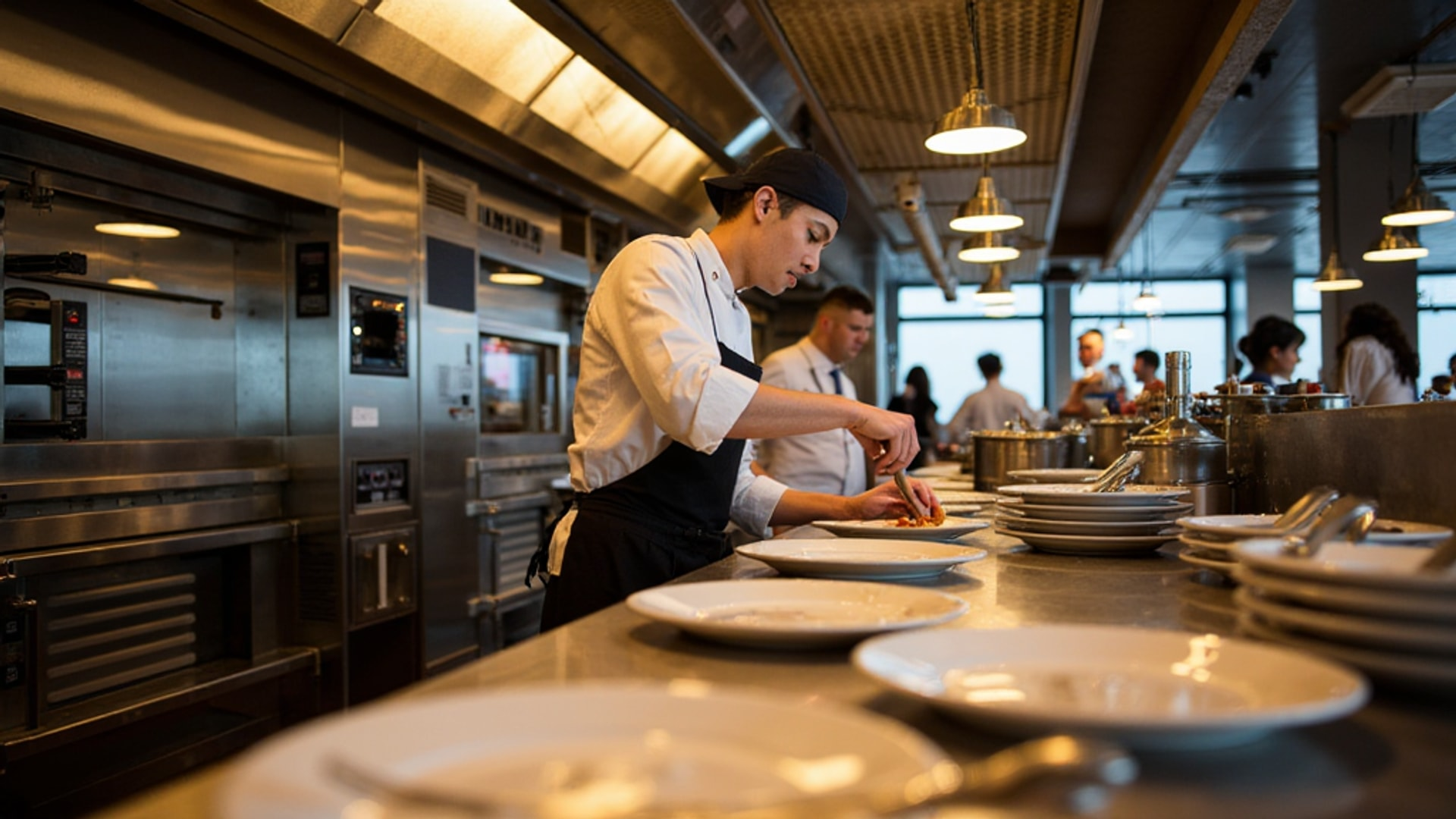
Running a profitable fine dining restaurant requires resolving a tension that does not exist at the same intensity anywhere else in the industry: the obligation to use premium ingredients and the economic necessity of managing food costs. The diner sitting at your table expects truffle, wagyu, and pristine seafood. The James Beard Foundation and Michelin Guide set the standards that shape these expectations. Your P&L needs the food cost line to stay in a range that leaves room for rent, labor, and something resembling a margin.
The operators who do this well do not compromise on either side. They use menu engineering principles adapted to the fine dining context — the same four-quadrant framework that works in a fast-casual operation, applied with sensitivity to brand positioning, guest experience, and the storytelling that justifies premium pricing.
The Fine Dining Matrix: Same Tool, Different Sensitivities
Standard menu engineering plots dishes on a two-by-two matrix based on popularity (how often they sell) and profitability (how much contribution margin they generate per plate). NOVA’s research on fine dining menu engineering confirms that the same framework applies at the upper end of the market, but with meaningful differences in how you interpret and respond to each quadrant.
Popularity is calculated as the number of orders for an item divided by total orders for the period. Profitability is the menu price minus food cost, divided by the menu price — expressed as a percentage, or better yet, as a dollar contribution margin.
The four categories:
Stars — high profit, high popularity. These are your anchor dishes. They define what guests think of when they think of your restaurant. Protect them fiercely. Consistency is the primary obligation here — any variance in ingredient quality, portioning, or preparation undermines the trust guests have built in the dish. Stars should be featured prominently in menus, presentations, and marketing materials.
Plowhorses — high popularity, lower profitability. In fine dining, these are often the dishes guests return for but which have high ingredient costs. The response is not to cheapen the dish but to find ways to improve margin through intelligent sourcing, portion calibration, or upsell opportunities. A recommended wine pairing that generates strong beverage margin can effectively subsidize a Plowhorse’s food cost.
Puzzles — high profitability, lower popularity. These dishes deserve better placement and stronger description. In fine dining, where storytelling carries unusual weight in menu design, a Puzzle dish often just needs a richer narrative — origin of the ingredient, the technique involved, the flavor journey the guest is about to take — to convert curious browsers into buyers.
Dogs — low profit, low popularity. In fine dining these need honest evaluation. Unlike a casual concept where Dogs can be quietly removed, a fine dining menu may need to carry certain prestige items for reasons of completeness or chef reputation even when they do not perform financially. If a dish stays despite poor numbers, it should be subsidized by decisions elsewhere — perhaps a high-margin accompaniment or smaller portion size that preserves the dish’s presence while improving its economics.
The Premium Ingredient Problem
The defining challenge of fine dining menu engineering is the premium ingredient. Truffle, wagyu beef, fresh foie gras, A5-grade anything, sustainable bluefin tuna, Iberico ham — these products carry food costs that would make a casual dining operator walk away from the dish entirely. In fine dining, they are often required for credibility.
The key technique, as NOVA’s analysis shows: use premium ingredients as accents rather than main components. A truffle shaving on an otherwise cost-controlled pasta dish communicates luxury without the food cost impact of truffle appearing in every component. A small portion of wagyu beef served alongside a supporting cast of seasonal vegetables and a house-made sauce justifies a $65 price point while keeping ingredient costs manageable.
This approach requires kitchen discipline. The instinct of a skilled chef is often to use premium ingredients generously — restraint can feel like compromise. The reframe is that restraint is a technique, not a limitation. A carefully placed accent of foie gras torchon communicates more culinary sophistication than a full portion if the dish is designed to make that accent the narrative center.
→ Read more: Menu Engineering Worksheet: Using the Profitability Matrix in Practice
Tasting Menus as Portion Optimization Vehicles
The tasting menu or prix fixe format is the most powerful tool for portion optimization in fine dining. Rather than serving one premium ingredient at a full portion, a tasting menu allows the kitchen to introduce it at an appropriate size — say, two ounces of A5 wagyu in course seven of a twelve-course progression — generating the luxury experience at a fraction of the cost that a standalone 8-ounce portion would require.
Tasting menus serve multiple financial functions simultaneously. They allow chefs to showcase technique and range across many flavor profiles while keeping individual portion sizes and food costs predictable. The prix fixe format simplifies kitchen operations by standardizing every guest’s meal, reducing mise en place complexity and minimizing waste from unsold a la carte items. And the predetermined structure makes service choreography smoother, which has labor efficiency implications.
The pricing logic of tasting menus is also favorable. When guests commit to a multi-course format, the psychological framing shifts from per-dish value evaluation to overall experience evaluation. Guests are not calculating whether each course is worth its money — they are assessing whether the evening as a whole was worth the investment. This framing supports prices that would be harder to defend on individual dishes priced in isolation.
Menu Placement and Storytelling as Profit Drivers
In casual dining, menu placement psychology focuses on visual anchoring, eye-tracking patterns, and using borders or boxes to direct attention. Fine dining menus operate on the same principles but with an additional and more powerful lever: narrative.
When a dish is described with origin-specific language — a specific farm, a regional tradition, a seasonal moment, a collaborative relationship with a supplier — guests are more willing to pay premium prices. The storytelling communicates that the dish is not interchangeable with anything available elsewhere. Descriptive menu language is a genuine profit driver in fine dining, not just a cosmetic choice, as NOVA’s data confirms.
Placement still matters. Dishes positioned at the top of a section or in a visual focal point generate more orders than those buried in the middle. High-margin Puzzle dishes that need more visibility should be moved to prime real estate rather than being left in positions where they are overlooked.
Emerging Trends Reshaping Fine Dining Menu Engineering
Three developments are meaningfully changing how fine dining menus are built and managed:
Solo dining accommodation. The growth of solo fine dining — guests celebrating personal milestones, traveling for work, or simply choosing to dine alone — has created demand for smaller format options. Restaurant Business Online has documented this trend extensively. Half-portion tasting menus, seated bar programs, and single-course a la carte formats accommodate solo diners without forcing them into a full tasting commitment or making them feel like second-class guests. This expands the addressable audience for fine dining without compromising the experience for groups.
Wellness-oriented dishes as a performance category. Fine dining guests are increasingly tracking dietary preferences — plant-based, gluten-free, low-inflammatory — that once would have been accommodated reluctantly, if at all. The shift is to treat these as a performance category in menu engineering rather than an accommodation. Tracking the sales and margins of wellness-oriented dishes separately allows operators to see whether this segment is carrying its financial weight and to invest in it accordingly.
Dynamic and digital pricing. The highest-end fine dining operations are experimenting with demand-responsive pricing, particularly for tasting menus and special events. A Saturday night tasting menu priced higher than a Tuesday version is not price gouging — it is an honest reflection of demand and the operational cost of peak-night service. Digital menu formats make this more feasible for restaurants that previously relied entirely on printed menus.
Food Cost Targets in Fine Dining Context
The conventional 28 to 35 percent food cost target needs context adjustment in fine dining. A restaurant built around premium ingredients and appropriate premium pricing may operate at 38 to 42 percent food cost on a la carte items and still achieve healthy profitability because the beverage program, tasting menu supplements, and cover charges carry significant contribution margin that compensates.
The more useful practice is to track food cost and contribution margin at the dish level and manage the menu as a portfolio. Some dishes will run high food costs and contribute substantial dollars per plate. Others will have lower food cost percentages and contribute meaningfully to volume. The target is a portfolio that generates the overall contribution margin the restaurant needs — not uniform food cost percentages across every item.
What fine dining cannot afford is a portfolio dominated by low-contribution-margin dishes regardless of food cost percentage. A $90 tasting menu where every course has low margin is not saved by good food cost percentages. The absolute dollar margin must be sufficient to cover the operation’s fixed cost structure and leave a meaningful net margin, which in fine dining is typically 5 to 15 percent depending on concept, market, and ownership structure.
The Quality Commitment That Underpins Everything
Every menu engineering recommendation for fine dining operates within a non-negotiable constraint: quality cannot be sacrificed to improve margins in ways that guests will detect. NOVA explicitly warns against this trade-off, noting that cutting quality undermines repeat business — the economic foundation of any fine dining operation where customer acquisition costs are high and retention is everything.
The discipline is to find margin through efficiency, intelligence, and design — not through compromise. Smaller, more impactful portions of premium ingredients. Better supplier relationships that improve ingredient quality and price simultaneously. Menu formats that maximize kitchen efficiency. Descriptions and placement strategies that convert Puzzle dishes into Stars. These are the levers that improve profitability without touching the quality perception that the guest experience depends on.
→ Read more: Wine List Strategy: Building a Profitable Program That Guests Actually Buy → Read more: Menu Copywriting: Writing Descriptions That Sell → Read more: Fine Dining Business Models: How the World’s Best Restaurants Actually Make Money