· Marketing · 7 min read
Food Truck Marketing: How to Build a Following When Your Location Changes Daily
Food trucks face a unique marketing challenge — selling both a brand and an ever-changing location. Here is how to master both at the same time.
Running a food truck is running a different kind of business than operating a fixed-location restaurant. The food may be just as good — sometimes better — but the marketing problem is fundamentally distinct. You are not just selling a dining experience. You are also selling a location that changes daily, a schedule that customers must actively follow to find you, and a brand that must cut through the noise of a street or parking lot environment.
Restolabs, a restaurant ordering platform, identifies this dual marketing challenge as the foundation of food truck strategy: “Food trucks must communicate both their brand and their ever-changing location to customers through multiple channels simultaneously.” Get either element wrong, and the other one cannot compensate.
The good news is that food trucks have natural marketing advantages that fixed restaurants spend significant money trying to create: visual distinctiveness, a compelling story, authentic street-food culture, and the scarcity principle built right in. The challenge is building a system that activates these advantages consistently.
Start with Your Most Visible Marketing Asset: The Truck
Before social media, before Google, before email lists — the truck itself. Restolabs makes this point clearly: for mobile vendors, the truck’s design and branding carry outsized marketing importance. The vehicle is seen by thousands of people during daily transit, whether it is serving customers or simply driving between locations. A distinctive, professionally wrapped truck creates brand impressions continuously, even when the truck is not actively open.
Invest in professional truck design and wrapping. The name, visual identity, color scheme, and any imagery on the truck should be memorable, legible from a distance, and clearly connected to the food you serve. An unclear or generic truck exterior wastes your most constant marketing opportunity. A striking, well-designed truck generates social media photos from passing pedestrians, appears in neighborhood street photography, and builds brand recall through repetition across its entire service area.
Location Marketing: The Daily Communication Problem
Your customers need to know where to find you. This sounds simple but requires a multi-channel approach because different customer segments use different platforms to find you on any given day.
According to Restolabs, effective food truck location communication uses these channels in combination:
Google Business Profile. Optimize your profile fully and encourage reviews, particularly for the search term “food trucks near me” — a high-intent query from people actively looking for mobile food vendors in the area. Keep your listed hours updated and use Google Posts to announce your daily location.
Food truck finder apps. Platforms like Street Food Finder and Roaming Hunger are used specifically by people hunting for food trucks. Listing your truck on these platforms puts you in front of an audience already in discovery mode, filtering specifically for mobile vendors.
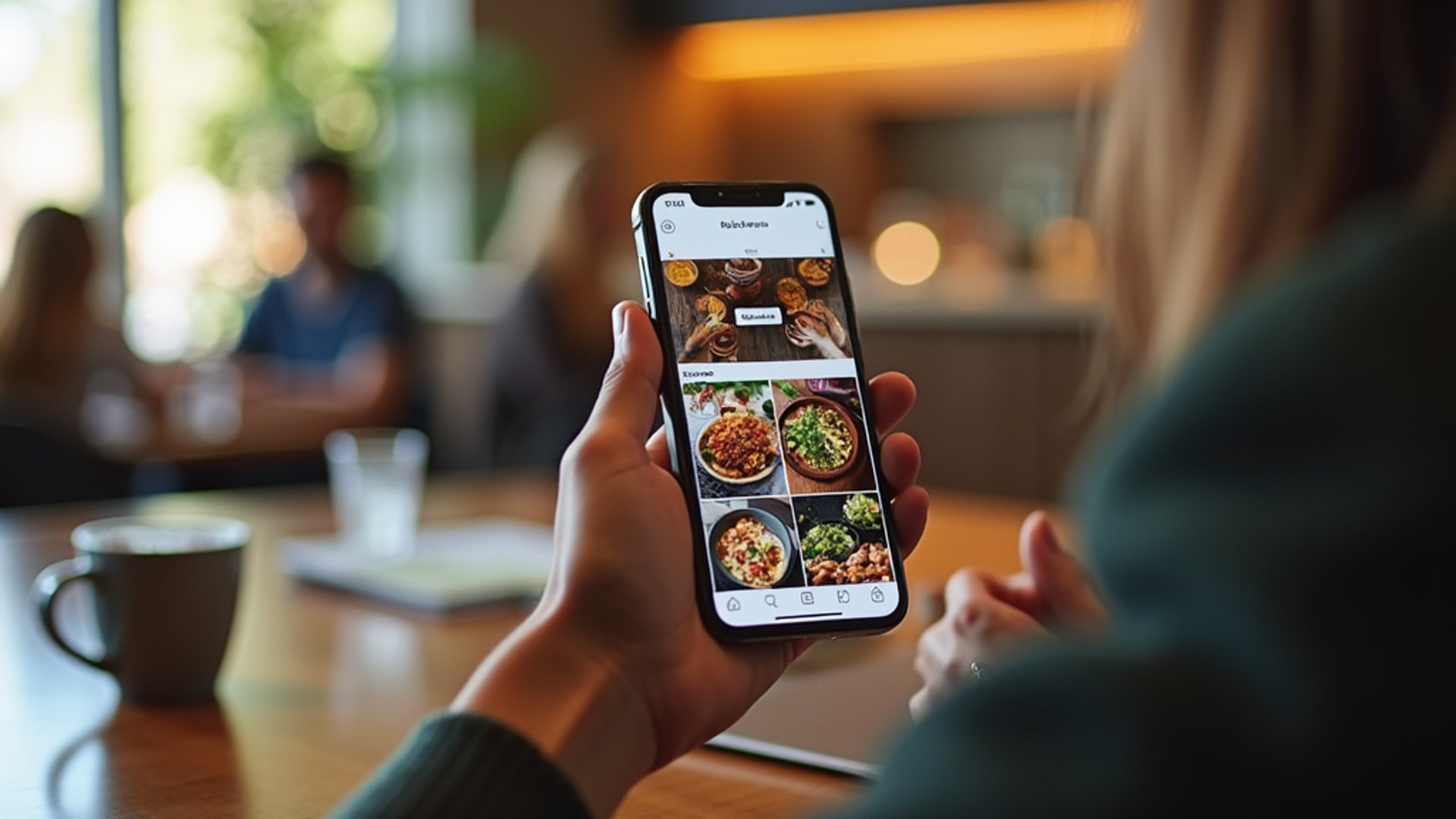
Instagram and social media location posts. Every morning, post your location for the day. Include the address, a neighborhood landmark, the serving hours, and what specials you have available. Use location tags to appear in local searches. Regular followers will develop the habit of checking your feed for your daily schedule.
Email and SMS location alerts. Build a subscriber list and send automated notifications when you post your schedule. SMS in particular has a 98% open rate according to Mailchimp, with the vast majority of messages read within three minutes of delivery — making it an excellent channel for time-sensitive location announcements.
The critical principle is redundancy. Someone who relies exclusively on Instagram will miss you on days they are not checking it. Someone who relies on your email newsletter will be stranded on a day you post your location only to Instagram Stories. Maintain all the channels simultaneously and your customers will always have at least one path to finding you.
Community Events: The Highest-Impact Marketing Channel
Restolabs identifies festival, street fair, farmers market, and corporate event participation as “one of the most effective visibility strategies” for food trucks. This is not just about revenue on the event day — it is about brand exposure at scale.
A single day at a well-attended local festival can expose your brand to thousands of potential repeat customers who live and work in your usual service area. Many of them will not buy from you that day. But they will see the truck. They will smell the food. They may follow you on Instagram. And when your truck shows up in their neighborhood two weeks later, the brand recognition shortens the decision time significantly.
Pursue an active event calendar throughout the year. Reach out to:
- Local farmers markets and artisan fairs.
- Corporate campus food truck programs.
- Sporting events, concerts, and outdoor festivals.
- Neighborhood block parties and community events.
- Brewery and winery parking lot programs.
- University campuses during high-traffic periods.
The events you are at regularly become part of your identity. Regulars start associating your presence at a certain farmers market with their weekend routine. That association is a powerful retention force that requires no explicit marketing to maintain once established.
Social Media: Authenticity Over Polish
Food trucks are natural social media subjects. The truck itself, the preparation process, the street environment, the customer interaction — all of this is inherently visual and genuinely interesting. Restolabs specifically highlights Instagram and TikTok as the primary platforms for showcasing the truck, daily specials, and user-generated content.
The advantage food trucks have over fixed restaurants on social media is authenticity. The noise, the hustle, the weather, the improvised setups, the real customer reactions — all of it is genuine content that resonates better than anything a photography studio can produce. Lean into this rather than trying to replicate the professional aesthetics of a full-service restaurant’s Instagram account.
Post behind-the-scenes content: prep work in the morning, setting up the truck, a close-up of a new dish being assembled. Let the audience see the person behind the window. Personal connection between a truck owner and their audience drives loyalty that no promotion can manufacture. The data from Restroworks confirms it: user-generated content converts at four times the rate of professionally produced branded content, and food truck customers are particularly willing to create it.
The TikTok playbook — three to five posts per week, authentic over polished, opening hook within the first three seconds — applies here just as much as for fixed restaurants. CloudKitchens documents several cases where a single viral TikTok video transformed a food truck’s trajectory, driving lineups and dramatically increasing sales volume.
Loyalty Programs Built for Mobility
Traditional punch-card loyalty programs do not work well for food trucks. If customers only encounter your truck occasionally or at variable locations, the physical card is often forgotten or lost. Restolabs recommends app-based loyalty programs that allow customers to track and redeem points regardless of which location they visit and that integrate location notification capabilities.
The ideal food truck loyalty program does two things simultaneously: rewards repeat visits with points or perks, and notifies enrolled members when the truck is near their current location or workplace. This dual function combines retention incentives with real-time location marketing — two critical food truck challenges addressed with one system.
Even if a full app-based loyalty program is beyond your current budget, building an SMS subscriber list provides a basic version of the same functionality. Subscribers opt in to receive location notifications and special offers, and you build a direct communication channel that does not depend on any social media algorithm.
Marketing Budget Guidance
Restolabs recommends food trucks allocate 3-10% of total sales to marketing efforts. This is a wide range that reflects the variance in competitive environments and growth stages. A new truck establishing its presence in a competitive urban market should invest toward the top of that range. An established truck with a loyal following and a regular event calendar can likely maintain its position toward the lower end.
The allocation should prioritize the channels that address your biggest constraint. If your primary challenge is location discovery — customers do not know where to find you — invest heavily in location app listings, SEO, and social media. If your challenge is repeat business — customers try you once but do not return — invest in loyalty programs and CRM-driven marketing. If your challenge is brand awareness in new areas — you want to expand your territory — prioritize event participation and influencer partnerships.
Spend where it hurts most, not where it feels balanced. Allocating budget to your biggest constraint produces better returns than spreading it evenly across all channels.
→ Read more: Guerrilla Marketing for Restaurants: Low-Cost, High-Impact Tactics → Read more: Restaurant SMS and Mobile Marketing: The High-Open-Rate Channel → Read more: TikTok Marketing for Restaurants: Building Viral Momentum