· Legal & Compliance · 8 min read
FDA Calorie Menu Labeling: Legal Requirements for Restaurant Chains
If your restaurant chain has 20 or more locations, federal law requires calorie counts on your menus — here is exactly what the FDA requires and how to comply.
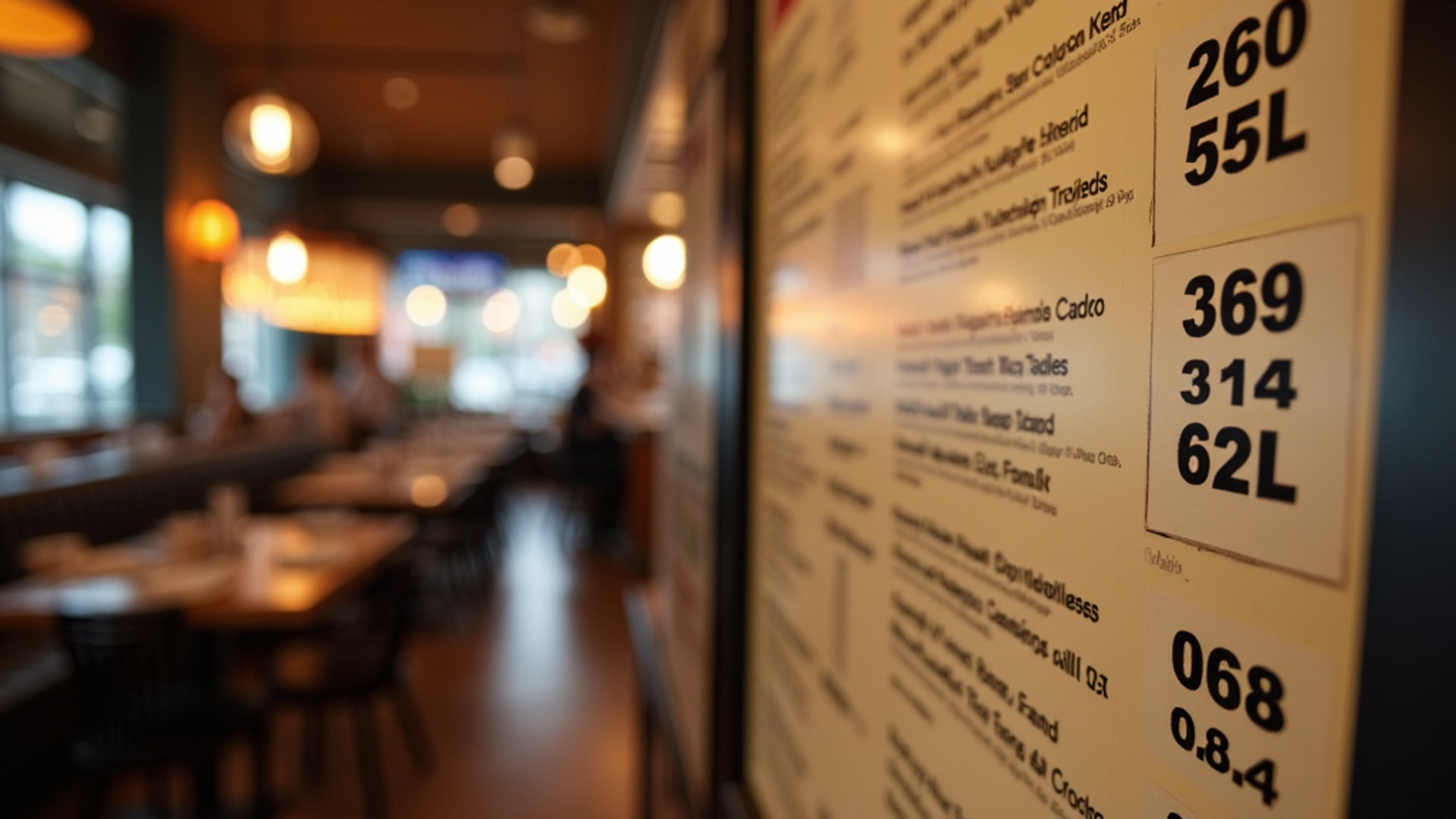
The FDA’s menu labeling rule has been in effect since May 7, 2018, and it applies to a broader range of food service operations than most operators initially assume. If you operate 20 or more locations under the same name with substantially similar menus, your menus and menu boards must display calorie information. This is not a recommendation or a best practice — it is a federal legal requirement with enforcement teeth.
Understanding the rule completely is also commercially relevant. The data on consumer use of calorie information is mixed, but the liability exposure for non-compliance is not: enforcement is conducted through FDA inspections and state and local health department inspections, with non-compliance potentially resulting in warning letters, seizure, or injunction.
Who the Rule Covers
The 20 or more locations threshold is the defining criterion. Establishments must operate under the same name and offer substantially the same menu items. The rule covers a broader range of food service formats than just traditional sit-down restaurants and fast food — it also applies to:
- Fast food chains
- Bakeries and coffee shops operating at scale
- Ice cream and frozen yogurt chains
- Pizza delivery chains
- Movie theater concession stands at chain cinemas
- Any retail food establishment with 20 or more locations offering restaurant-style food
The “substantially similar menu” requirement means that if your locations all offer the same core menu with minor regional variations, the rule applies to all of them. A chain does not escape coverage by adding a few location-specific items to an otherwise standardized menu.
Non-covered establishments can voluntarily opt in to the labeling requirements by registering with the FDA every other year. Some smaller chains or independent operators choose this path for competitive or marketing reasons.
What Must Be Displayed
The FDA’s requirements for calorie display are specific about placement, sizing, and language.
Core display requirement: Calorie counts must be displayed adjacent to the name or price of each standard menu item. The calorie information must appear in type that is no smaller than the name or price — whichever of those two is in smaller type. The label must use the word “Calories” or the abbreviation “Cal.”
This is a meaningful requirement. It prohibits approaches like listing calories in a footnote, on a separate nutrition pamphlet, or available only upon request. The calories must appear on the primary menu or menu board, next to the item, in visible type.
Coverage extends to all customer-facing ordering materials. The rule covers:
- Printed menus given to customers at the table
- Menu boards behind counters (including drive-through menu boards)
- Self-service food displays where customers select pre-packaged or prepared items
- Online menus used for ordering
This means a chain that operates primarily through digital ordering must display calorie information on its app and website ordering interface, not just at physical locations.
Two mandatory statements must also appear on the menu or menu board. First, a statement that additional written nutrition information is available upon request. Second, the calorie context statement: “2,000 calories a day is used for general nutrition advice, but calorie needs vary.” These statements cannot be omitted even if you display all required calorie information correctly.
Variable and Combination Items
Many restaurant menus include items where the final calorie count depends on customer choices. The FDA has established specific approaches for these situations.
Variable menu items — items where customers customize their order, such as build-your-own burgers, create-your-own salads, or pizza with selectable toppings — may be labeled with a calorie range. The range should reflect the lowest and highest calorie versions possible (e.g., “200–650 Cal”). Alternatively, restaurants may display the calorie count for a default or standard preparation.
Combination meals must display the total calorie count for the complete meal as listed. A combo that includes a sandwich, fries, and a drink must show the combined calorie total, not just the calorie count for the individual components separately.
Self-service and bulk foods displayed on a cafeteria-style line or buffet must display calorie information per serving or per unit in close proximity to the food item. The display must be prominent enough to be visible before the customer makes their selection.
Alcoholic beverages listed on the menu are covered by the labeling requirement. A menu that includes cocktails, wine, and beer must display calorie information for those beverages alongside all other covered items. This surprised many operators when the rule took effect — particularly those managing a detailed beverage program or wine list.
What Does Not Require Labeling
Not everything on a restaurant menu requires a calorie count.
Daily specials and limited-time offers are not considered “standard menu items” under the FDA’s framework and are not required to carry calorie labels. A chalkboard special or a seasonal promotion that appears for 60 days is exempt.
Custom orders that deviate from any standard preparation are not required to have calorie counts listed — because they are by definition custom.
Condiments and garnishes offered for free and that customers apply themselves (ketchup packets, sugar packets, condiment stations) are not subject to the display requirement.
However, the exemptions are for items that are genuinely temporary or non-standard. An item that appears on the menu every day for most of the year, even if technically labeled a “special,” is likely a standard menu item subject to the rule.
The Additional Nutrition Information Requirement
Beyond calories, covered establishments must make additional nutrition information available upon request in written form. This information must be available to customers who ask for it — it does not need to appear on the menu itself, but it must be readily accessible.
The required additional information includes:
- Total calories
- Calories from fat
- Total fat (grams)
- Saturated fat (grams)
- Trans fat (grams)
- Cholesterol (milligrams)
- Sodium (milligrams)
- Total carbohydrates (grams)
- Dietary fiber (grams)
- Sugars (grams)
- Protein (grams)
This information must be in a written format that the customer can examine — a printed nutrition pamphlet, a binder at the counter, a printed card available on request. Per FDA guidance on the rule, it cannot be provided solely through a website link that customers must access on their own device.
Getting Calorie Data: Testing and Acceptable Methods
Before you can display calorie counts, you need accurate calorie data for your menu items. The FDA accepts several methods for determining calorie counts.
Laboratory analysis is the most accurate method. A food science laboratory can physically analyze prepared menu items and measure their caloric content. This is costly — laboratory testing for a full menu can cost thousands of dollars — but it produces the most defensible data.
Nutrient databases and calculation software are the most commonly used approach for chain restaurants. Using USDA nutrient databases and ingredient-level data, software calculates the calorie content of recipes based on their ingredients. This is less expensive than laboratory testing and allows for rapid updates when recipes change.
Cookbooks and other reliable published sources can be used for simple, standardized preparations where reliable reference data exists.
The FDA’s standard allows for “reasonable” accuracy. It does not require that displayed calorie counts match laboratory testing to the gram. However, displayed counts that are systematically and materially understated — particularly if they appear designed to make items seem less caloric than they are — create both regulatory and consumer fraud exposure.
When recipes change, calorie counts must be updated. A restaurant that reformulates a burger to reduce sodium but does not update the menu’s calorie count is out of compliance if the calorie count has changed materially. Maintaining standardized recipes makes this process significantly more manageable.
Enforcement and Compliance
Enforcement of the menu labeling rule is conducted by the FDA and by state and local health departments that have been delegated enforcement authority. The FDA’s own guidance documentation outlines the enforcement approach:
- Warning letters for first-time or minor non-compliance, identifying the specific violations and providing a timeline for correction.
- Formal enforcement action — including seizure, injunction, and civil money penalties — for repeated or willful violations.
Health department inspections now routinely include menu labeling compliance checks for covered establishments. An inspector who finds menus without calorie counts for a 25-location chain will cite the violation in their inspection report, which becomes part of your public record.
Practical Compliance Checklist
If you are a covered establishment or are approaching the 20-location threshold, here is what you need to do.
Audit your current menus. Pull every current menu version — printed menus, menu boards, online ordering interfaces, drive-through boards — and identify every standard menu item that lacks a calorie count.
Generate calorie data. Commission laboratory testing or use validated calculation software for every standard menu item. Ensure your ingredient quantities and preparation methods are standardized enough that the calorie data is reproducible.
Update all menu formats simultaneously. When you roll out calorie labeling, update all formats at the same time. A printed menu that shows calorie counts while the online ordering interface does not creates partial compliance and ongoing exposure.
Add the two required statements. Verify that every menu format includes both required statements — the additional nutrition information notice and the 2,000-calorie reference statement.
Establish a recipe change protocol. When recipes change, the calorie update process must be triggered. Build calorie impact assessment into your recipe development process so that updates are not delayed.
Train your staff. Front-of-house staff will receive questions from customers about the nutrition information. Every manager and server should know that the written additional nutrition information is available upon request and where to find it. This fits naturally into your broader staff training programs.
The menu labeling rule is one of the more straightforward compliance obligations you will face. The data collection takes effort upfront, but once your system is in place, maintaining it is routine. Get it done and move on to the harder problems.
→ Read more: Menu Engineering: A Data-Driven System to Boost Restaurant Profits by 10-15%
→ Read more: Dietary Accommodations and Allergen Management: A Complete Restaurant Guide
→ Read more: Food Allergen Disclosure Laws: Liability, Labeling, and Restaurant Responsibilities