· Culture & Sustainability · 8 min read
Immigration and the Restaurant Workforce: Labor, Culture, and the Fight for a Functional System
Immigrants make up over 22% of all U.S. food service workers — and in states like California and New York, it exceeds 30% — making immigration policy one of the most consequential forces in the industry today.

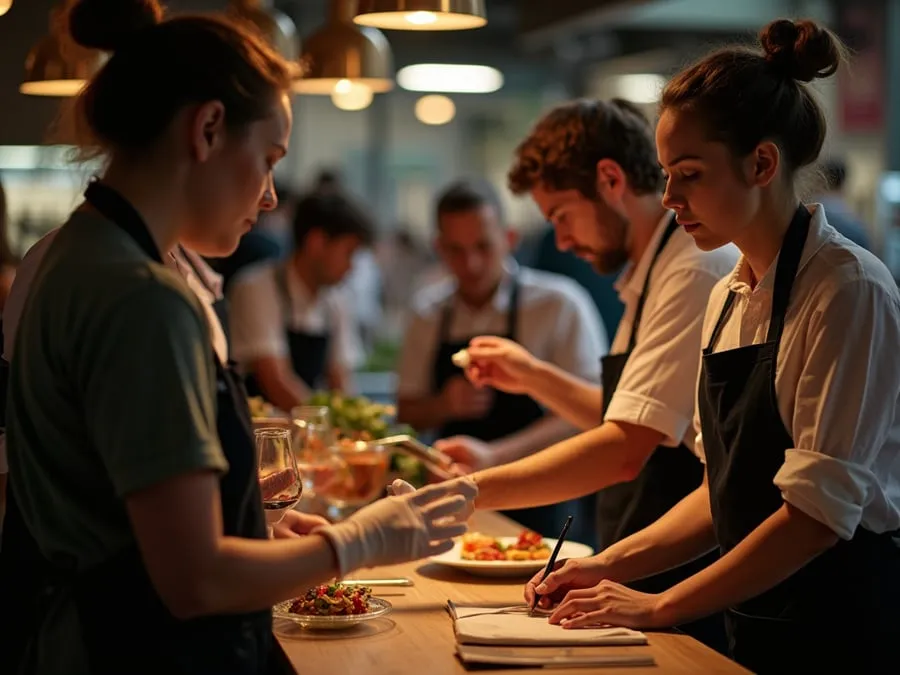
The restaurant industry has always been built on immigrant labor. The dishwashers, prep cooks, line cooks, and bussers who make the American dining experience possible are disproportionately immigrants — often recent arrivals, often undocumented, often working in conditions that domestic workers have largely declined.
This is not a secret. It is the foundation of the labor model that has sustained restaurant economics for generations. What has changed is that immigration enforcement has become more aggressive, more visible, and more destabilizing than at any point in recent memory. The consequences are being felt from kitchen staffing to customer traffic to the cost of every meal.
The Numbers Behind the Dependency
Immigrants make up over 22 percent of all U.S. workers in food services, according to Restaurant Business Online’s analysis. In California, Texas, and New York — three of the largest restaurant markets in the country — that figure exceeds 30 percent.
These workers are not distributed evenly across restaurant roles. They are concentrated in back-of-house positions: dishwashers, food prep workers, line cooks, and kitchen staff. These are the roles with the hardest physical conditions, the least customer-facing prestige, and the lowest wages — roles that are also among the most difficult to fill from the domestic labor pool even when wages rise.
The NRA’s 2026 State of the Industry report noted that demographic headwinds compound the labor challenge: 4.1 million workers retire annually through 2027, and there are not enough younger domestic workers to replace them even setting aside the immigration question. When immigration restriction reduces the available pool of workers willing to take these positions, there is no ready domestic substitute.
What Enforcement Is Actually Doing to Operations
The impact of immigration enforcement on restaurant operations is concrete and immediate, not abstract and theoretical.
Restaurant Business Online documented that over half of operators — 55 percent — report negative impacts from immigration policy changes. Among those operators, 37 percent report declines in sales and customer traffic, and 25 percent are experiencing trouble hiring and retaining employees.
At the kitchen level, enforcement actions trigger spikes in absenteeism, no-shows, and resignations in exactly the positions that are hardest to replace. A dishwasher who does not show up because of enforcement fear in the neighborhood leaves a kitchen in operational crisis. A prep cook who resigns because their work authorization situation has become uncertain cannot be replaced on short notice with a trained domestic worker.
The financial consequences extend beyond staffing. The Independent Restaurant Coalition estimates that immigration constraints are adding 14.5 percent to food-and-beverage costs for consumers — a compounding layer on top of the food inflation and tariff pressures that are already straining the industry.
The Community Restaurant Problem
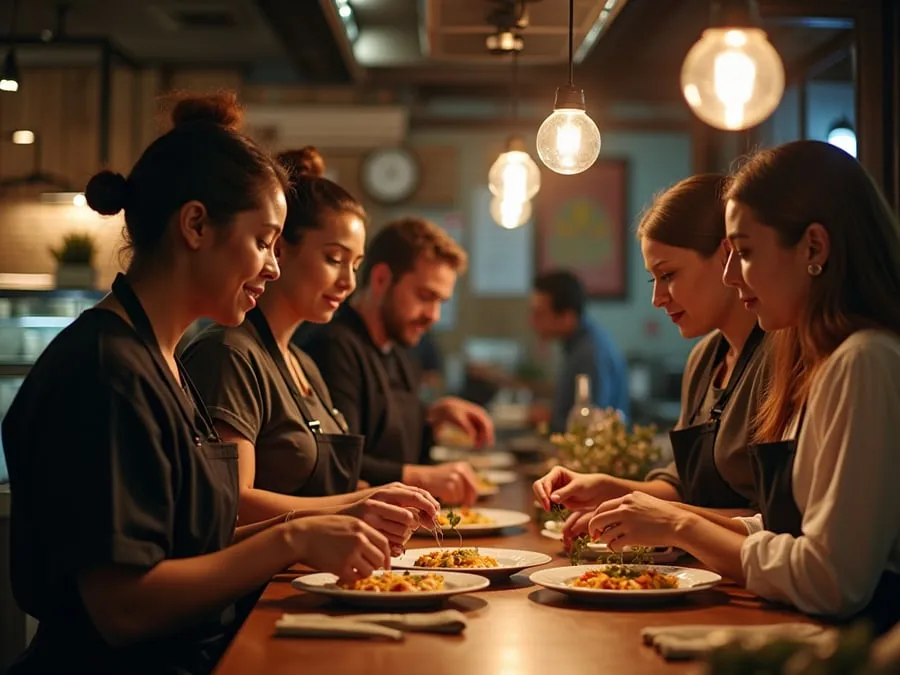
Perhaps the most underreported consequence of intensified enforcement is what happens to restaurants in immigrant communities. These establishments serve not just food but social function — community gathering spaces for populations that have built their lives around particular neighborhoods.
When enforcement activity increases in an immigrant community, residents respond by reducing their public presence. They shop less, go out less, and concentrate their movements. The restaurants that serve these communities take an immediate, often devastating hit to customer traffic.
Restaurant Business Online’s reporting described this as a dual economic blow: restaurants simultaneously lose workers from their kitchens and customers from their dining rooms. The compounding effect can be enough to close establishments that were previously viable, eliminating community anchors that are not simply interchangeable with any other restaurant.
This pattern plays out differently than the broad economic data suggests. A restaurant in a heavily immigrant neighborhood may show declining revenues while a comparable restaurant in a different demographic area shows no such trend. The aggregate industry data obscures the geographic concentration of these impacts.
The Cultural Contribution Beyond Labor
It would be reductive to frame immigrants purely as a labor supply problem. The restaurant industry’s cultural richness — the breadth of cuisines available in any major American city, the diversity of dining experiences accessible to consumers — is a direct product of immigrant entrepreneurship and culinary knowledge.
The majority of ethnic restaurants in the United States are immigrant-owned, immigrant-staffed, and immigrant-inspired. The surge of interest in regional Mexican cuisines, Vietnamese pho, Ethiopian injera, and dozens of other traditions represents cultural capital that did not arise from domestic culinary schools. It arrived with people who brought their food traditions and built businesses around them.
The NRA’s DEI research notes that 40 percent of restaurant businesses are majority-owned by minorities, many of them immigrants or first-generation Americans. This ownership diversity is both a cultural asset and an economic one — minority-owned restaurants create jobs, generate tax revenue, and build community wealth in populations that often lack access to capital for other business types.
Restricting immigration does not just reduce labor supply; it reduces the flow of culinary knowledge, entrepreneurship, and diversity that makes American dining exceptional compared to more homogeneous food cultures.
The Policy Environment
The National Restaurant Association has elevated immigration reform to one of its three core policy priorities — listed alongside credit card swipe fees and trade policy as fundamental industry concerns. The NRA’s advocacy position calls for a comprehensive approach: protecting current workers from deportation, modernizing the work visa system to create legal pathways for food service workers, and building a sustainable framework that acknowledges the industry’s structural dependence on immigrant labor.
The visa system’s current inadequacy is a foundational problem. The H-2B temporary worker visa program that restaurants could theoretically use to hire foreign workers for seasonal positions has annual caps that are exhausted almost immediately. The broader employment-based immigration system prioritizes high-skill workers in technology and professional fields, with no meaningful category for the kitchen workers the restaurant industry actually needs.
Reform proposals include expanding H-2B caps specifically for food service, creating agricultural and service worker visa categories with realistic caps, and pathways to legal status for long-term undocumented workers who have been contributing to the economy for years. These proposals have bipartisan support at the industry level but face a political environment that is increasingly difficult to navigate.
Practical Responses for Operators
Operators cannot control immigration policy, but they can manage their exposure to policy volatility.
Invest in I-9 compliance processes that are rigorous and documented. When enforcement scrutiny increases, the operators most at risk are those with poor documentation practices. Proper I-9 compliance protects both workers and employers by establishing clear records of employment authorization verification.
Build redundancy in critical back-of-house roles. Cross-train front-of-house staff to handle basic prep work. Develop relationships with staffing agencies that can place kitchen workers on short notice. The traditional approach of operating with minimal staffing redundancy creates fragility that enforcement volatility exposes.
Develop your pipeline from culinary programs that serve diverse student populations, including community colleges with high immigrant enrollment. Building relationships with these programs creates a sustainable recruitment channel that operates through legal employment channels.
Engage with local business associations and the NRA’s advocacy efforts. The restaurants that have been most effective in influencing immigration policy have been those that make their business case visible — not through political partisanship, but through clear documentation of the operational and economic consequences of the status quo.
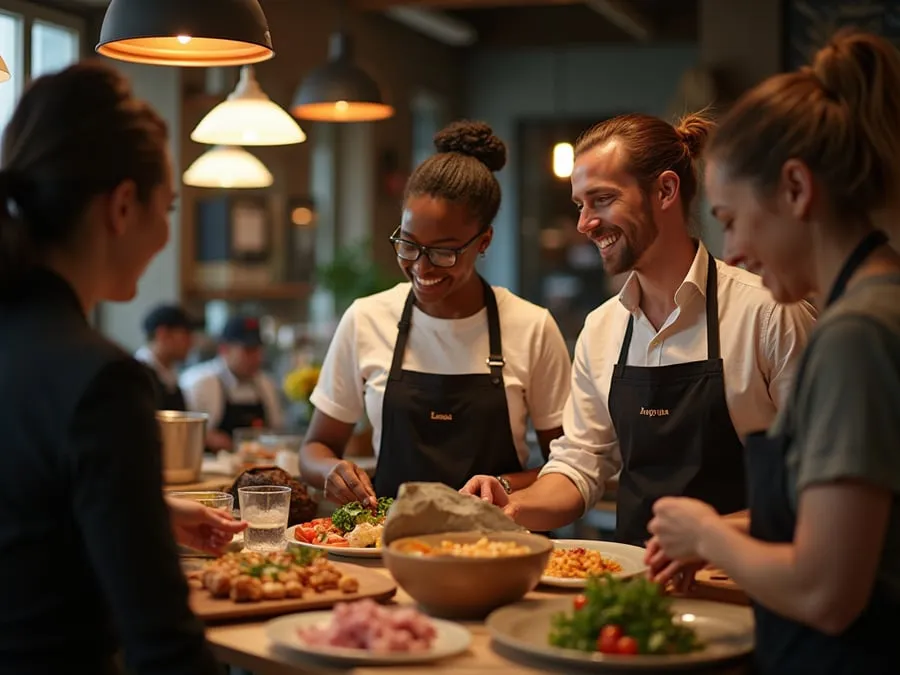
Treat your immigrant workforce with the respect that creates loyalty. In an environment of elevated enforcement risk, workers who feel genuinely valued by their employers are more likely to stay and less likely to disappear without notice. The labor practices that create genuine loyalty — fair wages, schedule respect, advancement opportunities, basic dignified treatment — are good practice regardless of immigration context, but they become operationally critical when the labor pool is under stress.
The Longer View
The restaurant industry will continue to depend on immigrant labor for the foreseeable future. No plausible domestic labor market development will close the gap between domestic worker supply and restaurant labor demand at wages the industry can currently sustain.
The choice facing the industry is between a stable, legal, regulated framework for immigrant labor participation in food service, or the current situation of structural dependence combined with increasing enforcement risk and humanitarian cost. The economic argument for a functional legal pathway is clear. Making that argument effectively, in terms that connect restaurant economics to broader public interest, is the work the industry’s advocacy organizations are increasingly focused on.
For individual operators, the most important thing to understand is that this is not a background issue.
-> Read more: Immigrant Restaurant Success: Building Community Through Food
-> Read more: Restaurant Labor Shortage: Practical Solutions for 2026
Immigration policy is shaping your kitchen staffing, your food costs, your customer traffic, and your community relationships today — not in some hypothetical future. Treating it as someone else’s problem to solve is no longer a viable operating assumption.