· Case Studies · 7 min read
Farm-to-Table Pioneers: Lessons from Chez Panisse, Blue Hill, and the Movement
Alice Waters didn't just open a restaurant — she started a supply chain revolution that transformed what American restaurants buy, how they talk about food, and why customers pay premium prices for provenance.
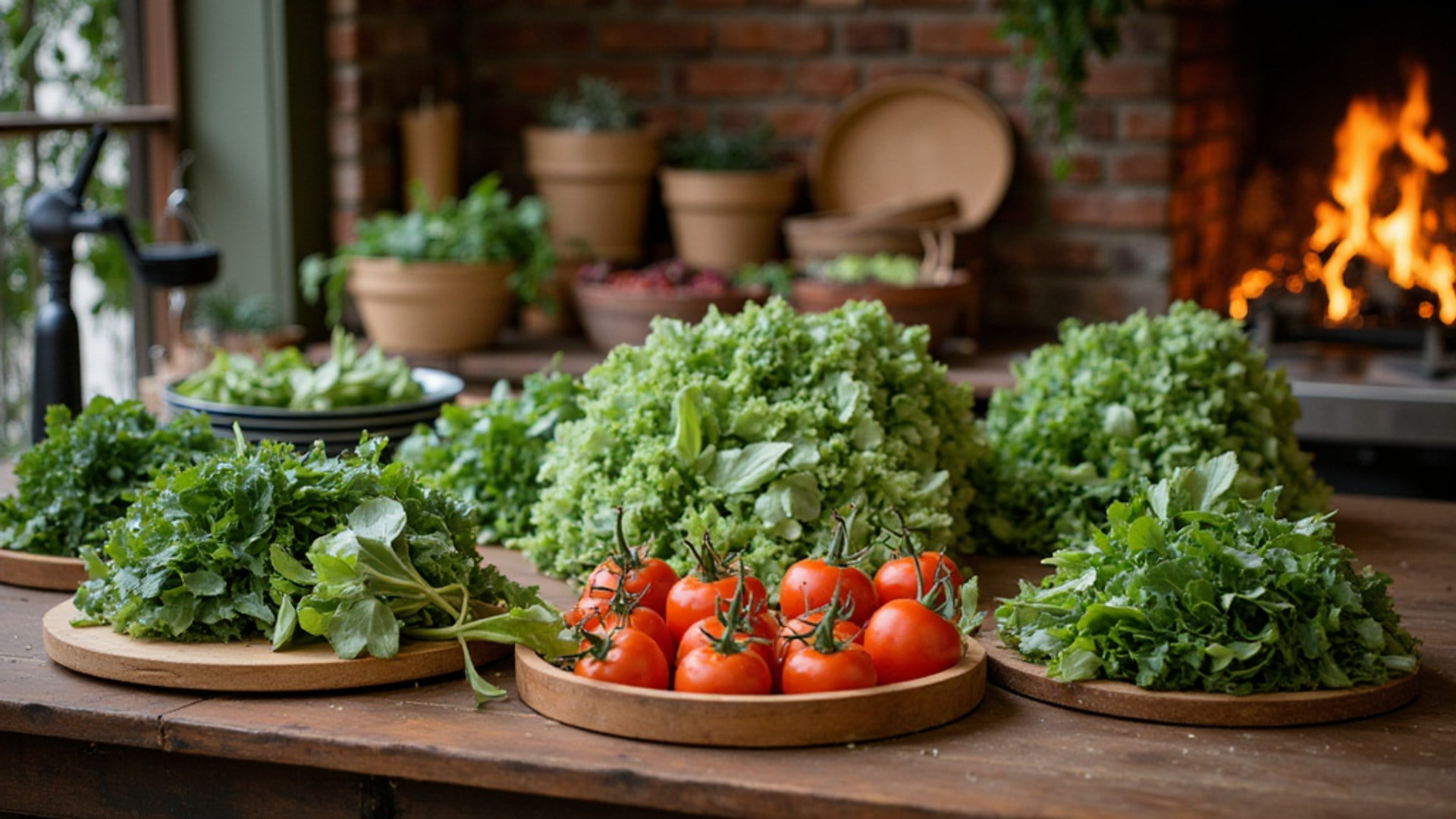
Most restaurants treat ingredient sourcing as a cost problem. The farm-to-table movement’s founders treated it as a values problem — and in solving it on their own terms, they discovered a business model that has sustained itself for decades while influencing an entire industry.
The story begins with a single decision in Berkeley in 1971, and it has not stopped reverberating since.
Chez Panisse: Where It Started
Alice Waters opened Chez Panisse in Berkeley, California in 1971 with a conviction that ran against everything the American restaurant industry stood for at the time: that food should be local, seasonal, and if possible, organically grown. This was not a marketing position. It was a moral one. Waters believed that industrial food systems produced inferior ingredients and did environmental damage, and that restaurants had an obligation to do better.
According to academic research published in Food, Culture & Society, Chez Panisse is widely credited with launching the farm-to-table movement in America as a coherent philosophy rather than a regional accident. What made Waters’ approach durable was that it was not merely a sourcing preference — it was a demand signal. By insisting on local and organic ingredients consistently and at scale, she created economic incentive for Bay Area farmers to shift toward more sustainable agricultural practices. The restaurant became a market force that shaped the supply chain it depended on.
This is the first lesson from Chez Panisse that most operators miss: you are not just a buyer. You are a vote in a market that determines what gets grown.
→ Read more: Local Sourcing: A Practical Guide to Farm-to-Table Chefs who understand this wield influence well beyond their kitchen.
Blue Hill at Stone Barns: The Closed Loop
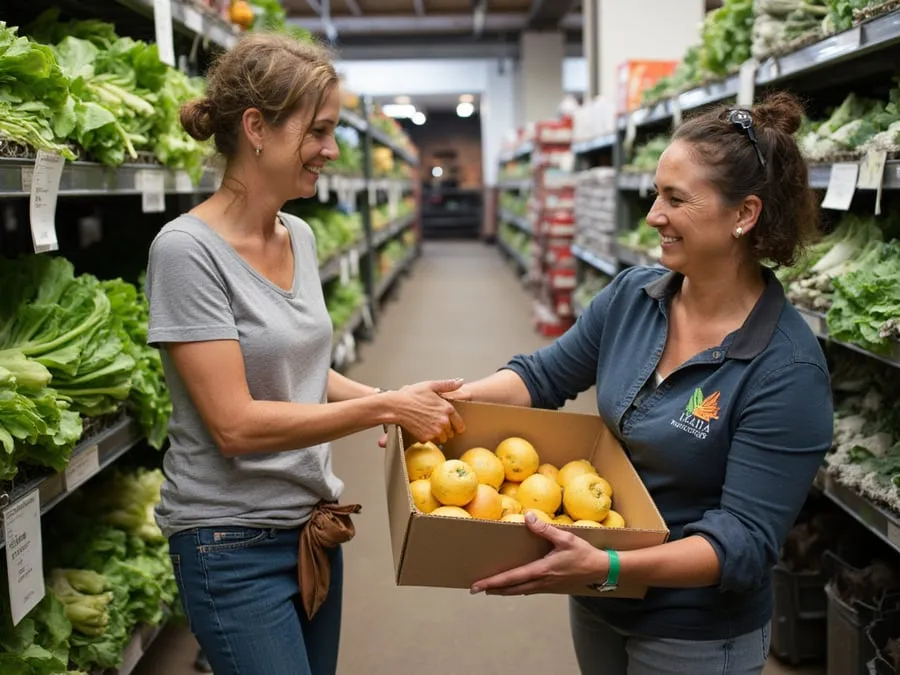
Dan Barber’s Blue Hill at Stone Barns in New York takes the concept to its logical extreme. The restaurant operates directly on a working farm — not near a farm, not partnered with a farm, but physically embedded within one. The menu changes daily based on what the farm produces. Any excess food feeds the farm’s animals or gets composted. There are no freezers full of backup inventory from a broadline distributor.
This creates what Food, Culture & Society describes as a closed-loop system: diners experience ingredients at peak freshness because the time between harvest and plate is measured in hours, not days. The waste that plagues conventional supply chains — the lettuce that doesn’t make it from California to a New York kitchen at peak quality, the proteins that travel thousands of miles to reach a distribution center — is largely eliminated.
The economic model requires premium pricing, and Blue Hill charges it. But the premium is grounded in a genuine value proposition that customers can physically see and understand. When the server explains that tonight’s vegetables were harvested this morning from the field visible through the window, that is not a marketing story. That is operational transparency creating genuine differentiation.
Noma and the Foraging Frontier
René Redzepi pushed the boundaries of what “local” could mean at Noma in Copenhagen. Rather than restricting local sourcing to farms, Redzepi and his team regularly foraged the surrounding environment for wild ingredients — berries, herbs, mushrooms, insects — that had no conventional supply chain whatsoever. According to Food, Culture & Society’s analysis, this hyper-local approach to sourcing influenced a generation of chefs globally and demonstrated that the definition of ingredient provenance could extend well beyond the farm.
The practical implication for operators is not that you need to forage. It is that the definition of “local” and “authentic” in your sourcing story can be expanded creatively. Heritage grain mills, regional cheese producers, small-scale fisheries, backyard beekeepers — there are producers in nearly every market whose story adds genuine value to a menu if you take the time to find them.
The Economics: When Sustainability Pays
The farm-to-table model is often criticized as financially inaccessible — premium pricing for customers who can afford it, supported by ingredient costs that squeeze margins at every turn. This critique is partly fair. However, the operational and financial reality is more nuanced.
Direct farmer-restaurant relationships, as documented in Food, Culture & Society’s research, significantly reduce food waste through precise ordering. When a chef knows exactly what will be available on Tuesday from a specific farm — because that farm called on Friday to discuss the harvest — she orders what she will use, not what she might use. This precision reduces spoilage, one of the most significant and underappreciated cost drivers in any restaurant operation.
The shorter transportation distances inherent in local sourcing also reduce carbon footprint, a metric that has become increasingly important to segments of the customer base concerned about sustainability.
→ Read more: Seasonal Ingredient Sourcing For restaurants serving customers who care about environmental impact, local sourcing provides a verifiable story that cannot be replicated by competitors using conventional supply chains.

Bringing the Farm Inside
The most technologically forward expression of the farm-to-table philosophy is now happening inside the dining room itself. Gather restaurant in Omaha uses 61 aeroponic towers to grow 400 pounds of produce per month within the restaurant — dramatically reducing reliance on external suppliers and eliminating transportation-related environmental costs entirely.
Peskesi in Crete has taken a different approach, sourcing nearly all ingredients from its own organic mountain farm. The model makes the restaurant effectively its own supply chain manager, removing the unpredictability of external supplier relationships at the cost of substantial land and farming operations.
These are extreme examples, and neither is appropriate for most operators. But the underlying principle — reducing the number of steps between growing and serving — scales down to practical actions like maintaining an herb wall, partnering with a local farm on a CSA-style ingredient program, or sourcing a single signature item (a cheese, a honey, a produce variety) exclusively from a nearby producer.
What the Movement Actually Teaches
The farm-to-table pioneers did not succeed because customers will always pay more for local food. Many markets will not support that premium, and many operators who have tried to build purely on sourcing provenance have failed for other reasons.
What the pioneers demonstrated is something more foundational: a coherent set of values, applied consistently across every decision, creates a restaurant with a distinctive identity that is genuinely difficult to copy. Chez Panisse’s identity was not “nice restaurant in Berkeley.” It was a specific philosophical position about food, land, and cooking that made it irreplaceable in the minds of the people who cared about those things.
The question for any operator is not whether to adopt the farm-to-table model specifically. It is whether there is a coherent set of values — about ingredients, about hospitality, about the relationship between the restaurant and its community — that can serve the same organizing function in a different context.
Waters proved that values-driven sourcing can generate customer loyalty that sustains a restaurant for decades. Blue Hill proved that integrating production and service creates a transparency no marketing budget can replicate. Noma proved that the definition of local can be stretched in directions no one expected.
The practical starting point for any operator interested in this direction: identify one ingredient where provenance genuinely matters to your concept, build a direct relationship with its producer, and tell that story honestly.
→ Read more: Ethical Sourcing and Certification
→ Read more: Sustainable Sourcing Guide See what happens to the customer who cares. That customer, multiplied across a loyal base, is the foundation the movement was built on.