· Legal & Compliance · 10 min read
Restaurant Licenses and Permits: Every Permit You Need and How to Get Them
Failure to obtain required permits can result in fines, closure, or prevention from opening at all. This guide covers every license and permit a restaurant needs — from your EIN and business license to the liquor license that can cost $300,000 in quota states — with costs, timelines, and application steps.
You cannot open a restaurant on enthusiasm alone. Between your concept and your first guest lies a stack of permits, licenses, and inspections that varies by jurisdiction but follows a predictable pattern everywhere. Skip one, and you risk fines, forced closure, or the nightmare scenario of discovering on opening week that you cannot legally serve alcohol because the application you forgot to submit has a six-month processing time.
According to WebstaurantStore’s comprehensive licensing guide, failure to obtain required permits can result in penalties, fines, closure, legal consequences, or even complete prevention from opening. The specific requirements vary by jurisdiction, but the core categories are consistent.
This guide walks through every major permit category, what it costs, how long it takes, and what you need to know to stay compliant after you open.
The Essential Permits: What Every Restaurant Needs
Employer Identification Number (EIN)
Your first step. According to WebstaurantStore, the EIN is a federal tax ID that enables legal employee hiring and payroll management. It is free to obtain through the IRS website and is required before most other permits can be applied for. You can get one in minutes — there is no reason to delay this.
Business License
The foundational permit granting authority to operate within your jurisdiction. According to WebstaurantStore, costs typically range from $25 to $300, with most falling between $50 and $75. Requires annual or multi-year renewal. For restaurants selling alcohol, both federal and state business licenses may be required.
Certificate of Occupancy
This confirms your building has passed final inspection, is properly zoned for restaurant use, and meets all applicable building codes. According to WebstaurantStore, it may encompass electrical, plumbing, and fire marshal inspections. Costs range from $100 to $400.
You cannot get a Certificate of Occupancy until construction or buildout is complete, so factor inspection timelines into your opening schedule.
Food Service License
Issued by the county Health Department, this demonstrates compliance with food preparation, storage, and safety regulations. According to WebstaurantStore, registration costs approximately $50, with inspection fees ranging from $100 to $1,000 depending on facility size and jurisdiction.
The inspection for your initial food service license covers the same areas as ongoing health inspections — temperature control, food storage, sanitation, and employee hygiene. Pass the first one, and you will face regular unannounced inspections going forward.
Employee Health Permits
According to WebstaurantStore, these certify that each food handler has completed required food safety training, typically through a ServSafe course or equivalent state-approved program. Costs range from $100 to $500 per employee with periodic renewal requirements.
Budget for these as part of your onboarding costs for every new hire, not just at opening.
→ Read more: Food Safety Certification: ServSafe and Beyond
Seller’s Permit
This authorizes collection of sales tax from customers. According to WebstaurantStore, it is typically free or costs up to $50.
Essential Permit Summary
| Permit | Issuing Authority | Cost Range | Timeline |
|---|---|---|---|
| EIN | IRS (federal) | Free | Immediate (online) |
| Business license | City/county | $25-300 | 1-4 weeks |
| Certificate of Occupancy | City/county | $100-400 | Depends on construction timeline |
| Food service license | County Health Dept | $150-1,050 | 2-8 weeks |
| Employee health permits | State/county | $100-500 per person | 1-2 weeks |
| Seller’s permit | State tax authority | Free-$50 | 1-2 weeks |
| Sign permit | City/county | $50-350 | 1-4 weeks |
| Building health permit | County Health Dept | $50-1,000 | 2-6 weeks |
The Liquor License: The Most Complex Permit You Will Face
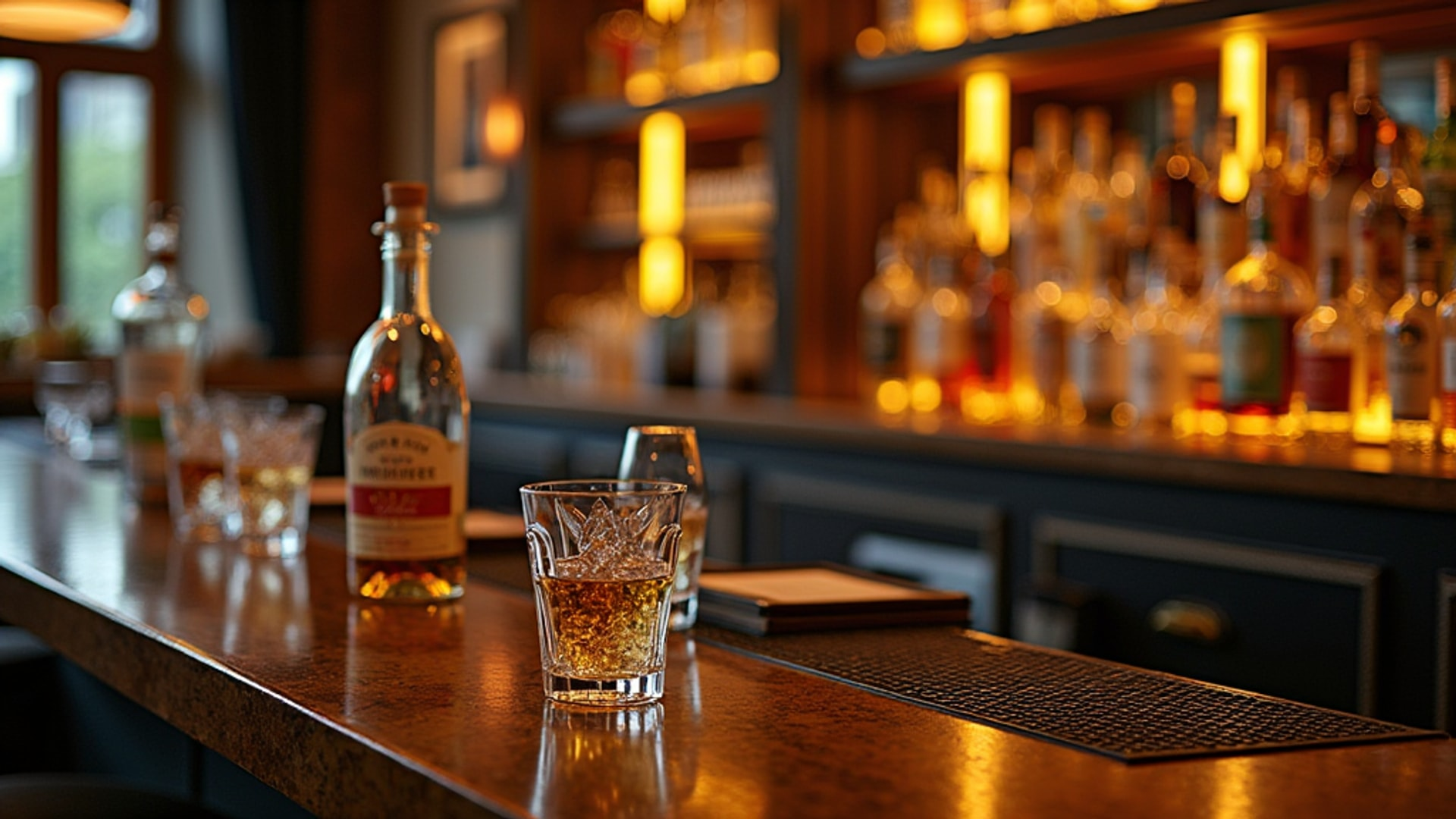
If you plan to serve alcohol — and the margin on drinks is a major reason most full-service restaurants do — the liquor license deserves special attention. It is among the most complex, expensive, and time-consuming permits in the entire process.
License Types
According to WebstaurantStore’s alcohol permit guide, several subtypes exist within on-premises licenses:
- Restaurant liquor license (all-liquor) — Covers spirits, wine, and beer. The standard choice for full-service restaurants.
- Beer and wine license — Restricts service to beer and wine only, no spirits. Lower cost, simpler application, faster approval.
- Tavern license — For bars and nightclubs with primary focus on alcohol service.
Some states restrict how much of a restaurant’s total revenue can come from alcohol. According to WebstaurantStore, restaurant-specific licenses often cap alcohol revenue at approximately 40% of total sales, requiring the establishment to maintain substantial food service operations.
The Application Process
According to WebstaurantStore, the process begins with contacting your state’s Alcoholic Beverage Control (ABC) agency:
- Verify zoning — Confirm your location is zoned to permit alcohol sales
- Gather prerequisites — Business license, health permits, zoning permits, tax permits
- Complete ABC forms — Detailed application specific to your state
- Pay processing fees — Typically $50 to $100 for the application itself
- Background checks — Required for all owners and sometimes managers
- Post public notice — Display notice at the restaurant location for a required period
- Address community objections — If neighbors or community members object, hearings may be required
What It Costs
This is where it gets serious. According to WebstaurantStore, costs vary dramatically:
- Non-quota states — Charge relatively modest fees for new licenses, often a few hundred to a few thousand dollars
- Quota states — Limit the number of available licenses in a geographic area. Prices can reach $300,000 or more as operators compete for limited availability.
The standard waiting time to hear back from the local ABC board is up to six months. In quota-limited markets, it can take significantly longer.
Strategic Options
According to WebstaurantStore, in quota-limited markets, purchasing an existing license from another business may be faster and sometimes more cost-effective than applying for a new one. This is common in states like New Jersey, where transferable licenses trade on a secondary market.
Bottom line: Factor liquor license costs and timelines into your opening plan from the earliest stages. A six-month delay because you did not start the application early enough is six months of lost revenue.
→ Read more: Liquor License Guide: Types, Application Process, and Costs by State
Health Department Inspections: Your Ongoing Compliance Reality
Your initial health inspection gets you open. Every inspection after that keeps you open. According to WebstaurantStore’s health inspection guide, inspections can occur at any time without advance notice, making constant readiness essential.
What Inspectors Look For
Temperature control — One of the most frequently cited priority violations. According to WebstaurantStore:
- Hot foods must be maintained above 135 degrees F
- Cold items must remain below 41 degrees F
- Temperature logs for coolers, freezers, and hot-holding units require daily updates
- Visible thermometers must display correct readings at all times
Food storage — According to WebstaurantStore, cross-contamination is one of the leading causes of foodborne illness:
- Clear labeling on all stored items
- Raw meats stored on bottom shelves to prevent drips onto ready-to-eat foods
- All items stored at least 6 inches off the ground
- Separation from chemical products
- FIFO (first in, first out) rotation followed consistently
Sanitation — Three-compartment washing stations with proper sanitizer concentrations and temperatures. All food contact surfaces cleaned and sanitized on schedule. Covered waste receptacles emptied regularly.
Employee hygiene — Proper hair restraints, consistent handwashing practices, clean clothing, appropriate footwear, and designated employee eating areas away from food preparation zones.
Scoring Systems
According to WebstaurantStore, two main grading systems exist:
| System | Scale | Passing | Consequence of Failure |
|---|---|---|---|
| Points-based | 0-100 | 90+ = good; 80-89 = adequate | Below 70 = mandatory corrective action |
| Letter grade | A-C | A = few/no violations | C = many violations; some jurisdictions mandate closure below passing |
Staying Inspection-Ready
According to WebstaurantStore, proactive preparation is the most effective strategy:
- Review your HACCP plan regularly to identify contamination risks
- Conduct unannounced self-inspections at random times to test real staff readiness
- Quiz employees regularly on safety protocols
- Stay current with food handling standards through ongoing education
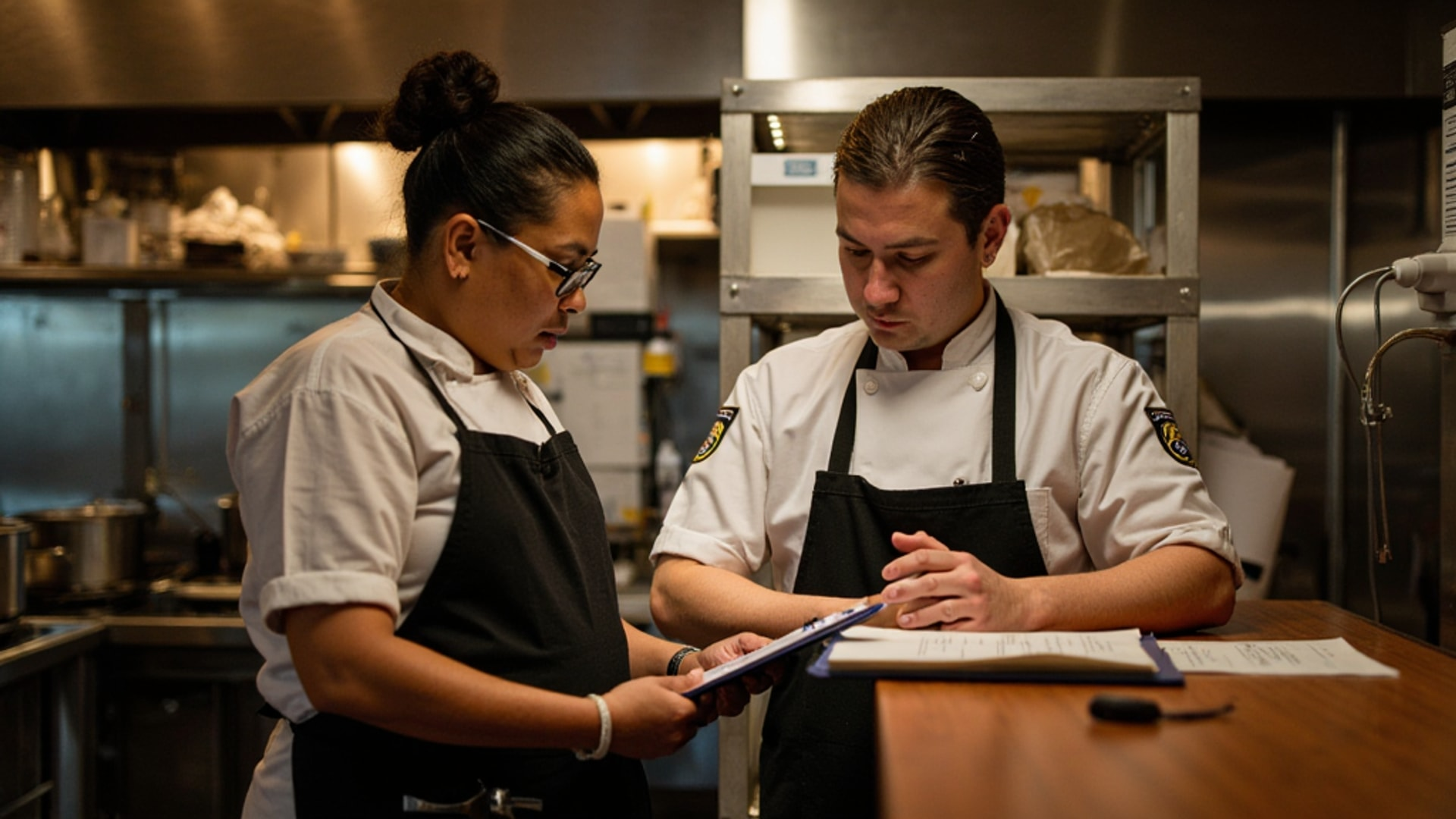
- During inspections: verify inspector credentials, accompany them throughout, request clarification on citations, and sign the report
Sales Tax: More Complex Than You Think
According to Taxually’s state-by-state guide, understanding sales tax on food is one of the most complex compliance areas for restaurant operators. The rules vary dramatically from state to state.
The Three-Category Framework
Tax authorities classify food into three categories with different tax treatment:
- Grocery items (bread, dairy, produce) — Exempt or taxed at reduced rates in most states
- Prepared food (heated by seller, served with utensils, ready for immediate consumption) — Typically taxed at full rates
- Restaurant meals — Almost universally taxed at full rates across all states
According to Taxually, the critical factor is whether food is sold for immediate consumption or home preparation.
State Variations
According to Taxually:
- No state sales tax: Alaska, Delaware, Montana, Oregon (though Alaska localities may apply local rules)
- Reduced grocery rate, full restaurant rate: Alabama (3%, reducing to 2%), Arkansas (0.125%), Illinois (1%), Missouri (1.225%), Tennessee (4%), Utah (3%)
- Grocery exempt, prepared food taxed: California, Texas, New York, Florida, and the majority of states
Local jurisdictions frequently impose additional taxes beyond state rates. A restaurant’s total tax obligation can vary from location to location even within the same state.
Compliance Requirements
According to Taxually, restaurant operators must collect the correct sales tax, file monthly or quarterly returns on time, and remit to their state tax authority. POS systems that automatically calculate and apply correct rates are essential — manual calculation invites errors and audit risk.
→ Read more: Restaurant Sales Tax: What’s Taxable, What’s Exempt, and How to Stay Compliant
Outdoor Dining Permits
According to Burnham Nationwide, the pandemic-era expansion of outdoor dining has evolved into permanent regulatory frameworks across many jurisdictions.
Common Permit Types
- Sidewalk dining permits — Tables and seating on sidewalks adjacent to the restaurant, typically year-round
- Roadway dining permits — Use of curbside parking lanes or street space, generally seasonal (spring through fall)
What You Need
According to Burnham Nationwide, regardless of jurisdiction, outdoor dining permits typically require:
- Detailed layout plans showing seating, barriers, lighting, and accessibility features
- Proof of adequate liability insurance
- ADA compliance (accessible seating, adequate pedestrian clearance, pathway access for mobility devices)
- Community engagement evidence in some jurisdictions
- Possible extension to existing liquor license for outdoor alcohol service
Cost Examples
According to Burnham Nationwide, New York City’s permanent Dining Out NYC program offers four-year licenses at $1,050 for either sidewalk or roadway dining. Other cities have followed with their own permanent programs: New Jersey made outdoor dining permissions permanent in November 2024, Los Angeles County approved its ordinance in January 2024, and Fairfax County, Virginia adopted its outdoor dining amendment in February 2024.
Additional Specialized Permits
Depending on your concept and location, you may also need:
- Music license — According to WebstaurantStore, required to play copyrighted music. Costs $250 to $2,000. Obtained through ASCAP, BMI, or GMR. See our guide on intellectual property and music licensing for details.
- Dumpster placement permit — Required in many urban jurisdictions
- Valet parking permit — If you offer valet service
- Fire alarm installation permit — Required for new construction or major renovations
- Grease disposal permit — For grease trap maintenance and waste oil removal
- Pool table permit — Some jurisdictions require this for game equipment
Your Licensing Timeline
Start early. Some permits take days, others take months. Here is a practical timeline working backward from opening:
| Months Before Opening | Action |
|---|---|
| 6-12 months | Apply for liquor license; begin zoning verification |
| 4-6 months | Obtain EIN; file for business license; apply for seller’s permit |
| 3-4 months | Begin construction/buildout; apply for building permits |
| 2-3 months | Apply for food service license; schedule pre-opening health inspection |
| 1-2 months | Obtain employee health permits for initial staff; apply for sign permit |
| 2-4 weeks | Receive Certificate of Occupancy after final inspections |
| 1-2 weeks | Final health department inspection; receive food service license |
| Opening | All permits displayed; POS configured for correct sales tax; compliance systems active |
The Bottom Line
The licensing and permit process is not glamorous, and it is not optional. Every permit on this list exists because someone in the past operated without proper oversight and people got hurt, cheated, or endangered.
Start the liquor license application first — it has the longest lead time and the highest stakes. Get your EIN immediately. Work the rest of the list in parallel with your buildout. Keep a master checklist with application dates, expected timelines, and renewal dates.
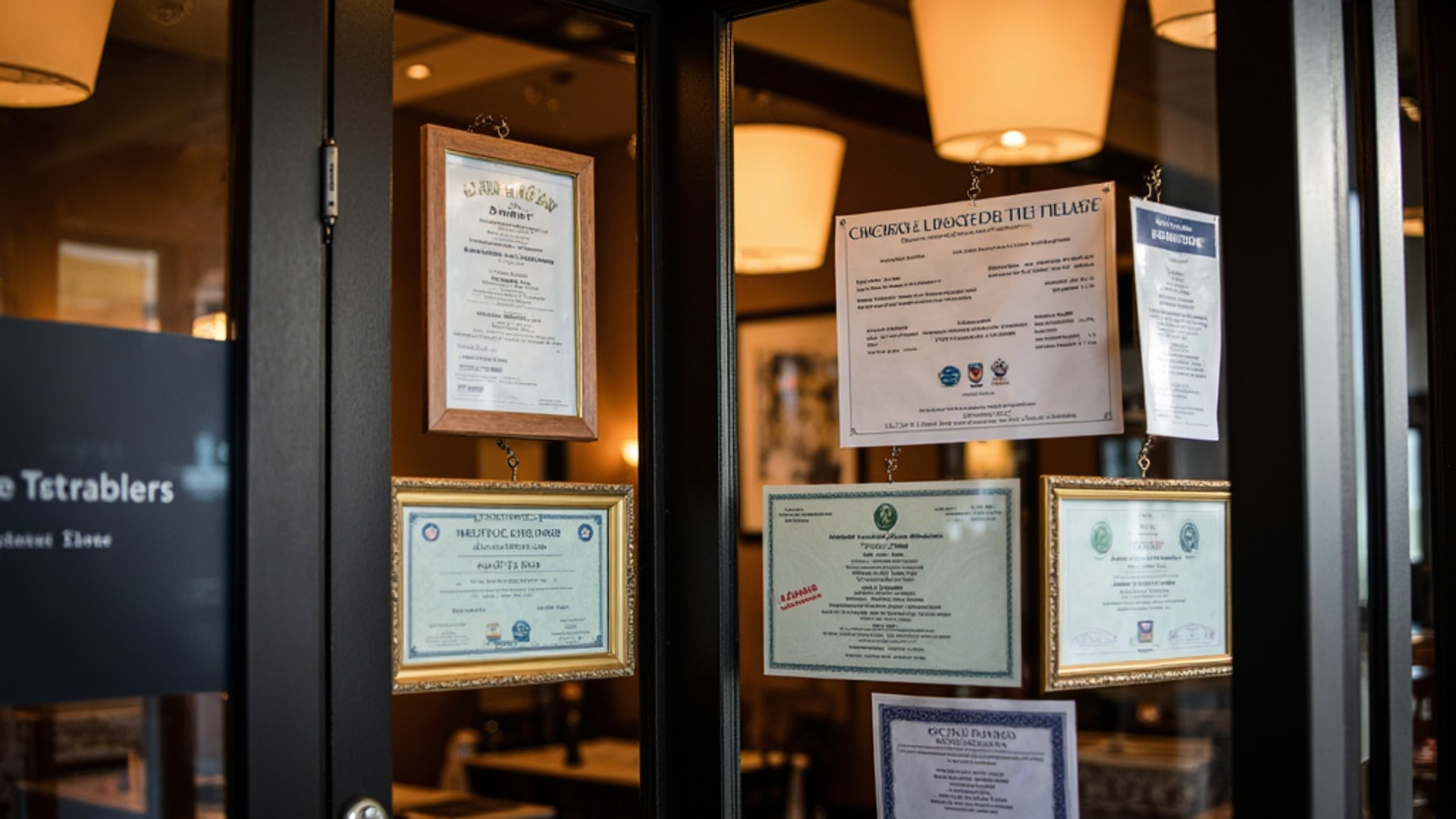
And remember: compliance is not a one-time event. Health inspections are ongoing. Sales tax returns are monthly or quarterly. Liquor licenses require renewal. Employee health permits expire. The restaurants that treat compliance as a continuous system — built into their daily operational workflow — rather than an opening checklist are the ones that avoid the fines, closures, and legal headaches that derail unprepared operators.
→ Read more: Food Safety Compliance: Protecting Your Guests and Your Business
Note: Specific requirements, costs, and timelines vary significantly by jurisdiction. Consult with local authorities and legal counsel to determine the exact permits required for your restaurant’s location and concept.