· Finance · 12 min read
Seasonal Financial Planning for Restaurants: Managing Cash Through Peaks and Valleys
Every restaurant has seasons — even if you haven't mapped them yet. Here is how to build the financial reserves, flexible staffing models, and operational adjustments that turn seasonal cash flow swings from an existential threat into a manageable cycle.
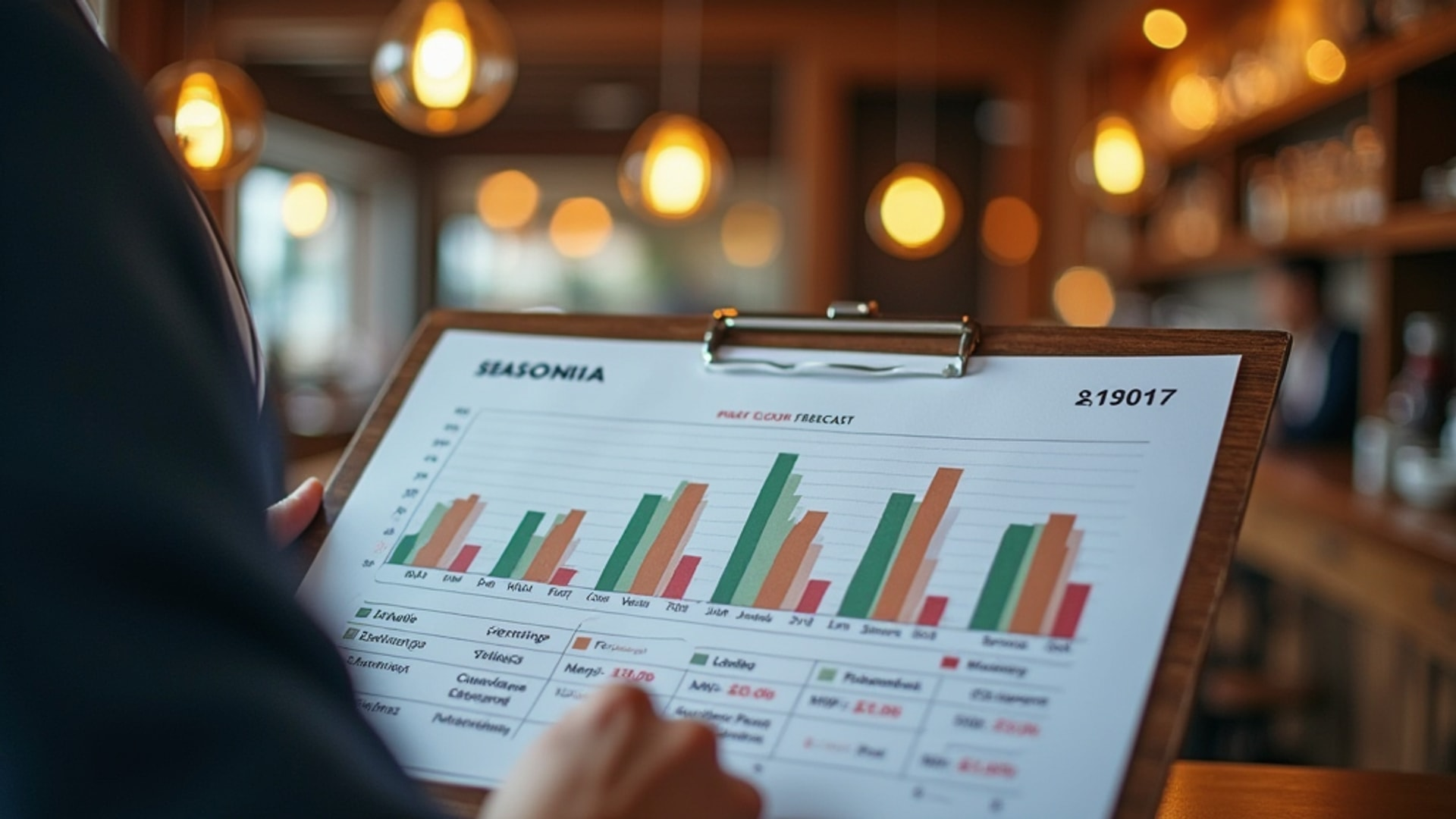
Seasonality is one of the most predictable challenges in the restaurant business, and yet it regularly catches operators off guard. Revenue drops in January, the summer heat keeps guests away at lunch, the December holiday rush creates its own labor and inventory pressures, and somehow these patterns, which repeat every year, still create financial crises.
The problem is not the seasonality itself. Seasonality is a known variable. The problem is treating it as unpredictable. NetSuite, which provides financial management software to thousands of restaurant and hospitality operators, makes the point clearly: stop treating seasonal fluctuations as surprises and start building them into your financial model as expected events.
That shift, from reactive scrambling to proactive planning, is what separates operators who feel controlled by their calendar from those who control it. Strong cash flow management is the foundation that makes this possible.
The Foundation: Historical Data Analysis
You cannot plan for seasonal patterns you haven’t documented. The starting point for seasonal financial planning is a rigorous analysis of your own past performance.
NetSuite recommends examining two to three years of historical sales data before attempting to build a seasonal financial model. One year of data is too limited. It may reflect unusual events (a competitor opening, a construction project affecting access, an unusually warm winter) that distort the pattern. Two to three years begins to show the true underlying seasonality.
The analysis should be granular:
Monthly revenue totals. The most basic view: what each month’s revenue looked like in each of the past two or three years, and what the average monthly revenue has been. This shows the amplitude of your seasonal swing.
Day-of-week patterns. Is your slowest period Thursday evenings in January, or Sunday lunches in August? Granularity matters because it determines how you staff and order inventory.
Meal-period trends. If lunch revenue drops 40% in summer but dinner holds steady, your labor adjustment strategy for summer is different than if both periods drop equally.
Weather correlations. In many markets, traffic on any given day correlates meaningfully with weather. Rain kills patio restaurants. Extreme cold or heat cuts walk-in traffic. If you can quantify the weather-revenue relationship, you can build weather-adjusted forecasts.
Special event effects. Local festivals, sports seasons, school calendars, and convention traffic can create mini-seasons within your annual pattern. Identify which local events drive meaningful traffic spikes or drops and mark them on your planning calendar.
Once you have this historical view, you can calculate your seasonal index, the ratio of each period’s revenue to your annual average. If your average monthly revenue is $100,000 and December averages $145,000, December has a seasonal index of 1.45. If January averages $68,000, its index is 0.68. These indices let you apply seasonal adjustments to your base revenue forecast for any future period.
The Reserve Strategy: The 5-10% Rule
Financial reserves are the primary defense against seasonal cash flow pressure. NetSuite recommends setting aside 5-10% of peak-month profits specifically to cover fixed costs during slower periods.
The mechanics work like this: in your highest-revenue months (say December and the summer period) you intentionally retain more cash rather than distributing it or spending it on non-essential improvements. That reserve funds the fixed costs of January and February without requiring you to draw on a line of credit, defer vendor payments, or make decisions about staffing that you’ll regret when volume recovers.
Calculating Your Reserve Target
To know how much to reserve, calculate your fixed cost exposure during your weakest period.
Fixed costs in a restaurant context include:
- Base rent (not percentage rent)
- Loan payments and debt service
- Management salaries (those that don’t flex with volume)
- Insurance premiums
- Utilities base charges
- Subscription services, software, and licensing fees
Exclude food cost, hourly labor, and other truly variable costs; those will decline with lower volume. Your fixed cost exposure is the minimum cash outflow per month regardless of revenue.
If your fixed costs are $60,000 per month and your weakest quarter averages $65,000 in monthly revenue, you have only $5,000 per month to cover variable costs and generate any contribution margin during that quarter. If fixed costs are $60,000 and the slowest month brings $45,000 in revenue, you are burning $15,000 per month in cash just to stay open, and you need reserves to cover that.
The reserve calculation: multiply your monthly fixed cost deficit by the number of slow months you expect to fund from reserves. If you expect three months of $15,000 monthly deficit, your target reserve is $45,000. Adjust the 5-10% of peak-month profits target upward or downward to hit this reserve level by the time your slow season begins.
Building the Dual-Season Budget
Most restaurant operators run a single annual budget. NetSuite recommends replacing this with a dual-season budgeting approach: separate budget models for peak and off-peak periods, each with distinct revenue assumptions, cost structures, and financial targets.
The Peak-Season Budget
Your peak-season budget reflects maximum revenue capacity and the staffing, inventory, and marketing investments required to capture it. Key elements:
Revenue targets by week or month. Based on your historical seasonal indices applied to your base revenue goal for the year.
Variable cost targets. Food cost percentage target (which may differ in peak season if menu mix shifts; higher-margin items may sell more during busy periods, or conversely, a heavily appetizer-focused bar crowd during the summer may compress margins).
Labor budget. Peak staffing levels with expected overtime, tip pool administration, and the full cost of training additional seasonal staff who won’t reach full productivity immediately.
Capital expenditure timing. Equipment that needs maintenance or replacement should ideally be addressed at the start of peak season, not during it. Budget for these investments in the pre-peak shoulder period.
Reserve contribution. The 5-10% set-aside builds into the peak-season budget as a line item, not an afterthought.
The Off-Peak Budget
The off-peak budget reflects reduced revenue with targeted cost reductions designed to minimize cash burn while maintaining the baseline capacity to serve guests.
Reduced labor hours. Cross-trained staff who can cover multiple roles reduce the total hours needed during slow periods. A server who can also run the bar or assist in the kitchen requires fewer total positions on the floor during slow Monday lunches.
Simplified menu. Fewer menu items during slow periods means fewer ingredient SKUs to manage, less waste from low-selling items, and simpler kitchen operations. The menu simplification also typically improves quality consistency by focusing the kitchen team on a tighter set of dishes.
Reduced ordering frequency. Ordering perishable ingredients three times per week during peak becomes twice per week or even once per week during slow periods, reducing the minimum order size required to hit MOQs and reducing waste from overstocking.
Marketing investment. Counterintuitively, the off-peak budget may include higher marketing spend as a percentage of revenue. Bringing in guests during slow periods requires more effort than capturing guests during busy periods, and the contribution from each additional cover is more valuable when fixed costs are under pressure.
Labor Strategy for Seasonal Flexibility
Labor is the largest variable cost in most restaurants, and managing it seasonally is one of the highest-leverage financial moves available.
Cross-Training as Infrastructure
NetSuite specifically highlights cross-training as a key tool for seasonal staffing flexibility. An employee who can work the host stand during slow periods and shift to server support during brunch rush provides far more flexibility than a single-role employee. A line cook who understands the cold line during slow periods can run two stations during peak service.
Cross-training takes time and intention to implement, but the payoff is significant: you can maintain a core team of cross-trained full-time employees year-round and scale capacity by adjusting their roles rather than by constantly hiring and terminating staff. This reduces turnover costs (which are substantial) and preserves institutional knowledge through the slow season.
→ Read more: Scheduling and Labor Optimization
Seasonal Staffing Models
For restaurants with extreme seasonality (coastal summer destinations, ski resort towns, venues that host holiday parties), a seasonal staffing model may be appropriate. This involves a smaller core year-round team supplemented by seasonal employees who are hired for the peak period and clear mutual agreements about the end date of employment.
The financial implications of seasonal staffing models need careful analysis. The cost of hiring and training seasonal staff is real — some sources estimate $1,500 to $5,000 per new hire including training time and early-period inefficiency. If your peak season is three months, the training cost per seasonal employee must be recovered within three months of peak revenue contribution before the hire becomes profitable. This calculation affects how many seasonal hires make financial sense versus how many hours of overtime from existing staff would be cheaper.
Inventory Management Through the Seasons
Inventory carrying costs are often overlooked in seasonal planning, but they compound quickly during slow periods.
During your slowest months, evaluate your inventory strategy:
Reduce par levels. Your par levels (the minimum quantities you keep on hand) should reflect current demand, not peak-season demand. Holding three cases of a specialty ingredient that turns over in three days during peak but in three weeks during slow season is a cash flow drain and a quality risk.
Simplify the menu. Each menu item requires its own inventory. A slow-period menu with 30% fewer items reduces inventory complexity proportionally. Guests during slow periods are often regulars who want comfort and value — they are not expecting the full seasonal creativity of your peak menu.
Negotiate delivery frequency with vendors. Food distributors who deliver three times per week during peak may be willing to shift to twice-weekly during your slow season if you communicate your needs in advance. Less frequent deliveries reduce minimum order pressure and give you more flexibility to adjust quantities as actual demand becomes clear.
Track waste more aggressively. During slow periods, waste is a higher percentage of revenue than during peak, so the financial impact of waste control is greater. Increase the frequency of waste tracking (at least daily for high-value proteins and produce) and adjust ordering when waste rates rise.
Promotional Strategy for Slow Periods
Marketing during slow periods serves a dual purpose: it generates incremental revenue and it maintains brand visibility through seasons when guests might otherwise forget about you.
NetSuite recommends several approaches specifically for slow-period promotional strategy:
Prix fixe and value menus. A fixed-price menu at a price point lower than your average check can bring in price-sensitive guests who would not visit at regular menu prices. The key is to design the prix fixe around menu items with strong contribution margins, not to discount your highest-margin items arbitrarily.
Loyalty program activation. If you have a loyalty program, slow periods are the time to activate promotions targeted at your existing loyal guests. A double-points weekend in January, or a “bring a friend” bonus offer in February, drives incremental visits from the guests most likely to respond.
Event programming. Trivia nights, cooking classes, wine dinners, live music: events create their own draw and can fill otherwise slow weeknights. The incremental revenue from a well-attended event is nearly all contribution margin above the event-specific costs (performer fee, any special food prep) because the fixed costs of opening the restaurant that night exist regardless.
Catering and private dining focus. Slow dining-room periods often coincide with strong demand for private events (the January post-holiday company meeting, the February corporate dinner). Actively marketing private dining and catering during your slow season can shift revenue from a slow category to a faster-growing one.
Using Technology for Seasonal Planning
Modern POS and accounting systems have significantly improved the practical ability to implement seasonal financial planning.
Historical reporting. A POS system with two to three years of transaction history can generate seasonal reports with a few clicks: revenue by week, by day of week, by meal period, by menu category. This is the historical data analysis foundation that makes all other planning possible.
Forecasting tools. Some accounting and restaurant management platforms (NetSuite included) include forecasting features that project future revenue based on historical patterns. These tools may account for seasonality automatically if the historical data is available.
Labor scheduling software. Platforms like 7Shifts, HotSchedules, or When I Work integrate with POS data to generate labor demand forecasts based on projected revenue. This makes the translation from revenue forecast to optimal staffing levels more systematic and reduces the manager judgment required.
Automated purchasing. Some inventory management platforms can generate purchase orders automatically based on par levels adjusted for current demand. These tools reduce the manual work of seasonal inventory adjustments.
The integration of these tools is where the biggest efficiency gains are. A restaurant where the POS feeds into the accounting system, which feeds into the labor scheduling tool, which informs the inventory management platform, has a fundamentally different planning capability than one where each of these functions operates independently.
Making Seasonality Work For You
Here is the mindset that separates operators who handle seasonality well from those who don’t: peak season is not profit season. It is reserve-building season. The revenue and margin generated during your busiest months exist to fund two things: the investments you need to make to keep growing, and the reserves you need to survive your slowest months.
Operators who distribute all of their peak-season profits immediately (as owner draws, as discretionary spending, as unplanned improvements) and then borrow to survive slow periods are paying interest to fund what their own reserves should cover. That interest cost, repeated year after year, compounds into a significant drag on the business.
Building $45,000 in reserves during December and January to fund a $15,000 per month cash burn through February, March, and April is not a sacrifice. It is financial management. It is the difference between running a business that feels precarious and running one that feels stable.
Map your patterns. Build your reserves. Adjust your operations. Then execute the strategy you’ve built. Stop being surprised by the same calendar every year.
→ Read more: Restaurant Revenue Streams: Diversifying Beyond the Dining Room