· Finance · 9 min read
Cost Segregation for Restaurants: Accelerating Depreciation and Tax Savings
A cost segregation study can generate $100K to $400K in federal tax benefits per million dollars spent on your restaurant. Here is how it works, who qualifies, and what it actually costs to get one done.
Most restaurant operators spend hundreds of thousands — sometimes millions — on building out or acquiring a restaurant space, then depreciate the entire thing over 39 years. That is the standard recovery period for commercial real estate, and it is, in most cases, a significant overpayment to the IRS.
Cost segregation is the strategy that fixes this. According to Capstan Tax Strategies, a firm specializing in tax planning for real estate and commercial construction, reclassifying restaurant building components to shorter depreciation periods can generate $100,000 to $400,000 in federal tax benefits per $1 million spent. First-year tax savings on typical restaurant projects often exceed $300,000.
That is not a projection for an ideal scenario. That is the standard outcome for operators who engage a qualified engineer to conduct a cost segregation study on their space.
Why Restaurants Are Ideal Candidates
Not every commercial property is equally well-suited for cost segregation. Restaurants are among the best candidates in any industry, and the reason is their build-out intensity.
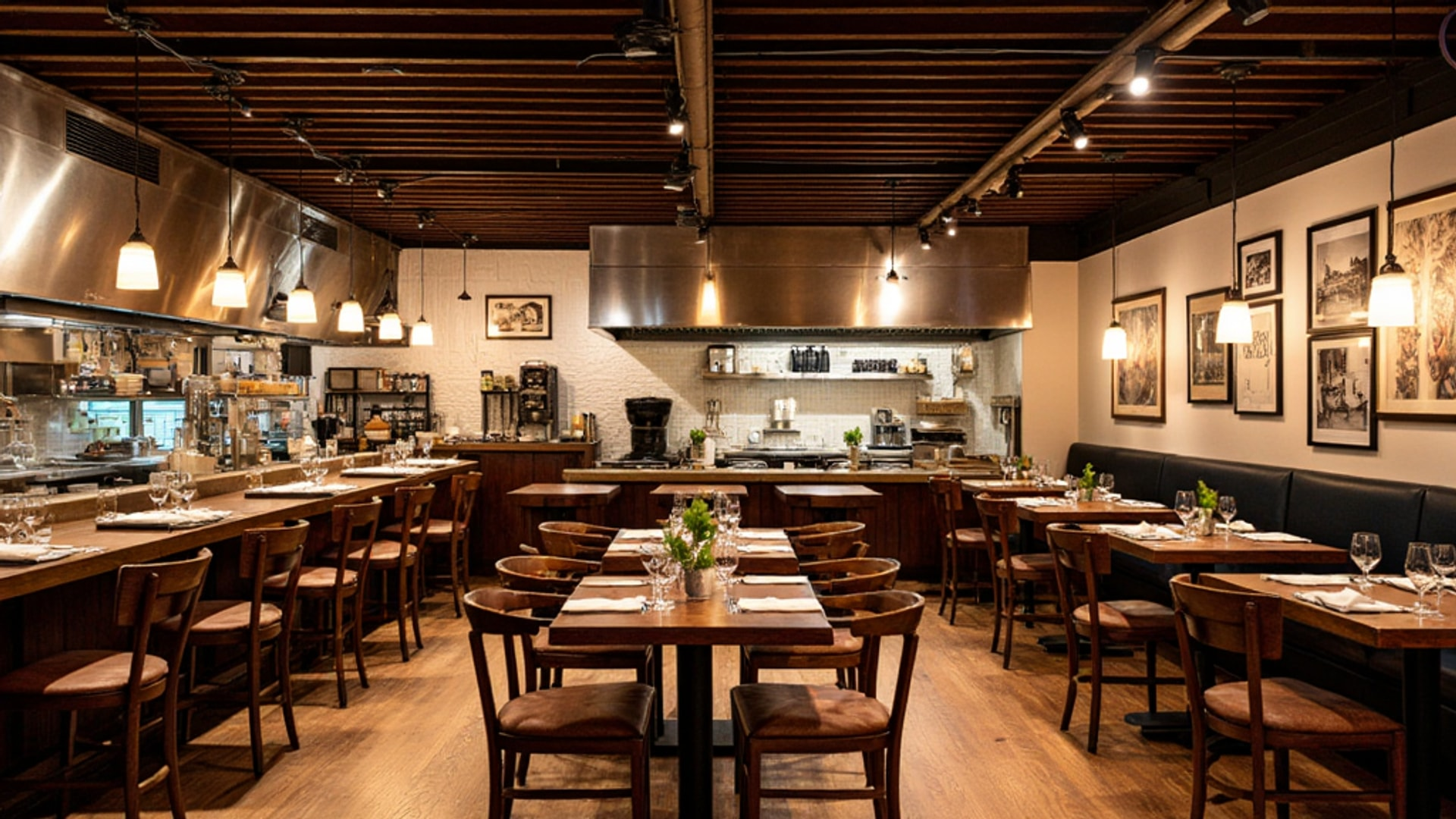
When you build or renovate a restaurant, you do not just put up walls. You run specialized electrical for commercial equipment, install dedicated plumbing for dish stations and prep sinks, add exhaust systems for the hood and HVAC, run gas lines through the kitchen, install decorative lighting in the dining room, build out a bar with its own plumbing and refrigeration, finish the floors with non-slip materials in back-of-house and decorative tile or hardwood in front-of-house, and add outdoor signage, landscaping, and patio improvements.
Under a blanket 39-year depreciation schedule, all of that gets lumped together. A cost segregation study separates them — and many of those components qualify for 5-year, 7-year, or 15-year depreciation instead.
How Cost Segregation Works
A cost segregation study is an engineering and tax analysis performed by specialists — either stand-alone firms like Capstan or divisions of larger accounting practices. The process involves a physical inspection of the property, a review of construction documents and cost records, and an analysis of each component against IRS classification guidelines.
The output is a detailed report that classifies every significant component of the build-out by its appropriate recovery period:
5-year property: Items with a 5-year recovery period include specific equipment, machinery, and certain fixtures directly tied to the restaurant’s operations. Carpeting, specialized kitchen equipment embedded in the structure, and certain decorative elements often land here.
7-year property: Most restaurant furniture and freestanding equipment falls into this category. Booths, bar stools, tables, and freestanding refrigeration units are typical 7-year assets.
15-year property: Site improvements and land improvements — parking lots, landscaping, fencing, outdoor patios — qualify for 15-year depreciation. This category often represents a significant portion of total project costs that most operators are incorrectly depreciating over 39 years.
39-year property: What remains after the reclassification — the structural shell, the building envelope, and components that genuinely are part of the real property — stays on the 39-year schedule.
In a typical restaurant build-out or acquisition, Capstan’s data shows that a meaningful portion of what would otherwise be classified as 39-year real property can be reclassified to these shorter schedules.
The Impact of 100% Bonus Depreciation
Cost segregation was always beneficial, but the restoration of 100% bonus depreciation for property placed in service after January 2025 has made it significantly more powerful.
Before bonus depreciation, reclassifying a component from 39-year to 5-year property still meant depreciating it over 5 years — faster, but still spread across multiple years. With 100% bonus depreciation, reclassified components can be fully deducted in the first year they are placed in service.
The cash flow implication is substantial. If a $1.5 million restaurant build-out yields $400,000 in components that can be reclassified to 5-year or 15-year property, and those components are eligible for 100% bonus depreciation, the restaurant can deduct the entire $400,000 in year one rather than spreading it over 5 to 15 years. At a 25% effective tax rate, that is $100,000 in immediate tax savings — cash that stays in the business rather than going to the IRS.
Without bonus depreciation, the same reclassification would generate the same total tax savings over time, but much of that benefit would be deferred to future years. With bonus depreciation, the timing advantage compounds the value significantly.
What Qualifies for Reclassification
Capstan identifies several categories of restaurant components that are commonly reclassified through cost segregation studies:
Kitchen-specific infrastructure: Plumbing that serves the kitchen exclusively — floor drains, pot-filler lines, prep sink connections — can often be reclassified from real property to shorter-lived personal property. Same for electrical service runs dedicated to commercial equipment.
Interior finishes and decorative elements: Decorative lighting, decorative tile work, millwork, and custom wall treatments in the dining room may qualify for shorter lives when they serve a decorative rather than structural function. The test is whether the element is part of the building structure or an enhancement that could be removed without affecting the structural integrity.
Tenant improvements in leased spaces: This is particularly important for operators who lease rather than own their space. Tenant improvement allowances funded by the landlord may be depreciated by the landlord, not the tenant, but significant buildout costs funded by the tenant can still be subject to cost segregation analysis. The shorter the remaining lease term relative to the depreciation period, the more valuable the acceleration becomes.
Outdoor and site improvements: Patio pavers, outdoor furniture foundations, landscaping, exterior signage supports, parking lot lighting, and curbing are all candidates for the 15-year land improvement category rather than 39-year real property.
HVAC systems: When an HVAC component serves a specific area or function — a dedicated exhaust system for the kitchen, a unit serving only the walk-in cooler area — it may be eligible for reclassification. HVAC serving the whole building typically stays at the longer period.
The Study Itself: Cost and Process
A cost segregation study typically costs between $5,000 and $15,000 according to Capstan. For a restaurant with a depreciable basis of $1 million or more, this represents a return of 10x or more in accelerated tax benefits — one of the highest ROI expenditures available in tax planning.
The process takes four to eight weeks from engagement to final report. It involves:
- Gathering construction cost records, contractor invoices, architectural plans, and prior depreciation schedules
- A site inspection by the study team (this is required for defensible results — studies done without a site visit are of lower quality and harder to defend in audit)
- Classification analysis against IRS asset categories and court precedents
- A written report with component-level breakdowns and supporting documentation
- A catch-up calculation if the property has been depreciated for multiple years under the wrong classifications (called a Section 481(a) adjustment)
The Section 481(a) adjustment is worth highlighting. If you purchased or built a restaurant two or three years ago and are only now doing a cost segregation study, you can still claim the benefit. The IRS allows you to file an accounting method change (Form 3115) to catch up on all the missed depreciation in a single year without amending prior returns. This means the study is never too late for qualifying properties.
Who Should Prioritize a Cost Segregation Study
Capstan sets the threshold at a depreciable basis of $500,000 or more. Below that level, the study cost may not justify the benefit. Above that threshold — and especially at $1 million or more — the economics are compelling for:
New construction: Restaurants built from the ground up have the highest proportion of reclassifiable components because every system is documented, costable, and recently placed in service.
Acquisitions: When you purchase an existing restaurant, the purchase price allocates across land, building, and personal property. A cost segregation study can optimize that allocation, often shifting significant value from the 39-year building category to shorter-lived assets.
Major renovations: A $750,000 kitchen gut-renovation or dining room remodel generates reclassifiable components even if the building itself is not being re-analyzed. The renovation cost is the depreciable basis for the study.
Tenant buildouts: Operators who invest heavily in leased spaces — high-end buildouts, custom bars, specialty kitchens — often find that cost segregation delivers some of the best returns precisely because the lease term creates pressure to accelerate recovery.
Coordinating with Your CPA
Cost segregation does not operate in isolation. The tax savings from a cost segregation study interact with your overall tax position in ways that require coordination with your CPA.
Passive activity limitations: If your restaurant generates a loss after aggressive depreciation, the deductibility of that loss depends on your tax situation. Passive investors in restaurants may face limitations on using large depreciation deductions. Active owners-operators generally do not.
Qualified Business Income (QBI) deduction: Large depreciation deductions reduce your net income from the business, which affects the QBI deduction calculation. Your CPA should model the interaction.
State tax conformity: Not all states conform to federal bonus depreciation rules. Some states require you to add back bonus depreciation and depreciate on the standard schedule for state tax purposes. The federal savings are real regardless, but the state picture varies.
Alternative Minimum Tax (AMT): Certain depreciation methods can affect AMT calculations for taxpayers in that position.
The bottom line: do not engage a cost segregation firm without briefing your CPA first. This should be part of your comprehensive restaurant tax planning strategy.
→ Read more: Restaurant Tax Planning: Deductions, Credits, and Year-Round Discipline The study itself is done by engineers with tax expertise, but the resulting deductions flow through your broader tax return, and your CPA needs to understand how they will be used.
Making the Decision
If you have spent $500,000 or more on a restaurant property — new construction, acquisition, renovation, or tenant buildout — the question is not whether to explore cost segregation but when. The study cost is predictable, the process is well-defined, and the ROI is consistent.
The operators who have done this work gain a genuine competitive advantage: more cash in the business in the years immediately following a major capital investment, which is exactly when cash is most constrained.
→ Read more: Restaurant Startup Costs: A Complete Breakdown of What You Will Actually Spend The operators who skip it are leaving money in the IRS’s hands that they are legally entitled to keep.
With 100% bonus depreciation restored for 2025, properties placed in service this year with reclassified components can receive full first-year deductions. Future legislative changes could alter this again. If you have a qualifying investment, stop reading and call your CPA.