· Culture & Sustainability · 13 min read
Restaurant Technology, AI, and Automation: A Practical Guide for Operators
Eight in ten restaurant executives expect their AI investments to increase this year. Here is what the technology actually does, what it costs, and how to adopt it without losing what makes your restaurant human.
The restaurant industry has never moved this fast on technology. In five years, AI has gone from a novelty demo at trade shows to a daily operational tool in more than half of all restaurants. A Deloitte survey of 375 restaurant executives across 11 countries found that eight in ten expect their AI investments to increase in the coming year. Over half of restaurants either use AI in their operations or plan to adopt it soon. By 2025, AI was projected to account for 50 percent of all restaurant customer interactions.
If those numbers feel abstract, consider the specifics: voice AI now handles complex food orders at 97 percent accuracy. Wendy’s reduced drive-through wait times by 22 seconds with AI ordering. Chili’s invested $200 million in technology and facilities in fiscal 2024 and saw a 15 percent increase in same-store sales with 5 percent traffic growth (CNBC Marathon via Foodverge).
This is no longer a question of whether to adopt. It is a question of what to adopt, in what order, and at what cost.
Where AI Is Already Working
The most common AI applications in restaurants today are not the headline-grabbing robots. According to Deloitte’s survey, the top use cases are automating marketing (28 percent of operators), gaining real-time insights (27 percent), and optimizing menus (26 percent). Chatbots lead with 60 percent daily use, followed by machine learning at 54 percent adoption.
The largest impact areas break down as follows:
| Application Area | Daily Use Rate | Examples |
|---|---|---|
| Customer experience | 63% | Recommendation engines, voice AI, personalized offers |
| Inventory management | 55% | Demand forecasting, IoT sensor tracking, automated reordering |
| Marketing automation | 28% | Targeted campaigns, social media scheduling, review responses |
| Menu optimization | 26% | Item performance analysis, pricing recommendations |
Notice what tops the list. Customer experience enhancement sits at 63 percent daily use, including recommendation engines and voice AI in drive-throughs (Deloitte). Inventory management follows at 55 percent, using forecasting and IoT sensors for real-time tracking. These are not futuristic applications. They are tools that address the two persistent pressures every operator faces: making guests happier and controlling costs.
Generative AI, the technology behind tools like ChatGPT, remains largely experimental in restaurants, with only 9 percent reporting daily use (Deloitte). If a vendor is pitching you generative AI as a must-have today, exercise caution. The proven applications are more specific and more immediately valuable.
Voice AI and Digital Ordering
Voice AI represents one of the most dramatic technology shifts in quick-service and fast-casual restaurants. Natural language processing has evolved enough to handle complex food orders with 97 percent accuracy, and restaurants implementing voice ordering report 35 percent faster order processing (Chef Store).
That speed gain is not trivial. In a drive-through running 100 cars per hour, 35 percent faster processing means serving roughly 135 cars in the same window. Over a lunch rush, that can translate to thousands of dollars in additional revenue per location.
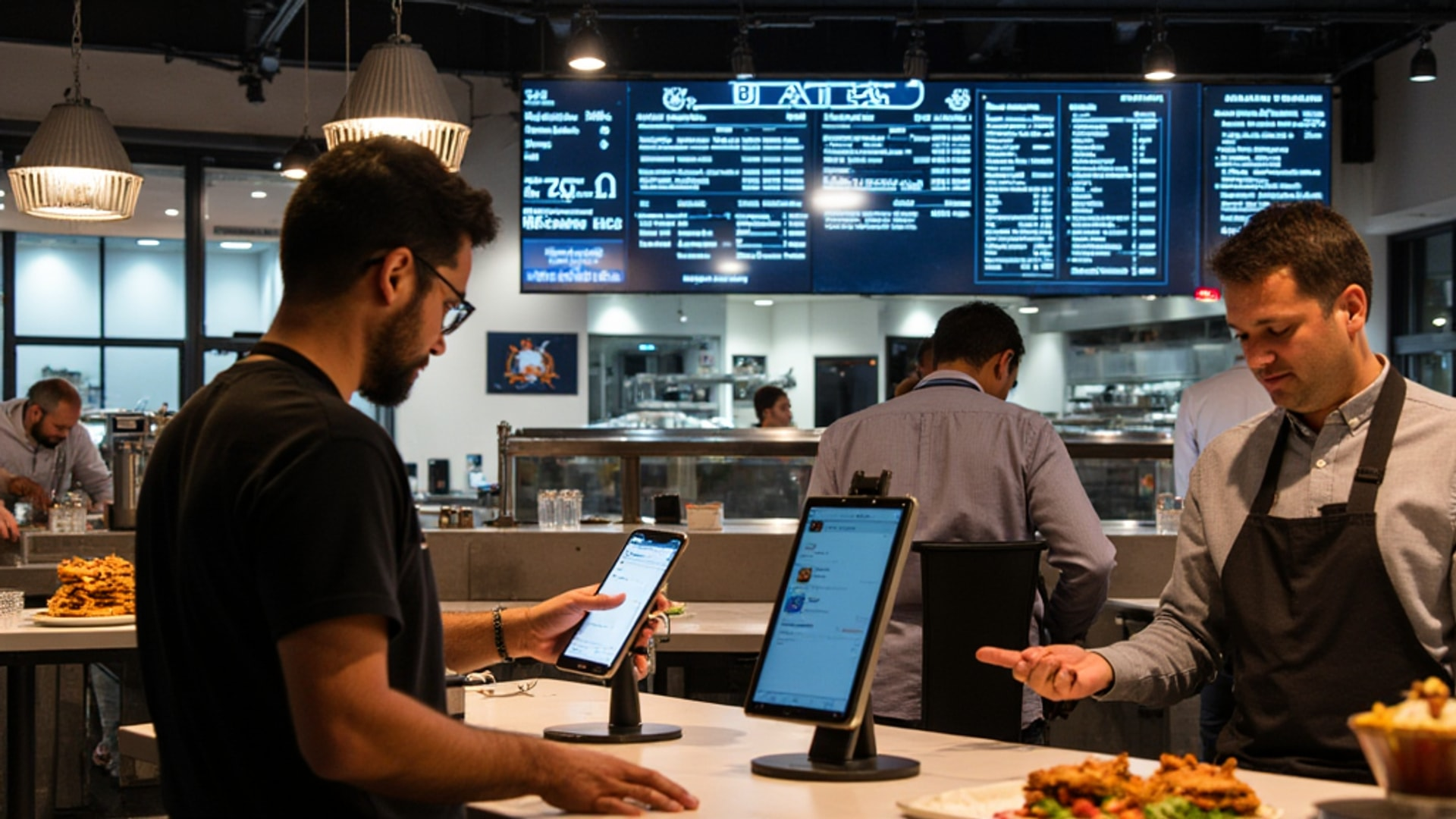
Digital ordering extends beyond the drive-through. Mobile payments, QR code menus, and pay-at-the-table tools let diners order and pay at their convenience. Nearly 75 percent of consumers now place food orders through mobile phones (Deliverect). The shift is not just about convenience for the guest. It reduces front-of-house labor requirements, eliminates order transcription errors, and generates data on ordering patterns that informs every other operational decision.
What This Means for You
- Quick-service and fast-casual operators: Voice AI ordering is approaching must-have status. Evaluate vendors based on accuracy rates in noisy environments, integration with your existing POS, and language support for your customer base.
- Full-service restaurants: QR code ordering and pay-at-the-table technology can reduce server workload during peak hours without eliminating the human touch. Test it as an option, not a replacement.
- All formats: If you are not collecting data from digital orders, you are leaving money on the table. Every digital order builds a picture of what your customers want, when they want it, and how much they will pay.
Kitchen Automation and Robotics
The back of house is where automation gets physical. Robotics companies have developed specialized machines for specific kitchen tasks, and major chains are deploying them at scale.
According to industry reporting from Foodverge and euronews, the current generation of kitchen robotics includes:
- Automated burger assembly (Creator, San Francisco) that handles grinding, toasting, assembly, and portioning with complete consistency
- AI-powered frying (Miso Robotics’ Flippy 2) that recognizes food types through cameras and adjusts cooking time, temperature, and technique automatically, deployed at Chipotle and Buffalo Wild Wings
- Automated bread production (Breadbot by Wilkinson Baking Company) that eliminates the need for skilled bakers at individual locations
- Robotic sous chefs (Dexai’s Albert) that assemble meals in minutes with safety features that pause operation when a person enters a four-foot radius
Chipotle is also testing robotic makeline technology that frees workers for consumer-facing service (Chef Store). The pattern across all of these deployments is the same: robots handle the repetitive, consistency-dependent tasks while human staff focus on creativity, hospitality, and the interpersonal elements that define dining.
The Independent Operator’s Path
Full kitchen robotics remain expensive and primarily suited to high-volume chain operations. But the principle scales down. The most impactful technologies for smaller operations include:
- AI-powered waste tracking that can cut food waste by 50 percent
- POS-integrated ordering systems that reduce ticket errors
- Kitchen display systems that improve ticket management and flow
- Digital temperature monitoring that automates HACCP compliance logging
These investments typically pay for themselves within months through reduced waste, improved labor efficiency, and higher throughput during peak service (Foodverge/euronews).
-> Read more: Kitchen Workflow Optimization
Unified Management Platforms
If you could make only one technology investment this year, an integrated POS system that consolidates ordering, payments, labor scheduling, inventory tracking, and performance reporting into a single platform would be the strongest candidate. According to Chef Store’s industry analysis, these unified systems represent one of the most impactful technology investments a restaurant can make.
The value is not in any single feature. It is in eliminating the data silos that plague restaurants running separate systems for each function. When your POS talks to your inventory system, which talks to your scheduling tool, which talks to your accounting software, you get something transformative: a real-time, unified picture of your entire business.
What Integrated Platforms Actually Deliver
Smarter scheduling. Smart scheduling tools built into unified platforms build shifts based on sales forecasts and staff availability. Instead of managers spending hours building schedules from intuition, the system suggests staffing levels based on historical sales patterns, upcoming events, and weather forecasts. The result is reduced overtime and more balanced schedules (Chef Store).
Predictive inventory. Inventory management systems syncing with real-time sales data track ingredient usage automatically, flagging potential shortages before they disrupt service. Rather than discovering you are out of salmon during Friday dinner service, the system alerts you on Wednesday morning based on current usage rates and upcoming reservations.
Operational visibility. Consolidated reporting means you can spot problems before they become crises. A sudden spike in food cost percentage, a decline in average check size, an increase in void rates — all visible in real time rather than buried in month-end reports.
How to Evaluate a Platform
When comparing unified management platforms, prioritize these criteria:
- Integration depth. Does it genuinely connect all functions, or is it a dashboard sitting on top of separate systems?
- Reporting speed. Real-time data is only valuable if you can access it without waiting for nightly batch reports.
- Scalability. Will it grow with you from one location to five?
- Support quality. Restaurant technology fails at the worst moments. Evaluate the vendor’s support hours, response times, and understanding of restaurant operations.
- Total cost of ownership. Factor in hardware, implementation, training, and ongoing subscription fees, not just the quoted monthly price.
The Delivery Platform Economy
The online food delivery market reached projected revenue of $429.9 billion in 2025, a 21.7 percent increase from the previous year, with expectations of reaching $563.4 billion by 2029 (Deliverect). Online orders now contribute approximately 40 percent of total restaurant sales. These are not numbers you can ignore.
DoorDash dominates with 67 percent market share, followed by Uber Eats at 23 percent (Deliverect). While delivery has boosted takeout profits by 15 to 30 percent for adopting restaurants, the commission structure remains a fundamental tension. High platform fees eat into already thin margins, and restaurants spend $24 billion annually on disposable containers alone.
The Delivery Dilemma
The strategic question is not whether to offer delivery but how to structure it profitably. Consider these approaches:
- Commission negotiation. Platform fees are more negotiable than most operators realize, especially for high-volume locations. Approach negotiations with your sales data, not just your frustration.
- Direct ordering channels. Build your own online ordering through your website and app. The technology cost is a fraction of platform commissions, and you retain the customer data.
- Hybrid approach. Use third-party platforms for customer acquisition and your own channels for retention. Offer incentives (loyalty points, discounts) for customers who order direct after discovering you on a platform.
- Menu engineering for delivery. Not every dish travels well. Develop a delivery-specific menu optimized for packaging, transport time, and food quality on arrival.
How Delivery Changes Your Operation
The delivery economy has fundamentally altered restaurant operations beyond just adding a revenue channel. According to Deliverect’s industry analysis, restaurants must now optimize for both dine-in and off-premises experiences, which affects kitchen design, staffing models, and even physical layouts.
Dedicated pickup infrastructure is driving significant revenue growth. Chipotle’s Chipotlane concept — a drive-through lane exclusively for mobile order pickups — demonstrates how purpose-built delivery and pickup infrastructure can increase throughput without disrupting the dine-in experience (Chef Store).
Gen Z has emerged as the most frequent user demographic for food delivery apps, and a notable 32 percent year-over-year increase in daily and weekly employee meal programs means workplace ordering is becoming a significant channel (Deliverect). If you are not thinking about catering and group ordering as part of your delivery strategy, you are missing a growing segment.
Loyalty and Personalization
Modern loyalty platforms have moved far beyond the punch card. In 2026, restaurant loyalty programs recognize repeat customers and deliver personalized offers based on ordering history and preferences. According to Chef Store, restaurants are investing heavily in technology-powered customization through mobile apps and exclusive recommendations tailored to individual guest profiles.
The data shows these programs work. Personalized offers increase visit frequency and average check size while building genuine customer relationships. The key is using the data you are already collecting through digital ordering and POS systems to create offers that feel relevant, not intrusive.
Building Personalization Without Creepiness
- Start with order history. “We noticed you love our spicy chicken sandwich. Try the new Nashville hot version this week” feels helpful, not invasive.
- Reward frequency, not just spending. Loyalty programs that reward visits build habits. Programs that only reward high spending alienate your regulars.
- Keep communications brief. One well-timed push notification beats five generic emails.
- Give control. Let customers set their communication preferences. Opt-in programs outperform opt-out ones in long-term engagement.
The Three Obstacles You Will Face
Deloitte’s survey identified three primary obstacles that restaurant leaders cite when implementing AI and technology:
- Identifying scalable use cases. The technology landscape is noisy. Vendors promise transformation, but most operators struggle to identify which applications will actually deliver ROI at their scale.
- Managing AI-related risks. Data privacy, algorithmic bias, system failures during peak service, and integration complexity all create risk that most restaurant operators are not trained to manage.
- Talent shortages. Implementing and maintaining AI systems requires technical talent that the restaurant industry has historically not attracted or developed.
Most executives surveyed felt unprepared regarding risk governance, technology infrastructure, and strategy implementation (Deloitte). This is an honest assessment, and it points to a practical reality: you do not need to solve all three problems at once.
A Practical Adoption Roadmap
Technology adoption in restaurants fails most often when operators try to transform everything simultaneously. A phased approach protects your investment and lets you build organizational capability over time.
Phase 1: Foundation (Months 1-3)
Focus: Unified POS and digital ordering.
- Evaluate and implement an integrated POS system that handles ordering, payments, and basic reporting
- Launch online ordering through your own website
- Set up digital menu boards or QR code menus
- Expected investment: $5,000-$15,000 for hardware and setup, plus $200-$500 monthly subscription
- Expected return: Reduced order errors, faster table turns, baseline data collection
Phase 2: Optimization (Months 4-8)
Focus: Data-driven operations.
- Implement inventory management integrated with your POS
- Add smart scheduling based on sales forecasts
- Launch a basic loyalty program tied to digital ordering
- Begin analyzing ordering data for menu optimization
- Expected investment: $200-$400 additional monthly for software
- Expected return: 2-5 percent reduction in food costs, 5-10 percent reduction in labor overstaffing
Phase 3: Intelligence (Months 9-15)
Focus: AI-powered decision making.
- Add demand forecasting for prep and purchasing
- Implement automated marketing (email, SMS) triggered by customer behavior
- Evaluate voice AI ordering if applicable to your format
- Explore delivery platform optimization or direct delivery channels
- Expected investment: $500-$1,500 monthly for AI tools
- Expected return: 15-30 percent faster order processing, measurable increase in repeat customer visits
Phase 4: Advanced (Months 16+)
Focus: Emerging technology evaluation.
- Assess kitchen automation for your highest-volume, most repetitive tasks
- Evaluate autonomous delivery options as they mature
- Consider computer vision for food quality and waste monitoring
- Expected investment: Varies widely, $10,000-$100,000+ for robotics
- Expected return: Concept-dependent, requires careful ROI analysis
What Technology Cannot Replace
For all the data in this article, the most important thing to understand about restaurant technology is what it cannot do. It cannot replace the server who remembers a regular’s usual order and asks about their kids. It cannot replicate the energy of a kitchen where cooks take genuine pride in every plate. It cannot create the warmth that makes a guest choose your restaurant over the one with better algorithms.
The operators who deploy technology most successfully are those who use it to remove friction, reduce waste, and free their people to do what humans do best: connect, create, and care. Chili’s did not invest $200 million in technology to eliminate jobs. They simplified the menu by over 20 percent and used technology to execute a smaller menu more consistently, translating to 20-30 percent more guests during peak hours (CNBC Marathon via Foodverge).
The goal is not a restaurant run by machines. It is a restaurant where technology handles everything that does not require a human touch, so your team can focus entirely on the things that do.
Key Takeaways
- Start with your POS. An integrated platform is the foundation for every other technology investment.
- Voice AI and digital ordering are mature. At 97 percent accuracy and 35 percent faster processing, these tools deliver measurable ROI today.
- Kitchen robotics are real but scale-dependent. Chain operators are deploying them now. Independents should focus on waste tracking, digital temperature monitoring, and kitchen display systems first.
- Delivery is a strategic decision, not just a channel. Structure it for profitability through commission negotiation, direct ordering, and delivery-specific menus.
- Adopt in phases. Foundation, optimization, intelligence, advanced. Each phase builds on the last.
- Protect what matters. Technology should amplify your team’s ability to deliver hospitality, not replace it.
-> Read more: The Food Delivery Shift: How Third-Party Apps Rewired Restaurant Economics
-> Read more: Daily Operations Workflow